Rotted window frame: should you repair it, replace the sash, or replace the whole window?
A rotted window frame has three honest fixes, and the right one depends on how deep the rot goes. Surface rot on a sound frame can be dug out and rebuilt with epoxy wood filler. Rot confined to the movable sash often means a sash swap. But once the rot reaches the sill, the jamb, or the wall framing behind it, a full window replacement is the only repair that actually stops it.

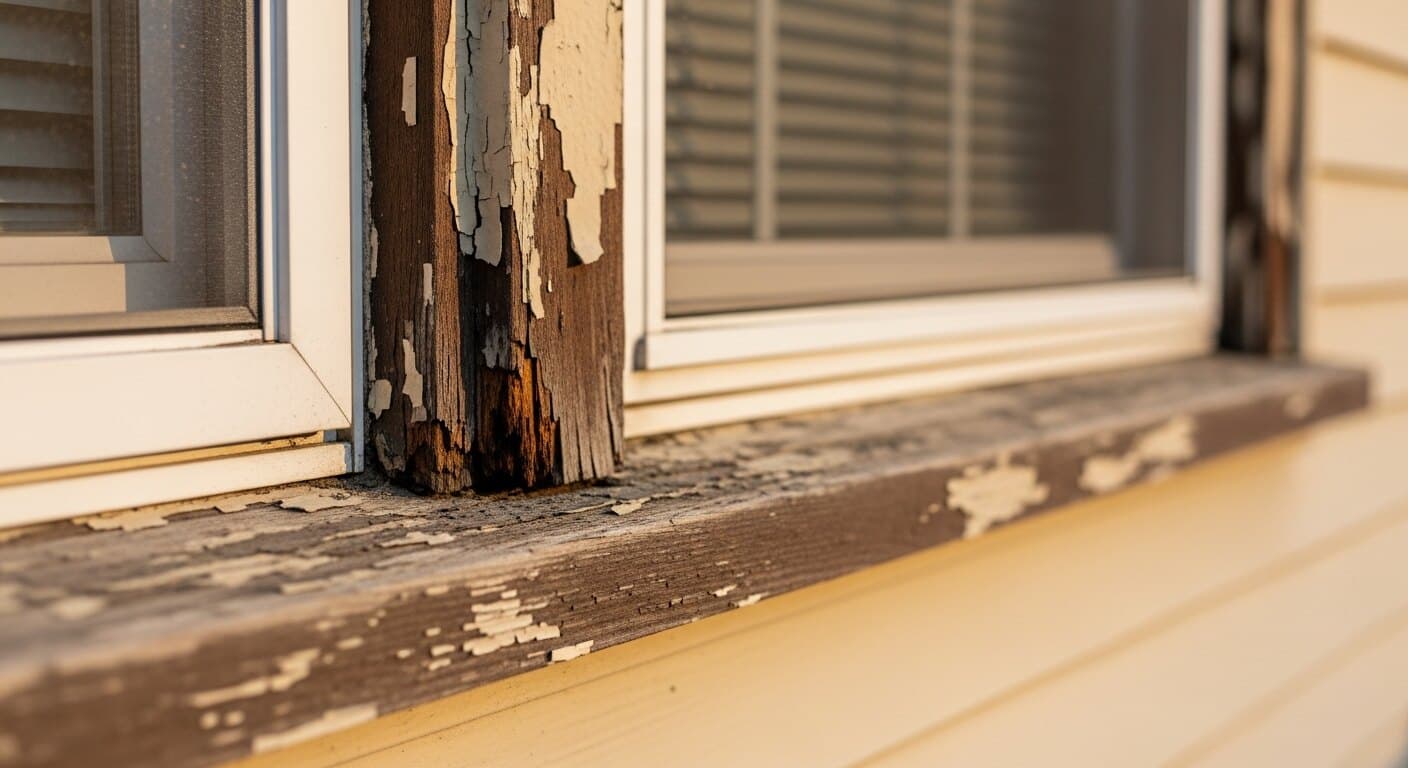
In hundreds of homes I have walked as a real estate agent, a rotted frame is one of the first things an inspector probes for. Usually with a screwdriver, pushed into the wood to see how far it sinks. That probe is the whole decision in miniature. If the tip stops at firm wood a quarter inch in, you likely have a cosmetic repair. If it disappears to the handle, you have a structural problem the seller (or you) cannot patch over. This page is about reading that difference honestly before you spend.
Rot is one of the few window problems where the cheap fix and the right fix are sometimes the same thing, and sometimes worlds apart. Let me walk through what causes it, the three repair paths, how to tell which one your frame actually needs, and what each costs in this market.
What causes a rotted window frame
A rotted window frame is wood that has stayed wet long enough for fungus to break down its fibers, and the water almost always comes from a failure somewhere above or around the glass. The rot is the symptom; the leak is the cause, and if you fix the wood without fixing the water path, it comes back.
Wood rot needs three things: wood, oxygen, and sustained moisture. Wood stays safe below roughly 20 percent moisture content; decay fungi need it wetter than that to take hold, per USDA Forest Products Laboratory research. Your frame supplies the first two; the question is always where the water is getting in. The usual culprits in DC/MD/VA homes are a failed paint or caulk line that let rain wick into end grain, a leaking insulated glass seal dripping into the sash, missing or clogged sill drainage, or flashing that was never installed right when the window went in. South- and west-facing windows rot first because they take the most sun-driven rain and the most freeze-thaw cycling. Older wood double-hung windows in this region's colonials and row houses are the most common victims, since they predate the better factory finishes and rot-resistant species used today. The practical point: before you choose a repair, find the leak. A flawless epoxy rebuild under a still-leaking sill is a repair with an expiration date.
How do I know if my window frame is rotted or just weathered?
Press a screwdriver or an awl into the suspect wood. Weathered-but-sound wood resists and the tip leaves a dent; rotted wood is soft, spongy, or crumbling and the tip sinks in with little force. That five-second probe is the single most useful test, and it is exactly what an inspector does.
Beyond the probe, here is what separates cosmetic damage from real rot:
- Peeling paint and gray, checked wood: usually just weathering and UV damage. The wood underneath is often still firm. This is a sand-and-repaint job, not a rot repair.
- Soft, dark, spongy wood that gives under the probe: active rot. The fibers are already compromised, and paint over it just traps moisture and accelerates the decay.
- A musty smell, visible fungus, or wood you can crumble between your fingers: advanced rot. By the time it is this obvious on the surface, it is usually deeper than it looks.
- Soft spots at the joints and the bottom corners of the sash and sill: the classic rot map. Water collects at horizontal surfaces and end grain, so the sill, the lower rail, and the corner joints rot before the verticals.
The mistake I see most is homeowners judging rot by how it looks. Rot works from the inside and from the back of the frame outward, so a frame that looks paintable on the surface can be hollow behind it. Always probe, and probe the bottom corners and the sill, not just the face you can see.
Can a rotted window frame be repaired with epoxy?
Yes, when the rot is shallow and localized and the structural core of the frame is still sound. Two-part epoxy systems (a liquid consolidant that soaks into and hardens the punky wood, then a moldable filler you shape and sand) are a legitimate, long-lasting repair for surface and edge rot, not a hack.
Epoxy is the right call when you can dig out all the soft wood and still have solid, load-bearing frame left around the repair. It bonds to the remaining wood, does not shrink the way standard wood filler does, and once primed and painted it holds for many years. Trim, brickmould, a rotted corner of a sill nose, and small soft patches on an otherwise-firm jamb are textbook epoxy repairs. The discipline that makes it work: remove every fiber of rotted wood first (epoxy over soft wood just hides decay that keeps spreading), let the area dry fully, treat it with consolidant, and fix the water source that caused it.
When should you replace the sash instead?
Replace the sash, not the whole window, when the rot is confined to the movable sash itself (the framed panel that holds the glass and slides or swings) and the surrounding frame, jamb, and sill are still solid. A sash swap is the middle path: more than an epoxy patch, far less than a full window.
This works because the sash is a discrete, removable part. On many wood double-hung and casement windows, you can order or build a replacement sash and reglaze it into the existing, sound frame, restoring smooth operation and a clean seal without disturbing the wall. It is the right answer when the sash has rotted (often from a failed glass seal dripping into the bottom rail) but the jamb the sash rides in and the sill below are firm under the probe.
Two honest caveats. First, sash availability depends on the brand and age of your window. For a common current line, a factory sash kit may exist; for a 60-year-old custom wood window, a replacement sash means a millwork shop building one, which can cost as much as a new window. Second, a sash swap fixes the sash, not an aging frame. If the jamb is also soft or the window is near the end of its life anyway, you can spend real money on a sash and still be looking at a tired frame around fresh wood. Price the sash against a full unit before you commit; sometimes the math says just replace it.
When does a rotted window frame mean full replacement?
A rotted window frame needs full replacement once the rot has reached the structural members, the sill, the jamb, or the framing behind the window, or when the wood is so far gone it will not hold a fastener or a seal. At that point you are not repairing a window, you are stopping water damage from spreading into your wall.
Here is the line I draw, drawn from what actually shows up behind the trim when a window comes out:
- Rot in the sill or jamb, not just the sash: full replacement, almost always. These are the parts that hold the window square and shed water. Once they are compromised, a sash or epoxy fix is patching around a failing core.
- Rot that has spread into the rough opening or wall framing: full replacement plus carpentry. The crew has to cut back to sound framing, re-sister or replace studs and the sill plate if needed, and re-flash before the new window goes in.
- Multiple rotted windows of the same age: often a whole-set decision. If your wood windows are all 40-plus years old and several are rotting, piecemeal repairs add up fast, and full replacement resets the energy performance and the maintenance clock at once.
- The window barely operates and the wood crumbles: replacement. A frame too far gone to hold a screw will not hold a weatherstrip or a seal either.
This is also where install type matters. A rotted frame is the textbook case for a full-frame install rather than an insert (pocket) install, because the whole point is to strip the rot out down to the rough opening, fix what is behind it, and re-flash, not to drop a new window into the damaged frame. An insert install over rot hides the decay behind a brand-new window, which is exactly the hidden-defect trap a foggy window left in a bad frame falls into too. For the mechanics of full-frame versus insert and what the crew does when they find rot mid-install, see the window installation guide.
What it costs: epoxy vs sash vs full replacement
The three paths span a wide cost range, which is exactly why diagnosing the rot correctly saves the most money. Epoxy is the cheapest by far, a sash swap sits in the middle, and a full-frame replacement with carpentry is the most expensive, especially once hidden rot adds remediation behind the wall.
| Path | What it fixes | Relative cost | Best when |
|---|---|---|---|
| Epoxy repair | Surface and edge rot on a sound frame | Lowest (often DIY-able) | Rot is shallow, core is solid, water source is fixable |
| Sash replacement | Rot confined to the movable sash | Middle (depends heavily on availability) | Sash is rotted, jamb and sill are firm |
| Full-frame replacement | Rotted sill, jamb, or wall framing | Highest (window plus carpentry) | Rot reaches the structure, or the window is end-of-life |
A few honest notes on the numbers. Epoxy is materials-cheap (a two-part kit is modest) but labor-real if you hire it out, and a millwork sash can rival the price of a whole new window, which is the surprise that flips many "just replace the sash" plans into full replacements. Full-frame replacement costs more than an insert because of the demolition, the flashing, and any framing repair, and rot is the most common source of mid-install surprises, so budget a contingency over the base quote for what the crew finds once the wall is open. OneStep's installed pricing for a single rot-driven full-frame replacement in our market: [data pending: OneStep DC/MD/VA installed price range for a single full-frame replacement window where rot remediation is involved]. For the broader ranges, see the cost to replace a single window and, if several frames are gone, the cost to replace all the windows in a house. If you are moving off wood entirely to stop the rot cycle, the vinyl window cost and fiberglass window cost pages cover the rot-proof alternatives.
Get an honest price, no salesperson
Tell us your address and window and get itemized pricing — no in-home pitch, no surprises.
What a rotted window frame does on a home inspection
A rotted window frame is one of the most commonly written-up window defects on a home inspection report, and once it is in writing it becomes a negotiation line item. Inspectors probe for it specifically, so it rarely stays your private problem in a sale.
This is the part I watched play out across years of transactions. An inspector notes soft or rotted frames in the report, often with photos and the room location, and may flag it as a moisture-intrusion concern rather than a cosmetic one, which carries more weight with a buyer. The buyer's agent then has a lever: a repair credit, a price reduction, or a demand that you fix it before closing on a licensed contractor's invoice. The credit a buyer asks for is frequently larger than what it would have cost you to handle it quietly before listing, because rot reads as deferred maintenance and buyers assume there is more they cannot see. On average, a rotted-frame finding costs a seller roughly [data pending: typical buyer credit or repair cost for a rotted window frame finding at closing in DC/MD/VA, from agent/inspector data] at the table. If you are listing within a year or two, clearing rotted frames first is usually cheaper than the concession you will negotiate later, and far cheaper than the lender repair escrow a serious moisture finding can trigger. To see what clean replacements would look like on your actual house before you list, you can preview styles and pricing in the configurator.
See it on your own house first
Preview a clean replacement on a photo of your actual window and get itemized pricing before you decide.
Lead paint, permits, and the pre-1978 wrinkle in DC, MD, and VA
If your home was built before 1978 and you are paying someone to disturb painted wood (which a rotted-frame repair or replacement does), the federal EPA Renovation, Repair, and Painting (RRP) Rule requires the contractor to be EPA lead-safe certified and to use lead-safe work practices. This applies to window work regardless of how small the area is.
Per the EPA, the RRP Rule covers paid renovation that disturbs painted surfaces in housing built before 1978, and window replacement and removal specifically trigger it (the usual six-square-foot interior / twenty-square-foot exterior thresholds do not exempt window work). The rule does not apply only if the components have been tested and found free of lead-based paint by a certified renovator or inspector. Much of DC/MD/VA's older housing stock predates 1978, so on a colonial, a row house, or a mid-century cape, assume lead-safe practices are part of any rot repair that involves cutting or scraping painted wood, and ask any contractor to confirm certification before they start.
Permits are a separate, jurisdiction-driven question. A like-for-like insert replacement often needs no permit, while a full-frame replacement that involves cutting back to the framing more often does, and a home in a historic district (Georgetown, Capitol Hill, Old Town Alexandria, the Annapolis Historic District) adds a design-review layer regardless of install type. Because rot usually forces a full-frame job, it is more likely to need a permit than a simple insert. Confirm the current rule with your local permitting office before you assume. For the wider list of window problems and how to tell a repair issue from a replacement one, start at the window problems hub, and if your rot traces back to a leak, the water leaking around windows guide covers the source side of the problem.
Is OneStep right for you?
Frequently asked questions
Can a rotted window frame be repaired, or does it have to be replaced?
It depends on how deep the rot goes. Shallow, localized rot on a frame that is still structurally sound can be repaired with two-part epoxy. But once the rot reaches the sill, the jamb, or the wall framing behind the window, full replacement is the only fix that actually stops the water damage from spreading.
How do I tell if my window frame is rotted or just weathered?
Press a screwdriver or awl into the suspect wood. Sound but weathered wood resists and leaves only a dent, while rotted wood is soft and spongy and the tip sinks in easily. Check the sill and the bottom corners of the sash first, since rot collects where water sits.
Does epoxy actually work on rotted wood window frames?
Yes, when used correctly on shallow rot. A two-part system uses a liquid consolidant to harden the remaining wood and a moldable filler to rebuild the shape, and once primed and painted it lasts many years. You must remove all the soft wood first and fix the leak that caused the rot, or it will return.
Should I replace just the sash or the whole window?
Replace just the sash when the rot is confined to the movable sash and the surrounding frame, jamb, and sill are still firm. Replace the whole window when the rot has reached those structural parts. Price the sash against a full unit first, because a custom millwork sash can cost nearly as much as a new window.
Will a rotted window frame fail a home inspection?
It will not fail in a pass or fail sense, but a home inspector will note rotted frames in the report, often as a moisture-intrusion concern. Once documented, buyers commonly use it to request a repair credit or price reduction, which is why many sellers fix rotted frames before listing.
Do I need a lead-safe contractor to fix a rotted window frame?
If your home was built before 1978 and you are paying someone to disturb painted wood, yes. The EPA Renovation, Repair, and Painting Rule requires the contractor to be lead-safe certified for window work regardless of the area disturbed, unless the components have been tested and found free of lead-based paint.
Is a rotted window frame an emergency?
Not usually an immediate emergency, but it is active water damage that gets worse, not better, on its own. Rot spreads into the surrounding wood and can reach the wall framing if ignored, so it is best addressed before it grows from a cosmetic repair into a structural one.
Next step
Probe for the depth of the rot first, then match the fix to what the screwdriver finds: epoxy for shallow surface rot on a sound frame, a sash swap for a rotted sash in a firm frame, full-frame replacement once the rot reaches the structure. If the probe says structure, that is the point to put an itemized number on your own openings in your own hands, well before a salesperson is the one framing the choice.
Start your measurement in 5 minutes
Snap a photo with your phone, get AI measurements and an honest price — no salesperson, no in-home pitch.
Keep diagnosing: the window problems hub covers every common issue, from a drafty window to a failed glass seal, the window materials guide explains the rot-proof vinyl and fiberglass options that retire the wood-rot cycle, and you can ask Zig whether your frame is a repair or a replacement. The person behind every page on this site is Anthony Moorman.