How much does it cost to replace a single window?
The cost to replace a single window in the DC/MD/VA market generally runs from a few hundred dollars for a budget vinyl insert to well over a thousand for a premium or full-frame job. One-off swaps cost more per window than a whole-house project, because the crew still has to mobilize, measure, and set up for a single opening. Material, install type, and glass move the number most.

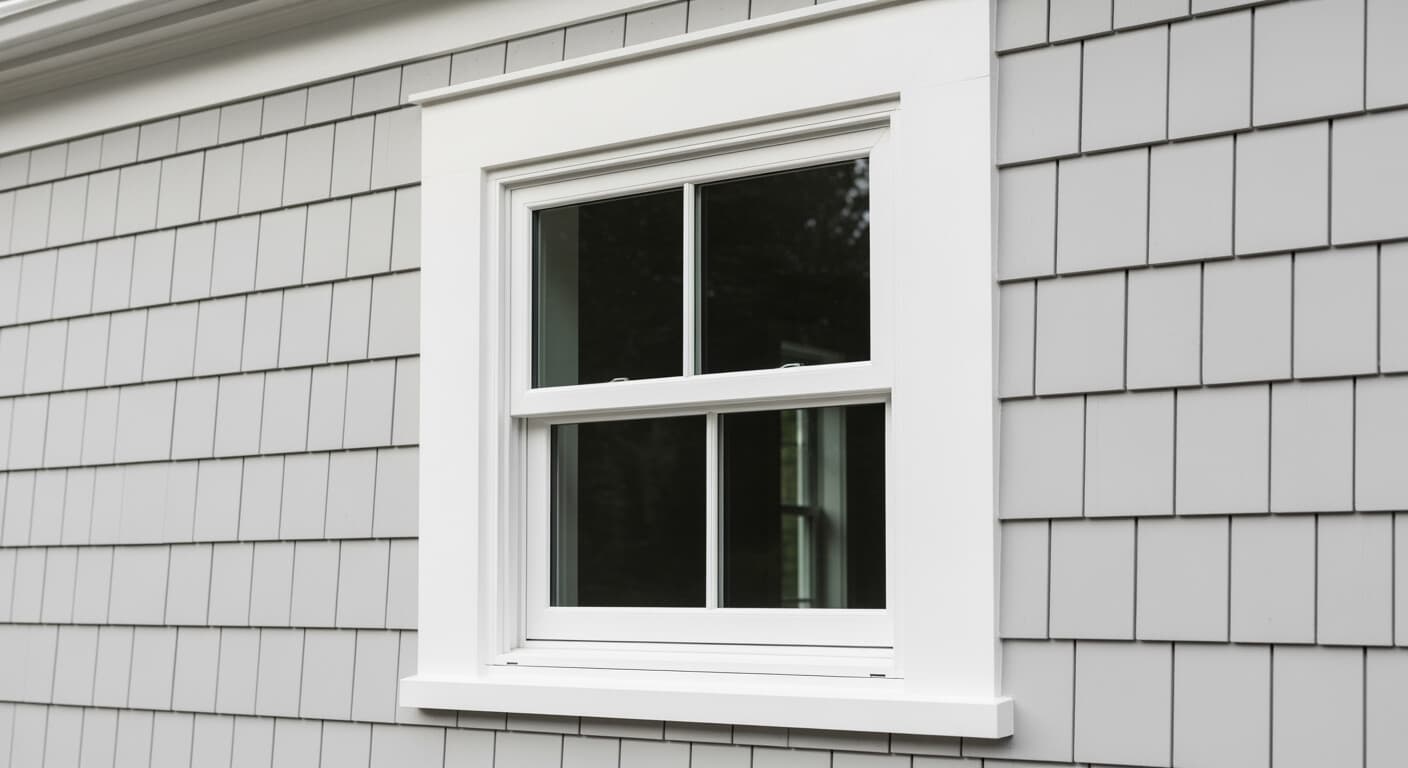
If you've got one broken, fogged, or stuck window and you're not ready to redo the whole house, this page is for you. The honest version: a single-window swap almost never costs a proportional one-fifth of what a five-window job does. The unit might be cheap, but labor doesn't scale down. A crew still has to drive out, set up, remove the sash, install the unit, and clean up, and almost none of that effort shrinks because the order is one window. The single-opening job is where per-window math looks worst for the homeowner, because the fixed cost of a crew's trip is spread across one unit instead of fifteen.
What is the cost to replace a single window in DC/MD/VA?
The cost to replace a single window in our region generally lands somewhere between a few hundred dollars at the budget-vinyl-insert end and well over a thousand for a premium unit or a full-frame job. The exact number tracks four things: frame material, install type, glass package, and the minimum-trip charge most installers apply to one-off work.
The ranges below are general market context for the DC/MD/VA area, not OneStep's verified prices. They reflect what reputable industry sources publish for a single, standard-size, double-pane window installed as an insert. Use them to sanity-check a quote.
| Tier | Typical frame / brand examples | General market range, one window installed | Who it fits |
|---|---|---|---|
| Budget vinyl | Builder-grade vinyl insert | [data pending: budget vinyl single-window installed market range, DC/MD/VA] | Rentals, flips, one secondary opening |
| Mid-tier vinyl | Mainstream branded vinyl | [data pending: mid-tier vinyl single-window installed market range, DC/MD/VA] | Most owner-occupied homes |
| Premium vinyl / composite | ProVia, Andersen 100 Series | [data pending: premium vinyl/composite single-window installed market range] | Long-term hold, energy focus |
| Fiberglass / Fibrex | Marvin Essential, Renewal by Andersen | [data pending: fiberglass/Fibrex single-window installed market range] | Historic districts, 15+ year hold |
| Wood interior / clad | Marvin Signature, Pella Reserve | [data pending: wood/clad single-window installed market range] | High-end remodels, matching trim |
One thing sits on top of these numbers: if your other windows are a specific brand, line, or color, sourcing one unit to match can push you up a tier or add a special-order fee.
Why one-off cost to replace a single window runs higher per window
A single-window job carries a higher per-window cost than a whole-house project because the fixed costs of the trip don't shrink. The crew still mobilizes once, the truck still rolls, and many installers apply a minimum job charge that a one-window order barely clears.
Think of the bill as two parts: the per-window cost (unit, glass, labor for that opening) and the fixed cost of the visit (drive time, setup, cleanup, disposal, the minimum charge). On a ten-window job that fixed cost spreads across ten openings; on a one-window job it lands on one. That's why a single replacement can feel disproportionately expensive: you absorb the whole mobilization yourself.
- Minimum job charge. Many installers won't roll a truck for less than a set floor; a single budget window can be priced more by that floor than by the window.
- Special-order matching. Matching one window to an existing brand, color, or grille pattern often means a special order with its own lead time and fee.
- Diagnosis vs. replacement. A fogged pane sometimes only needs a new insulated glass unit, not a whole window, so it's worth confirming first.
One-window leads were treated as a problem to manage, not business to win. Schedulers knew the job might not clear the company minimum, so those appointments got slotted last, and we were coached to ask about every other opening in the house before talking about the one the homeowner actually called for. If the project could not grow, nobody upstream was excited about it.
Insert or full-frame for a single window?
For one window, an insert (pocket) replacement is the lower-cost path and the right call when the existing frame is sound. Full-frame (stripping back to the rough opening) costs meaningfully more and is only required when the frame is rotted, when you're changing the window type, or when the opening was never sound.
On a single broken or fogged window where the surrounding frame is solid, there's rarely a reason to pay for full-frame. If an installer quotes full-frame on a sound frame for a one-off swap, ask why. The honest answer is sometimes "it's cleaner for us," which is a cost reason for you to weigh.
Insert (pocket)
A new unit fits into the existing sound frame. Relative cost: lower. The right call for most fogged or broken-sash swaps where the frame is solid and you are keeping the same window type.
Full-frame
Strips back to the rough opening. Relative cost: higher. Only genuinely required when the frame is rotted, there is water damage, you are changing the window type, or the sill/jamb has failed.
For the broader breakdown of what drives any window's price, see our window replacement cost guide and the full cost hub.
Does a fogged or broken window always need full replacement?
Not always. A fogged window (condensation trapped between the panes) means the insulated glass unit's seal has failed, and on many windows you can replace just that glass unit rather than the whole window. A cracked sash or failed balance can sometimes be repaired too.
Whether repair beats replacement depends on the window's age and condition. If the frame and hardware are sound and only the glass seal failed, a glass-unit swap is the cheaper fix. If the window is old, single-pane, drafty, or the frame is compromised, replacing the whole unit usually makes more sense, especially in our IECC Zone 4 (mixed-humid) climate, where an old single-pane unit costs you on both heating and cooling. Ask any installer to quote both options. If you're unsure which applies, ask Zig to walk through the symptoms with you.
Are there tax credits or rebates for replacing one window in 2026?
No federal window tax credit applies in 2026. The federal §25C Energy Efficient Home Improvement Credit for windows (formerly 30% of cost, capped at $600 per year for windows) was terminated for property placed in service after December 31, 2025 under the 2025 federal tax law (Public Law 119-21).
So for a single-window install in 2026, do not count on a federal credit. If a salesperson still cites the 30%/$600 figure, it's outdated. What can still move the math: your utility's bill savings from replacing an old single-pane unit, and any state or local DC/MD/VA program. Those programs change and most target whole-home or income-qualified projects rather than a single window, so confirm current terms before relying on any: [data pending: current DC/MD/VA state or local single-window rebate/incentive programs and eligibility]. On a one-window swap, the payback case is usually comfort and stopping a draft, not a rebate.
What does it cost to replace a single window with OneStep?
OneStep shows you an itemized, no-rep price for your specific opening before anyone talks to you, the same five drivers (install type, material, glass, brand, count) applied to your actual window. Because pricing is configured per home rather than pitched, the cleanest way to see a real number is to run your address through the configurator.
We're not going to print a fake "from $X" headline for a single window. That's exactly the marked-up-list-price game an honest cost page should warn against. What OneStep removes is the in-home rep, the standard pitch, and the expiring discount. For a one-off swap, that transparency matters, but so does honesty about fit.
Get an honest price, no salesperson
Tell us your address and window and get itemized pricing — no in-home pitch, no surprises.
How to get a fair price on a single-window replacement
Get the quote itemized, confirm insert vs. full-frame, and get at least two bids, because the per-window spread is widest on one-off jobs. A fair single-window quote shows the unit, glass, labor, and any minimum or trip charge as separate lines.
- Ask whether it's insert or full-frame, and why. Full-frame on a sound frame needs a reason.
- Ask whether the fog or break needs the whole window or just the glass.
- Get the NFRC U-factor and SHGC for the exact glass. Lower U-factor means less heat loss, lower SHGC less summer solar gain.
- Confirm whether a minimum job charge is baked in.
- If matching existing windows matters, confirm brand, line, color, and grille first.
For a line-by-line look at what belongs on any window quote, the window replacement overview and the cost hub go deeper, and you can compare styles like double-hung and casement at the windows hub.
See it on your own house first
Preview a clean replacement on a photo of your actual window and get itemized pricing before you decide.
Frequently asked questions
How much does it cost to replace a single window in DC, MD, or VA?
In our region, replacing one window generally ranges from a few hundred dollars for a budget vinyl insert to well over a thousand for a premium unit or full-frame job. Those are general market figures, and the fair number depends on material, install type, glass, and whether a minimum job charge applies.
Why does replacing one window cost more per window than doing several?
Because the fixed costs of the visit (drive time, setup, cleanup, disposal, and any minimum job charge) don't shrink for one opening. On a whole-house job those costs spread across many windows; on a one-off swap, you absorb the whole mobilization yourself, so the per-window number runs higher.
Can I just replace the glass on a fogged window instead of the whole window?
Often, yes. A fogged window means the seal in the insulated glass unit failed, and on many windows you can replace just that glass unit rather than the whole window, which is usually cheaper. It depends on the window's age and frame condition, so ask an installer to quote both the glass-only fix and a full replacement.
Is insert or full-frame replacement better for a single window?
For one window with a sound surrounding frame, an insert or pocket replacement is the lower-cost and appropriate choice. Full-frame costs more and is only genuinely required when the frame is rotted or water-damaged, when you're changing window type, or when the opening was never sound.
Is there a tax credit for replacing one window in 2026?
No. The federal section 25C credit for windows (30% of cost, up to $600 per year for windows) was terminated for property placed in service after December 31, 2025 under Public Law 119-21. For a 2026 single-window install, do not assume a federal credit applies, and confirm any current state, local, or utility incentives before relying on them.
Should I use OneStep to replace just one window?
Often not. For a single budget-tier or urgent swap, a local handyman or independent installer with a stock unit usually quotes less and arrives sooner. OneStep is built for transparent, itemized pricing on multi-window projects without an in-home rep, which is where it earns its keep.
Next step
For a single window, the most useful first move is two honest bids and a clear answer on whether you need the whole unit or just the glass. If you're replacing several windows, run your address through our 3D configurator for an itemized, no-rep price per opening.
See it on your own house first
Preview a clean replacement on a photo of your actual window and get itemized pricing before you decide.
For the full tier-by-tier breakdown, start at the cost hub and the window replacement cost guide. To understand what we do, see window replacement and the styles we install at the windows hub. The person behind every page on this site is at Anthony Moorman.