Window leaks: why water is coming in and what to do about it
Most window leaks are not the window. In our older Mid-Atlantic housing stock, water around a window almost always traces to failed flashing, missing head drip cap, cracked exterior caulk, or a clogged sill, not a defective unit. Find the actual entry path first. Re-caulk and clear weep holes before you touch the flashing, and only replace the window once the install itself is the failure.

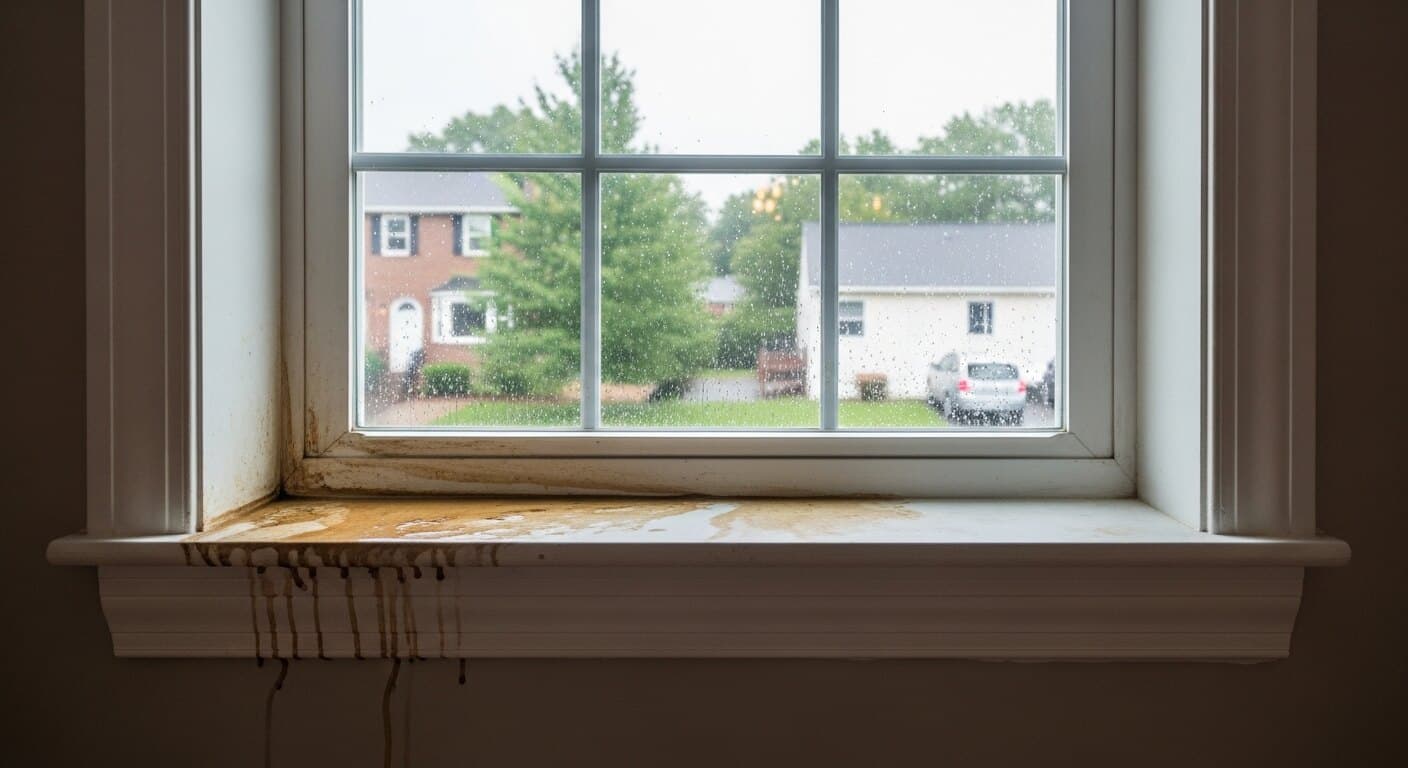
I will say the unpopular thing first, because it saves people the most money: the window is rarely the leak. As a realtor in older DC, Maryland, and Virginia homes, I have stood in plenty of water-stained rooms. The water was almost never coming through the glass or the sash. It was coming in above the window, behind the siding, through a drip cap someone left off, or through a bead of caulk that gave up three winters ago. Replacing the window before you find that path just buries the leak behind a brand-new unit.
This page is the order of operations I would give a family member: how to figure out where the water is actually entering, the cheap fixes to try first, when the flashing is the real problem, and the narrow case where the window itself has to come out. Let me walk it.
What causes window leaks
Window leaks are an entry-path problem, not usually a glass problem. Water gets behind the cladding above or beside the opening and finds the lowest, easiest route in, which is often the window because that is the biggest hole in that wall.
In our region's housing stock, four causes account for most of what I see:
- Missing or failed head flashing (drip cap). The metal cap above the window that sheds water out and away. It is frequently omitted on older homes or hidden under trim, and its absence is a top cause of leaks. This is an install defect, not a window defect.
- Reverse-lapped flashing or housewrap. When the layers above the window are tucked behind the layers below them instead of over them, water runs behind the barrier into the wall instead of shedding out. A correct install layers everything shingle-fashion so water always sheds outward.
- Failed exterior caulk. The perimeter bead between the window frame and the siding or brick cracks, shrinks, and pulls away over five to ten years, the service life InterNACHI's life-expectancy chart gives caulking. The cheapest, most common, and most overlooked culprit.
- Clogged or painted-over weep holes. The small slots on the bottom exterior of a vinyl or aluminum window are designed to drain water out. Painted shut or packed with debris, the sill fills and overflows inward.
The 2021 International Residential Code (Section R703.4) requires flashing at window openings to be applied shingle-fashion to prevent water entering the wall cavity, and where the manufacturer's installation instructions do not say otherwise, the code's fallback is pan flashing at the sill, sloped or designed to drain water back out. When a home leaks, one of those details was skipped or has failed.
How to find where window leaks are coming from
Diagnose the entry point before you fix anything, because the fix depends entirely on the path. Watch when and where the water shows up, then test the suspects from cheapest to most invasive.
Start with timing and location, which narrow it fast:
- Water only during wind-driven rain, appearing high or at the corners. Points to head flashing or the area above the window, not the window itself.
- Water pooling on the interior sill after any rain. Points to clogged weep holes, a failed sill seal, or perimeter caulk.
- Water down the wall below the window, sometimes far below. Points to flashing or siding above, with the water traveling down inside the wall before it shows.
Then test in order. Run a garden hose low on the window first (the sill and bottom), watch inside, then work upward to the sides and finally the top, pausing several minutes at each zone. The level where water appears inside is your entry path. Do this on a helper system: one person with the hose, one watching inside with a flashlight. If the water only appears when you hit the area above the window, the glass and sash are innocent and the flashing is guilty. For moisture that shows up between the panes rather than running down the frame, that is a different problem entirely, covered on our failed window seal and foggy windows pages.
Re-caulk, reflash, or replace: the order of operations
Work cheapest to most invasive, and stop the moment the leak stops. The right sequence is clear weep holes and re-caulk first, address flashing second, and replace the window only when the install or the unit itself is the failure.
Here is the decision ladder, with rough costs for our market:
| Fix | What it addresses | Invasiveness | Typical DC/MD/VA cost |
|---|---|---|---|
| Clear weep holes | Sill overflowing inward | None (DIY) | Free |
| Re-caulk perimeter | Cracked exterior seal | Low (DIY or handyman) | [data pending: DC/MD/VA handyman re-caulk cost per window; source local handyman quotes] |
| Replace/add head flashing | Missing or failed drip cap | Medium (siding work) | Varies by cladding |
| Reflash the opening | Reverse-lapped or absent flashing | High (siding removal) | Varies by cladding and access |
| Full-frame replacement | Rotted opening or failed unit | Highest | See pricing below |
The order matters because each step rules out the cheaper cause. Most leaks I trace are solved at the first two rungs: a clogged weep slot or a tired caulk bead. Caulk and weep holes are an afternoon and pocket change. Do not let anyone sell you a flashing job, much less a window, before those are ruled out.
Flashing repair is the middle ground people skip toward replacement too fast. If the window unit is sound but the head flashing is missing or the housewrap is reverse-lapped, the correct fix is to open the cladding above the window, install proper flashing shingle-fashion, and close it back up. That keeps your existing window and fixes the actual defect. It is real work, but it is far cheaper than a new window and it is the right call when the unit itself is fine.
One warning on the cheap end: do not try to solve a flashing failure with more caulk. I have seen homeowners run a fat bead of sealant across the top of a window to stop water coming from above, which traps the water inside the wall instead of letting the flashing shed it out. Caulk belongs on the perimeter joint between the frame and the cladding, not across a horizontal seam where water needs to drain. Sealing the wrong joint can turn a slow leak into hidden rot, because the water still gets in but now it cannot get back out. If the hose test points above the window, that is a flashing job, not a caulk job, full stop.
When a leaking window actually needs replacement
Replace the window when the opening has rotted, when the window is old enough that re-flashing means disturbing it anyway, or when the unit's own frame or seal has failed past repair. A leak alone is not a replacement trigger. A compromised opening is.
The honest replacement cases:
- The rough opening or sill has rotted. Once water has been getting in long enough to soften the framing around the window, you are past a caulk-and-flash fix. The opening has to be opened up, the rot remediated, and the window reset with new flashing. If you are already there, a new unit usually makes sense. Our rotted window frame page covers how to judge how far the rot has gone.
- The window is original and you would disturb it to reflash anyway. On a 30-year-old aluminum or early vinyl unit, if fixing the flashing means pulling the window, replacing it while the wall is open is often the smarter spend.
- The unit's own frame is cracked or the corners have separated. Rare, but it happens on older vinyl. If the frame itself is the entry path, the unit is the problem.
What does not justify replacement on its own: a single failed caulk bead, a clogged weep hole, or a missing drip cap on an otherwise sound window. I have watched homeowners spend on full-window replacement for a $15 problem because a salesperson framed any water as a dead window. In this market, a single replacement window installed runs roughly [data pending: OneStep installed single-window replacement price range, DC/MD/VA; source OneStep catalog/configurator], so the gap between a caulk fix and a replacement is large enough to be worth diagnosing carefully. For the broader numbers, see our cost to replace a single window and window replacement cost breakdowns.
Why older Mid-Atlantic homes leak more
Our region's housing stock makes leaks more common, not because the windows are worse, but because of how and when the homes were built. Older flashing standards, settling, and decades of repainting and recaulking all stack up.
DC row houses, Maryland colonials, and Virginia Cape Cods built before modern flashing details often never had a proper head drip cap or a sloped sill pan to begin with, because the codes that require them came later. Add half a century of settling that racks openings out of square, plus owner after owner caulking over the symptom instead of fixing the flashing, and you get walls where water has had a long time to find a path. South- and west-facing walls take the most wind-driven rain in our climate and leak first.
The other regional wrinkle is historic districts. If you are in Georgetown, Capitol Hill, Old Town Alexandria, or Annapolis's historic overlay, both your repair and any replacement may need to match approved materials and profiles, which affects what flashing and trim work is allowed and how long approval takes. Factor that into the timeline before you assume a quick fix. Our window installation guide walks the permit and historic-review layer in more detail.
Is OneStep right for you?
If you are not sure whether your leak is a caulk problem, a flashing problem, or a window problem, that is the exact question to settle before you spend. You can ask Zig to walk you through the hose test and the entry-path logic, or price a replacement on your real openings if the diagnosis points that way.
See it on your own house first
Preview a clean replacement on a photo of your actual window and get itemized pricing before you decide.
Frequently asked questions
Why is water leaking around my window but not through the glass?
Because the leak is almost always the install, not the window. Water gets behind the siding above or beside the opening through missing head flashing, reverse-lapped housewrap, or failed perimeter caulk, then runs to the window because it is the largest gap in that wall. The glass and sash are usually innocent.
How do I find where my window is leaking from?
Run a garden hose on the window from the bottom up, pausing several minutes at the sill, then the sides, then the top, while a helper watches inside with a flashlight. The zone that makes water appear inside is your entry path. If it only leaks when you spray above the window, the flashing is the cause, not the window.
Can I just caulk a leaking window to fix it?
Often yes, if the leak is a cracked perimeter caulk bead, which is the most common and cheapest cause. Clear the weep holes and re-caulk the exterior perimeter first. If water still gets in after that, the problem is higher up in the flashing, and caulk will not fix a flashing failure.
What are weep holes and why do they matter for window leaks?
Weep holes are small drainage slots on the bottom exterior of vinyl and aluminum windows that let collected water drain back out. When they are painted shut or clogged with debris, the sill fills and overflows inward, which looks like a leak. Clearing them is a free first fix to try.
Does a leaking window mean I need to replace it?
Usually not. A leak alone is not a replacement trigger. Replace the window only when the rough opening or sill has rotted, when the unit's own frame has cracked or separated, or when fixing the flashing means disturbing an old window you would rather replace anyway.
Why do older DC, Maryland, and Virginia homes leak more around windows?
Many were built before modern flashing codes required a head drip cap and a sloped sill pan, so those details were never there. Decades of settling rack the openings out of square, and owners often caulk over the symptom instead of fixing the flashing, letting water find a path over time.
Next step
The cheapest move with a leaking window is to diagnose the entry path before you spend, because the fix ranges from a free weep-hole clearing to a full replacement. If your diagnosis points to the window or a rotted opening, get an itemized number on your actual home before any rep uses the water damage to push you.
Start your measurement in 5 minutes
Snap a photo with your phone, get AI measurements and an honest price — no salesperson, no in-home pitch.
Keep diagnosing: the full window problems hub sorts every symptom from repair to replace, the rotted window frame and cracked pane pages cover the next decisions down this path, and the person behind every page here is Anthony Moorman.