Foggy windows: should you repair or replace them?
Foggy windows mean the seal between the two panes of glass has failed and moisture is trapped inside the sealed unit. You cannot wipe it away or reseal it reliably. Your two real options are replacing just the insulated glass unit (cheaper, if the frame is sound) or replacing the whole window. Which is right depends on the frame's condition, the warranty, and how many windows are affected.

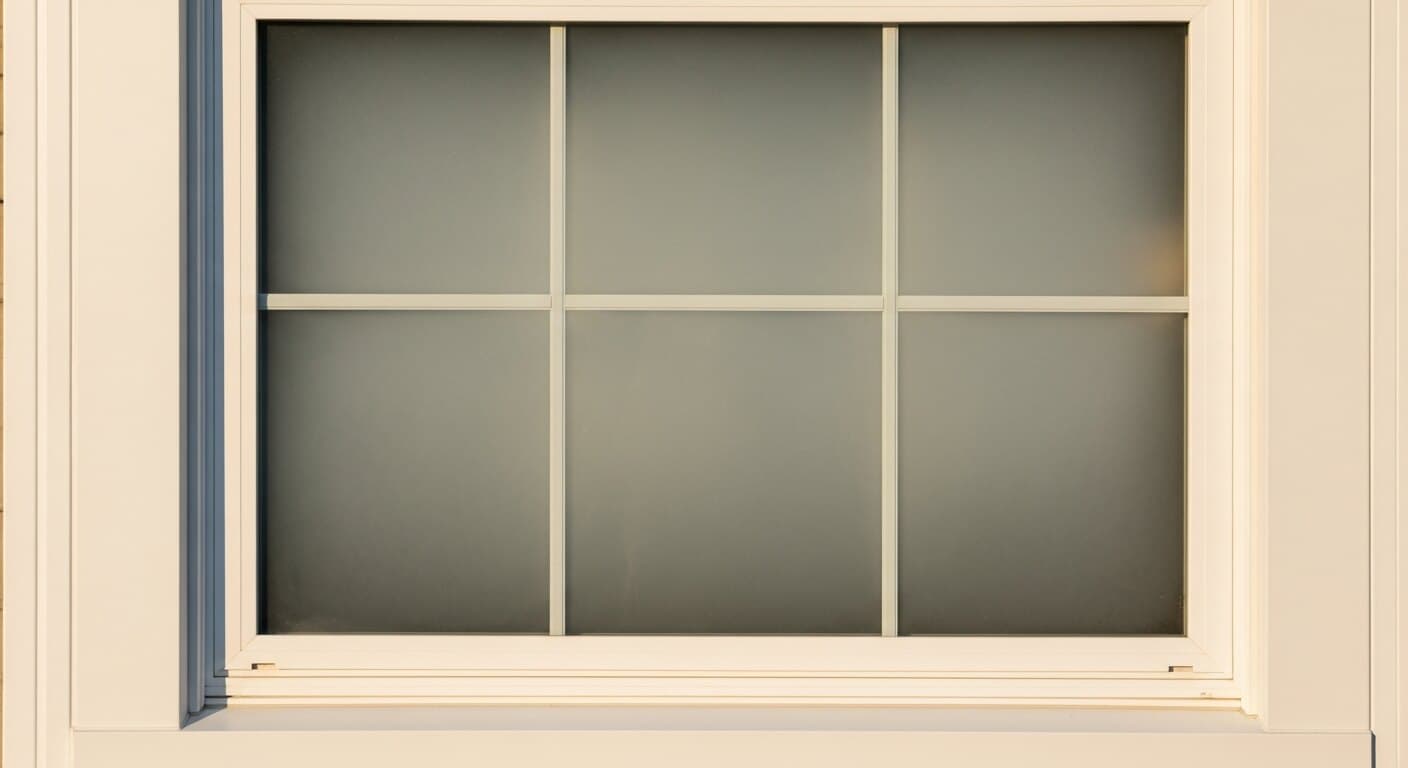
In 12 years selling real estate across DC, Maryland, and Virginia, I learned to spot a fogged pane from the curb. Home inspectors catch every one of them, and they end up in writing. That is the lens I am writing from here: not just what is physically wrong with a foggy window, but what it costs you when an inspector or a buyer puts it on a report. The good news is the fix is usually smaller and cheaper than the panic suggests.
Let me walk through what causes it, which repair is right for your situation, what each path costs in this market, and how a fogged unit actually plays out when you sell.
What causes foggy windows between the panes?
Foggy windows are caused by a failed seal in the insulated glass unit (IGU), the double- or triple-pane sandwich that makes up modern glass. Once that seal breaks, outside air and humidity get into the space between the panes, condense, and leave the haze you cannot clean off.
Think of the glass as a sandwich, not a single slice. Two (sometimes three) panes sit a fixed distance apart, held by a spacer around their edges, and the cavity between them is filled with dry air or argon and sealed shut. That dry, captive pocket of gas is the part that actually insulates. When the edge seal lets go (age, years of heat cycling, a weak original build, or water pooling in the frame), the pocket stops being airtight. Outdoor humidity creeps in, our Zone 4 mixed-humid swings condense it against the cold inner faces of the glass, and the result is fog, streaks, or a chalky film that no amount of Windex touches.
Two things to know up front. First, the fog confirms the seal is gone; there is no spray, tape, or trick that reliably restores a failed IGU. Second, a fogged unit has also lost most of its insulating gas fill, so the window is now performing closer to plain glass than the energy-rated unit you paid for.
Can you repair a foggy window, or do you have to replace it?
You can repair a foggy window without replacing the whole unit in most cases, as long as the frame and sash are sound. The standard fix is replacing only the insulated glass unit, not the entire window. A new IGU goes into your existing frame and restores the sealed, gas-filled cavity.
The script I was handed for a fogged pane was simple: treat the haze as proof the whole window failed, and its neighbors as next in line. Nobody taught us to mention the warranty claim or the glass-only swap. A covered pane closes no sale.
Here is the honest decision tree I would give a friend:
Replace the glass (IGU)
Frame and sash are solid, one or two windows affected. A new sealed unit drops into your existing frame. This is the cheaper, faster path and it is the right call when the rest of the window is in good shape.
Replace the window
Frame is rotted, swollen, racked, or the window barely operates. Dropping fresh glass into a failing frame is throwing good money after bad, and it hides rot you will pay for later.
The window is still under a glass/seal warranty? File the claim first. Many manufacturers cover seal failure for years (more on that below), and a covered claim can make the glass itself free.
- Many windows are fogging at once: Run the math on a whole-home replacement. Seals can give out well inside a window's life (InterNACHI puts insulated glazing at 8 to 20 years), and in the houses I sold in, fog rarely showed up alone on an aging set. Once you are paying for several glass swaps on old, low-efficiency frames, full replacement often wins on both energy and resale.
How much does it cost to fix a foggy window?
Fixing a foggy window usually costs less than the panic suggests, because glass-only is the common path. National cost aggregators land glass-unit (IGU) replacement somewhere around $150 to $500 per window, while a full replacement window installed runs closer to $400 to $1,200. The shorthand worth remembering: the glass swap tends to come in 50 to 70 percent below replacing the whole unit.
Treat those as national brackets, not a quote for this market, because the real number swings with glass size, double- versus triple-pane, the Low-E and argon spec, and how hard the sash is to pull. A small bathroom unit sits at the bottom of the range; a large picture-window sheet in tempered, gas-filled, Low-E glass sits at the top and takes longer to source. For what this works out to on a single opening in our area, see [data pending: OneStep DC/MD/VA installed price range for single-window replacement vs glass-only IGU swap].
The math that actually decides it is per-window cost times the number of foggy windows, weighed against a whole-home number. One fogged unit in a sound frame is almost always a repair. Say six units have fogged across an aging set: that usually pushes you toward replacement, where you also reset the energy performance and the warranty clock. For the full picture on either path, see the cost to replace a single window and the cost to replace all the windows in a house.
Will my warranty cover the failed seal?
Often, yes, and checking is free, so make it your first move before you reach for your wallet. A failed seal is one of the most routinely warranted window defects there is, with manufacturer coverage that commonly runs 10 to 20 years from the install or manufacture date. Andersen and Marvin both publish 20-year seal coverage, and Simonton's builder lines run 15.
Coverage is tiered and worded carefully, so read your actual document rather than the marketing. A few patterns worth knowing:
- The seal usually carries the longest term on the page. Andersen and Marvin, to name two, warrant the sealed glass for 20 years while their hardware terms run far shorter, because seal failure is a defect they expect and price for.
- Watch the parts-versus-labor split. In the warranties I explained to homeowners as a rep, "lifetime" rarely covered the labor to come out and install the new glass; Andersen's written warranty, for one, excludes installation labor outright. The pane itself can be free while the service visit and reinstallation are entirely on you.
- Registration is rarely the ballgame people fear. The big brands' published warranties (Pella, Andersen, Milgard, and Simonton among them) treat registration as optional, not a condition of coverage; payment and proper installation are what actually gatekeep a claim. Still, read what your own document says.
- A transferable seal warranty has resale value here. Some coverage passes to the next owner intact and some evaporates at sale. In a market that turns over as fast as DC/MD/VA, the transferable version is a small but genuine selling point.
If you do not know the brand or age of your windows, a window pro can often identify the unit from spacer marks, etched logos, or the date stamp in the glass corner. Worth doing before you assume the repair is out of pocket. Our window consultant Zig can also help you read the major brands' seal-failure language if you have a warranty document in hand.
Are foggy windows worth fixing, or should I just live with them?
If the fog bothers you, the window is in a visible room, or you are within a few years of selling, fixing foggy windows is worth it. A fogged unit is not a safety problem, but it is a visible, documented defect that costs you on resale and quietly raises your energy bills.
Here is what living with it actually costs. First, energy: a failed seal has lost its insulating gas fill, so that opening now leaks more heat in winter and more cooling in summer than the rated window did. One window is marginal; several add up. Second, appearance: in a kitchen, living room, or any street-facing window, the haze reads as neglect even when the rest of the house is immaculate. Third, and this is the real-estate-agent point, it does not stay your secret. The fog gets worse over time as more moisture cycles in, and it is one of the easiest things in the house for a buyer or inspector to spot.
The counterpoint, honestly: a single fogged pane in a basement or a rarely-seen window, on a house you plan to keep for years, is a reasonable thing to defer. It will not damage the structure. Just know that deferring is a choice to accept the small energy penalty and the eventual repair, not a way to make the problem go away.
What a foggy window does to your home's value
A foggy window rarely tanks a sale on its own, but it almost always ends up on the inspection report, and anything on that report becomes a negotiation line item. Buyers read fog as deferred maintenance and assume there is more they cannot see.
This is the part I watched play out across years of transactions in this market. A home inspector will note every fogged pane in the report, usually by room, sometimes with photos. Once it is in writing, the buyer's agent has a lever. The typical outcome is not the deal collapsing; it is a credit request, and the credit a buyer asks for is frequently larger than what the repair would have cost you to handle quietly before listing. On average, a fogged-pane line item costs a seller roughly [data pending: typical buyer credit or price concession for a fogged insulated glass unit at closing in DC/MD/VA, from agent/inspector data] at the table.
There is also a perception cost that does not show up as a number. Several foggy windows across a house signal "the windows are old and neglected," which makes a buyer mentally tally a full replacement project and discount accordingly, even if only a few units have actually failed. If you are listing within a year or two, clearing visible fogged panes is usually cheap insurance against a much larger imagined deduction. If you want to see what a clean replacement would look like on your actual house before you list, you can preview styles and get itemized pricing in the configurator.
See it on your own house first
Preview a clean replacement on a photo of your actual window and get itemized pricing before you decide.
Foggy windows vs other window moisture: don't misdiagnose it
Make sure the moisture is actually between the panes before you pay to replace glass. Condensation on the inside surface of the glass (a room-humidity problem) and condensation on the outside surface (harmless, weather-driven) are not seal failure and do not call for glass replacement.
Quick test: if you can wipe the moisture off, it is on a surface you can reach (inside or outside the glass) and your seal is fine. If the haze is locked between the panes and no cleaning touches it, that is a failed IGU. Getting this right saves you from replacing glass that was never the problem.
- Between the panes, cannot wipe it: Failed seal. This page's fix applies.
- Inside surface, in winter, wipeable: Indoor humidity meeting cold glass. Usually a ventilation or humidity issue, not the window.
- Outside surface, on cool mornings: Dew on energy-efficient glass. Counterintuitively, this often means the window is sealing heat in well. Nothing to fix.
For a full diagnosis of which moisture is which and what each one means, see the window condensation guide and, if the symptom is really just seal-related haze, the deeper write-up on failed window seals. For the broader list of window issues and how to tell repair from replacement, the window problems hub is the place to start.
Is OneStep right for you?
Frequently asked questions
Why is my window foggy between the panes?
The seal around the insulated glass unit has failed, letting humid air into the space between the panes where it condenses. It happens from age, heat cycling, manufacturing defects, or water sitting in the frame. Once the seal is gone, the fog cannot be cleaned off because the moisture is sealed inside the glass.
Can a foggy window be fixed without replacing the whole window?
Yes, in most cases. If the frame and sash are sound, a glass professional can replace just the insulated glass unit and leave your existing frame in place. Full window replacement is only necessary when the frame is rotted, warped, or the window no longer operates properly.
How much does it cost to fix a foggy window?
National third-party estimates put glass-only insulated glass unit replacement around 150 to 500 dollars per window, versus roughly 400 to 1,200 dollars for a full replacement window installed. Glass-only typically runs 50 to 70 percent less. The actual figure depends on glass size, pane count, the Low-E and argon package, and your local market.
Does a window warranty cover a failed seal?
Often yes. Insulated glass seal failure is one of the most commonly warranted defects, with coverage commonly running 10 to 20 years: Andersen and Marvin each cover seals for 20 years, and Simonton's builder lines for 15. Check the document for the term length, the parts-versus-labor split, and any proration, then file the claim before paying out of pocket.
Do foggy windows fail a home inspection?
A foggy window will not fail an inspection in a pass/fail sense, but a home inspector will note every fogged pane in the report. Once it is documented, buyers commonly use it to request a repair credit, which is why many sellers fix visible fogged panes before listing.
Are foggy windows a sign I need to replace all my windows?
Not necessarily. One or two fogged units in sound frames usually just need glass replacement. But if many windows are fogging at once, the set may be aging out together; InterNACHI puts insulated glazing at 8 to 20 years, so clustered failures are usually telling you something, and a whole-home replacement may make more sense on cost, energy, and resale.
Can foggy windows be dangerous?
No. A failed seal is a performance and appearance problem, not a safety hazard. The glass is still intact and the window still functions. The downsides are reduced energy efficiency from the lost gas fill and the visible haze, not any structural or health risk.
Next step
One or two fogged panes in good frames? Call a glass shop and have the insulated units swapped; that is the whole job. If the fog is really the loudest symptom of windows that are aging out across the house, run the numbers on your own openings first so the replace decision is yours, not a salesperson's.
Start your measurement in 5 minutes
Snap a photo with your phone, get AI measurements and an honest price — no salesperson, no in-home pitch.
Keep diagnosing: the window problems hub covers every common window issue, the energy-efficient windows guide explains the Low-E and argon performance a failed seal gives up, and you can ask Zig which fix fits your specific window. The person behind every page on this site is Anthony Moorman.