Energy-efficient windows: a homeowner's complete guide
Energy-efficient windows are about two numbers on a label, not a brand on a TV ad. For a DC, Maryland, or Virginia home (IECC climate zone 4, mixed-humid) you want a low U-factor so the window insulates against winter cold, and a balanced SHGC so it blocks summer solar heat without making the house dark and cold in January. Low-E coatings and argon fill are how a window hits those numbers.

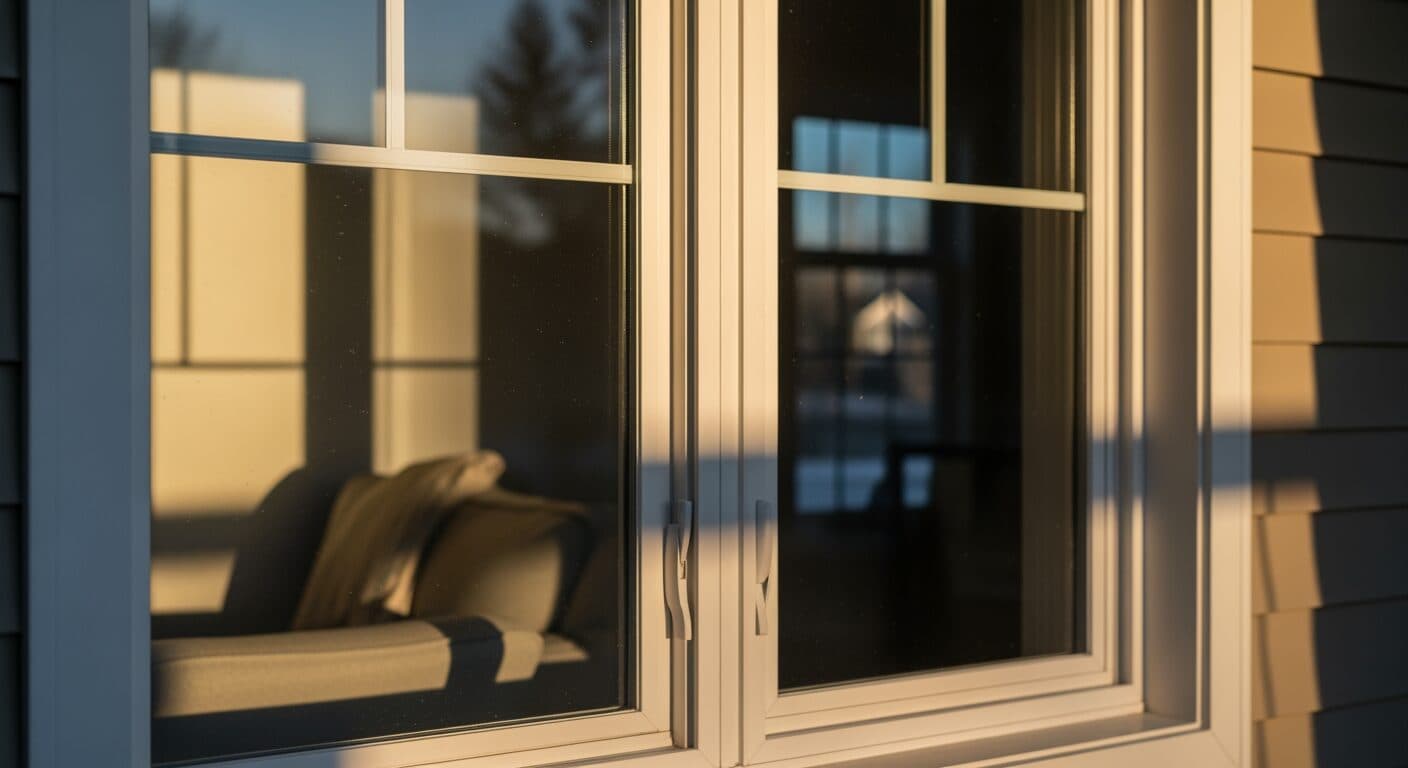
Most homeowners come to energy efficiency after a comfort problem, not a spreadsheet. A bedroom that never warms up. A west-facing living room that bakes from 3pm on. A draft you can feel from across the couch. The windows are usually a real part of that. But the in-home pitch will sell you the wrong fix at the wrong price, because the whole conversation gets reduced to "double-pane vs triple-pane" and "is it ENERGY STAR certified," which barely scratches what actually matters.
This guide is the version I wish every homeowner had before their first quote. I spent 2.5 years selling efficient glass packages inside Renewal by Andersen, so I know which numbers a rep leans on and which ones they hope you skip. By the end you'll be able to read an NFRC label, know which numbers matter for our climate, and tell a real efficiency upgrade from a marked-up one.
What makes energy-efficient windows efficient
An energy-efficient window controls heat flow in both directions: it slows heat escaping in winter and blocks unwanted solar heat in summer. Four things determine how well it does that. The glass coating, the gas between the panes, the number of panes, and the frame material and seal.
The single window unit is a system. Two panes of glass trap an insulating gas. A microscopically thin Low-E coating on the glass reflects radiant heat. A spacer holds the panes apart and seals the gas in. The frame surrounds it all and is often the weakest insulating link. Change any one of these and the rated performance changes, which is why two windows that look identical in a showroom can perform very differently.
Heat moves through a window three ways, and an efficient unit has to fight all three. Conduction is heat traveling straight through the solid frame and the glass; convection is heat carried by air or gas circulating inside the sealed cavity; radiation is infrared heat passing through the glass as energy. The gas fill and the spacer slow conduction and convection across the gap, the Low-E coating reflects the radiant share, and the frame material decides how much heat shortcuts straight through the perimeter. When a salesperson talks only about "the glass," they're describing one of those three paths and quietly skipping the frame and the seal, which is where a lot of real-world performance is won or lost.
The performance gets measured and printed on a standardized label by the National Fenestration Rating Council (NFRC), so you can compare a budget vinyl unit and a premium fiberglass one on the same scale. NFRC ratings are independently certified, which is what makes them more trustworthy than a brochure's marketing claims: the rating council, not the manufacturer's copywriter, signs off on the number. The rest of this guide walks through each number on that label and what it means for a home in our region.
U-factor: how well the window keeps heat in
U-factor measures how much heat escapes through the whole window. Lower is better. It's the number that matters most for winter comfort and heating bills in DC, Maryland, and Virginia, because our cold season is long enough that heat loss dominates.
Think of U-factor as the inverse of insulation. A wall's insulation is rated by R-value, where higher means more resistance to heat flow. U-factor is the flip side: it measures heat transmission, so a lower U-factor means the window leaks less heat. NFRC rates U-factor for the whole window assembly (glass, frame, and spacer together), not just the center of the glass, which is the honest way to measure it. Some manufacturers quote a flattering "center-of-glass" number; always check that the U-factor you're comparing is the full-unit NFRC rating.
For our climate zone, you want the lowest U-factor your budget allows, because heat loss through windows is a steady drain all winter. ENERGY STAR sets a maximum U-factor a window must hit to qualify in the Northern and North-Central zones that cover our region. For the North-Central zone, the current threshold under the ENERGY STAR Version 7.0 specification is a U-factor of 0.25 or lower. A standard older double-pane window without a good Low-E coating performs far worse than a modern qualifying unit, and a clear single-pane window (common in pre-1980 DC row houses and older MD and VA homes) is worse still.
U-factor is also where the glass package, gas fill, and frame all show up in a single number, so it's the cleanest way to compare two windows' insulating ability at a glance. When you're weighing quotes, line up the NFRC U-factors first: if a more expensive window has a higher (worse) U-factor than a cheaper one, the price is buying something other than insulation, whether that's looks, a brand, or a warranty, and you should know that before you pay for it.
A worked example makes this concrete. Say one quote shows a U-factor of 0.30 and a second shows 0.27 on a similar window: that lower number means the assembly loses heat more slowly, so it holds interior warmth better through a long DC winter. The gap looks small on paper but it compounds across every window and every cold hour of the season, which is why lining up U-factors before you compare anything else keeps the comparison honest. The catch is that U-factor alone never tells the whole story, because a window can post a strong U-factor and still feel drafty if the assembly leaks air, which is exactly why the next section pulls in the two numbers most reps never mention.
SHGC: how much solar heat the window lets in
Solar Heat Gain Coefficient (SHGC) measures how much of the sun's heat passes through the glass. On the NFRC rating scale it runs from 0 to 1. Lower means less solar heat comes in. In a mixed-humid climate like ours, this is the number people get wrong most often.
A hot-climate home in Phoenix wants the lowest SHGC possible to keep the sun out year-round. A cold-climate home in Minnesota might want a higher SHGC to capture free solar heat in winter. We're in between (climate zone 4, mixed-humid) so we want a balanced SHGC: low enough to tame a west-facing room in August, high enough that we still get some passive warmth in January. Pushing SHGC too low to fight summer heat can leave the house colder and gloomier in winter than it needs to be.
ENERGY STAR's criteria for our region reflect that balance. The current qualifying SHGC for the North-Central zone, under the ENERGY STAR Version 7.0 specification, is 0.40 or lower. Orientation matters too: a low-SHGC package makes the most sense on the south- and west-facing windows that take the afternoon sun, and matters less on north-facing openings that never get direct light. If you're unsure which glass package fits which side of your house, ask Zig: our window consultant can walk through it by orientation.
VT and air leakage: the two numbers people skip
Visible Transmittance (VT) measures how much daylight comes through; Air Leakage (AL) measures how much air passes through the assembly. Both appear on the NFRC label and both quietly affect how a window feels day to day.
VT runs 0 to 1 on the NFRC label, where higher means more natural light. There's a real tension with SHGC: the coatings that block solar heat can also dim the room. Modern "spectrally selective" Low-E coatings are designed to keep VT high while pulling SHGC down, and that's the engineering you're paying for in a better glass package. If a room feels cave-like after a window upgrade, a too-aggressive low-SHGC coating with poor VT is often why.
Air Leakage is the one almost nobody asks about. It's measured in cubic feet per minute per square foot of window, and lower is better. A window can have an excellent U-factor and still feel drafty if the assembly leaks air around the sash. This is where window type matters as much as glass: a casement seals tightest because the sash compresses against the frame when you crank it shut, while a double-hung relies on weatherstripping at a sliding joint. Typical AL ratings for a quality replacement window fall around [data pending: typical Air Leakage rating range, cfm/ft², quality replacement window].
Low-E coatings and gas fills: how a window hits its numbers
Low-E (low-emissivity) coatings and inert gas fills are the two upgrades that turn an ordinary insulated window into an efficient one. The Low-E coating handles radiant heat; the gas fill slows conductive heat transfer through the air gap.
A Low-E coating is a microscopically thin metallic layer on the glass that reflects radiant heat back toward its source: heat stays inside in winter, solar heat bounces off in summer. Coatings come in different "tints" and layer counts tuned for different climates, which is how the same frame can be configured for a hot climate or a cold one. The number of silver layers in the coating is the rough shorthand here: a single-silver Low-E leans toward letting solar heat in, a double- or triple-silver coating rejects more of it while keeping the glass clear, and the more aggressive the solar rejection, the more the visible light can suffer if the coating isn't well engineered. Most quality replacement windows in our region use a Low-E package designed for the balanced SHGC zone 4 wants, which usually lands in the double-silver range rather than the extreme low-SHGC coatings made for the Deep South.
Gas fills replace the air between the panes with a denser, less conductive inert gas, usually argon, occasionally krypton in thinner triple-pane gaps. The gas slows heat moving across the cavity because it's heavier and more sluggish than air, so it convects less inside the sealed space. Argon is standard and inexpensive; krypton performs slightly better per inch but costs more and is mainly used where pane spacing is too narrow for argon to work well, which is exactly the situation in a tight triple-pane gap. A point worth knowing: the industry rule of thumb, derived from ASTM E2190 durability testing, is that insulated glass units lose roughly one percent of their gas fill a year through the seal, so a failed seal eventually means lost argon and a foggy, underperforming window. The spacer that holds the panes and seals the gas matters too. "Warm-edge" spacers insulate better than the old aluminum ones, which conducted cold straight across the glass edge and showed up as condensation along the bottom of the pane on cold mornings, and the warm-edge version is a real but rarely discussed contributor to the rated U-factor.
The frame and the seal: the part the label doesn't fully capture
The frame material and the quality of the seal are the parts of an energy-efficient window that the glass numbers don't tell the whole story about. NFRC's whole-window U-factor does fold the frame in, but two units with the same rated U-factor can age very differently depending on the frame and how well it's built.
The frame is often the weakest insulating element of the assembly. Solid aluminum frames conduct heat badly and are nearly extinct in residential replacement for that reason. Vinyl, fiberglass, and composite frames insulate far better. Vinyl frames are hollow and sometimes foam-filled for extra resistance, while fiberglass expands and contracts at nearly the same rate as the glass it holds, which helps the seal survive decades of temperature swings. Material choice is partly an efficiency decision and partly a longevity and looks decision; the deeper trade-offs live in our window materials guide. For our climate, any of the modern non-metal frames will support a qualifying U-factor, so the bigger variable is build quality, not the headline material.
The seal is what keeps the argon in and the moisture out. The insulated glass unit is sealed at the edges, and that seal is the single most common long-term failure point: when it goes, the gas fill leaks out, condensation forms between the panes, and the window's real-world performance quietly degrades below its rated numbers. Warm-edge spacers (the strip that holds the panes apart) both insulate the glass edge better than old aluminum spacers and tend to hold the seal longer. When you compare windows, the warranty on the seal (the glass unit specifically, separate from the frame) is one of the few specs that predicts how long the rated efficiency will actually last. A 20-year seal warranty and a 5-year seal warranty on otherwise-similar units are telling you something real about the manufacturer's confidence. This is also why I push people to read the warranty's fine print: a long headline term that quietly excludes labor, or that prorates the glass coverage after a few years, protects you a lot less than the big number suggests, and seal failures rarely show up until well past the point a salesperson is still returning your calls.
Double-pane vs triple-pane: is the third pane worth it here?
Double-pane with a good Low-E coating and argon fill is the right default for most DC/MD/VA homes. Triple-pane improves the U-factor further and cuts noise, but the added cost and weight only pay off in specific situations in our climate.
A third pane adds another insulating gas gap and another glass surface for a Low-E coating, so it meaningfully lowers U-factor, most useful in colder zones (5 and up) where heat loss is severe. In zone 4, the energy savings of triple over double are real but modest, and the payback period stretches because our winters aren't extreme enough to recover the upcharge quickly. Where triple-pane earns its keep here is noise: homes near a busy road, a flight path, or Metro tracks get a genuine acoustic benefit, because the extra pane and the asymmetric glass thicknesses interrupt sound waves more effectively than a matched double-pane. Triple-pane is also heavier, which can matter for large operating sashes, where the added weight makes a casement harder to crank or a double-hung harder to raise over the years.
| Feature | Double-pane (Low-E + argon) | Triple-pane (Low-E + argon/krypton) |
|---|---|---|
| Panes / gas gaps | 2 panes, 1 gas gap | 3 panes, 2 gas gaps |
| U-factor | Lower (better) than single/clear double | Lower still (best insulation) |
| Best climate fit | Zone 4 (DC/MD/VA) default | Colder zones; noisy locations in zone 4 |
| Noise reduction | Good | Better |
| Weight | Standard | Heavier (matters on large sashes) |
| Relative cost | Baseline efficient package | Upcharge of [data pending: triple-pane upcharge over double-pane, % or per-window range] |
| Payback in zone 4 | Faster | Slower (modest energy delta here) |
For the full cost breakdown, see triple-pane window cost and the broader energy-efficient window cost guide.
How to read the NFRC label
Every certified window carries an NFRC label, and learning to read it is the single most useful skill for comparing quotes. It lists U-factor, SHGC, VT, and Air Leakage in a fixed format, so you can compare any two windows on the same scale regardless of brand.
The NFRC label is the white-and-black sticker on the glass of a sample or new unit. It shows the manufacturer and product, then the four numbers in a consistent layout: U-factor and SHGC on top (the two that matter most), VT and AL below. Because NFRC ratings are independently certified to a single standard, they cut through marketing, and a "premium" window with a worse U-factor than a "value" one is telling you something the brochure won't. The trap to watch for is glass-package substitution: a brand's flagship line might advertise a strong U-factor on its best coating, but the price you were quoted may be for a lower-tier glass package with weaker numbers. When a rep hands you a spec sheet, ask to see the actual NFRC numbers for the exact glass package being quoted, not the brand's best-case configuration, and confirm the model and option codes on the label match what's written on your contract.
| NFRC label number | What it measures | Better direction | What it controls for you |
|---|---|---|---|
| U-factor | Whole-window heat loss | Lower | Winter warmth, heating bill |
| SHGC | Solar heat let in | Lower (balanced in zone 4) | Summer heat, AC load |
| VT | Daylight let in | Higher | How bright the room feels |
| Air Leakage | Air passing the assembly | Lower | Drafts, comfort |
ENERGY STAR uses these same NFRC numbers as its pass/fail criteria, which is the link between the two systems, and more on that next.
ENERGY STAR and what it means for zone 4
ENERGY STAR certification means a window meets the EPA's efficiency criteria for a given climate zone, using its NFRC-rated U-factor and SHGC. For DC, Maryland, and Virginia, which fall in ENERGY STAR's North-Central zone, certification is a reliable shortcut to "efficient enough for our climate."
The criteria are zone-specific by design: a window certified for the South may not qualify in the North, because the U-factor and SHGC targets differ by climate. The program was updated to Version 7.0, which tightened the requirements over earlier versions, so a window certified years ago under an older spec isn't automatically certified today. When you check certification, confirm it's against the current criteria for the North-Central zone, not a stale or different-zone label. The exact qualifying numbers for the North-Central zone under Version 7.0, as noted in the U-factor and SHGC sections above, are a U-factor of 0.25 or lower and an SHGC of 0.40 or lower.
One honest note on incentives: the federal §25C energy-efficient home improvement tax credit, which historically gave a credit toward qualifying ENERGY STAR windows, expired for installs placed in service after December 31, 2025 under the One Big Beautiful Bill Act (Public Law 119-21). If a salesperson tells you the federal window tax credit will offset your project in 2026, that is no longer accurate. ENERGY STAR certification still matters, because it's the performance benchmark and it's what utility and state rebate programs key off, but the federal credit itself is gone. Check for current utility or state rebates instead; available amounts in our area are [data pending: current DC/MD/VA utility or state window rebate amounts, 2026].
What energy-efficient windows realistically save you
Energy-efficient windows lower heating and cooling bills, but the payback is slow (usually measured in years, not months) and comfort is the more honest reason to upgrade. Anyone promising your windows will "pay for themselves" quickly is selling, not estimating.
When the conversation in a homeowner's den narrowed to double versus triple pane, that was rarely an engineering discussion. The glass upgrade was the most profitable lever I had, the one line where the price could climb without the window looking any different on the wall. So every comfort complaint got steered toward more glass, because that was where the margin lived. The honest version is that the right coating on a double-pane package solves most zone 4 problems.
Windows are a modest share of a home's total heat loss compared to attic insulation and air sealing, so replacing them rarely produces a dramatic line-item drop on a utility bill. The energy savings are real but gradual; the change most homeowners actually notice is comfort, like no more cold draft by the couch, no more west-facing room you can't use in the afternoon, and less outside noise. Estimated annual savings depend heavily on what you're replacing: going from single-pane or failed-seal windows to a modern Low-E package saves far more than upgrading already-decent double-pane. A realistic annual energy savings range for a full-home upgrade in our region is [data pending: estimated annual energy savings range, full-home efficient window upgrade, DC/MD/VA], with a simple payback of [data pending: simple payback period range, efficient window upgrade, zone 4].
That said, if your only goal is the fastest energy payback, windows are usually not the first dollar to spend, because air sealing and attic insulation almost always return faster. Windows win on comfort, looks, noise, and fixing failed units. Be honest with yourself about which of those you're actually buying.
A few things shift the math in windows' favor. If your current windows are single-pane, have failed seals, or are old aluminum frames that sweat and conduct cold, the jump to a modern Low-E package is large enough that comfort and savings arrive together. Replacing the whole house at once also spreads the fixed mobilization cost across more units, which lowers the per-window price and shortens the payback versus doing a few at a time. And if you're already replacing windows for looks or because units have failed, the incremental cost of choosing an efficient glass package over a base one is small, so at that point the efficiency upgrade pays back fast because you're only counting the upcharge, not the whole window. The mistake is buying windows primarily for energy savings on a house that already has decent double-pane; that's where the payback math disappoints. For a full cost picture by tier and configuration, see the energy-efficient window cost and window replacement cost guides.
See it on your own house first
Preview a clean replacement on a photo of your actual window and get itemized pricing before you decide.
Frequently asked questions
What is a good U-factor for windows in DC, Maryland, or Virginia?
Lower is better, and for climate zone 4 you want the lowest U-factor your budget allows since winter heat loss dominates. The ENERGY STAR Version 7.0 specification sets the qualifying maximum for the North-Central zone at a U-factor of 0.25, and always compare the whole-window NFRC U-factor rather than a flattering center-of-glass number.
What SHGC should I look for in a mixed-humid climate?
A balanced SHGC, low enough to block summer solar heat on west- and south-facing windows, high enough to keep some passive winter warmth. DC, MD, and VA are zone 4, mixed-humid, so the North-Central ENERGY STAR package is usually the right compromise rather than the lowest possible SHGC.
Are triple-pane windows worth it in the DC area?
For most zone 4 homes, no. Double-pane with a good Low-E coating and argon is the efficient default, and triple-pane's energy edge here is modest with a slow payback. Triple-pane earns its cost mainly for noise reduction near busy roads, flight paths, or Metro lines.
Do Low-E coatings make rooms darker?
They can, but good ones don't. Spectrally selective Low-E coatings are engineered to lower solar heat gain (SHGC) while keeping visible light (VT) high. If a room felt much darker after a window upgrade, an overly aggressive low-SHGC coating with poor VT is the likely cause.
Is there still a federal tax credit for energy-efficient windows in 2026?
No. The federal §25C energy-efficient home improvement credit expired for installs placed in service after December 31, 2025 under the One Big Beautiful Bill Act (Public Law 119-21). ENERGY STAR certification still matters for performance and for utility or state rebate eligibility, but the federal credit itself is no longer available.
How much will energy-efficient windows lower my utility bill?
Less dramatically than the pitch suggests. Windows are a modest share of total home heat loss, so the savings are gradual and the payback runs years, not months. The bigger, more reliable payoff is comfort, like fewer drafts, livable west-facing rooms, and less noise, especially when replacing single-pane or failed-seal windows.
What is the NFRC label and why does it matter?
It's the independently certified sticker listing a window's U-factor, SHGC, VT, and Air Leakage on one standard scale. Because every certified window is rated the same way, it lets you compare any two units honestly regardless of brand or marketing claims.
Next step
The fastest way to see efficient glass packages on your actual home (with U-factor and SHGC differences and transparent pricing) is our 3D configurator. It pulls up your house, lets you compare double- and triple-pane packages side by side, and gives you an itemized number with no phone call and no rep coming over.
Get an honest price, no salesperson
Tell us your address and window and get itemized pricing — no in-home pitch, no surprises.
For the full picture, the complete guide to replacement windows covers the whole project, how to choose a window type maps types to rooms, and window materials compares vinyl, fiberglass, and wood. Our full homeowner library lives at /guides, the commercial overview is at /window-replacement, and the person behind every page on this site is at /about/anthony-moorman.