Window materials: how to choose the right frame
The four window materials worth your time are vinyl, fiberglass, composite, and wood. Vinyl wins on value, fiberglass on durability per dollar, composite splits the difference, and wood on looks. For most DC, Maryland, and Virginia homes in our mixed-humid climate, vinyl or fiberglass is the right answer. Wood earns its premium only on historic and high-end homes.

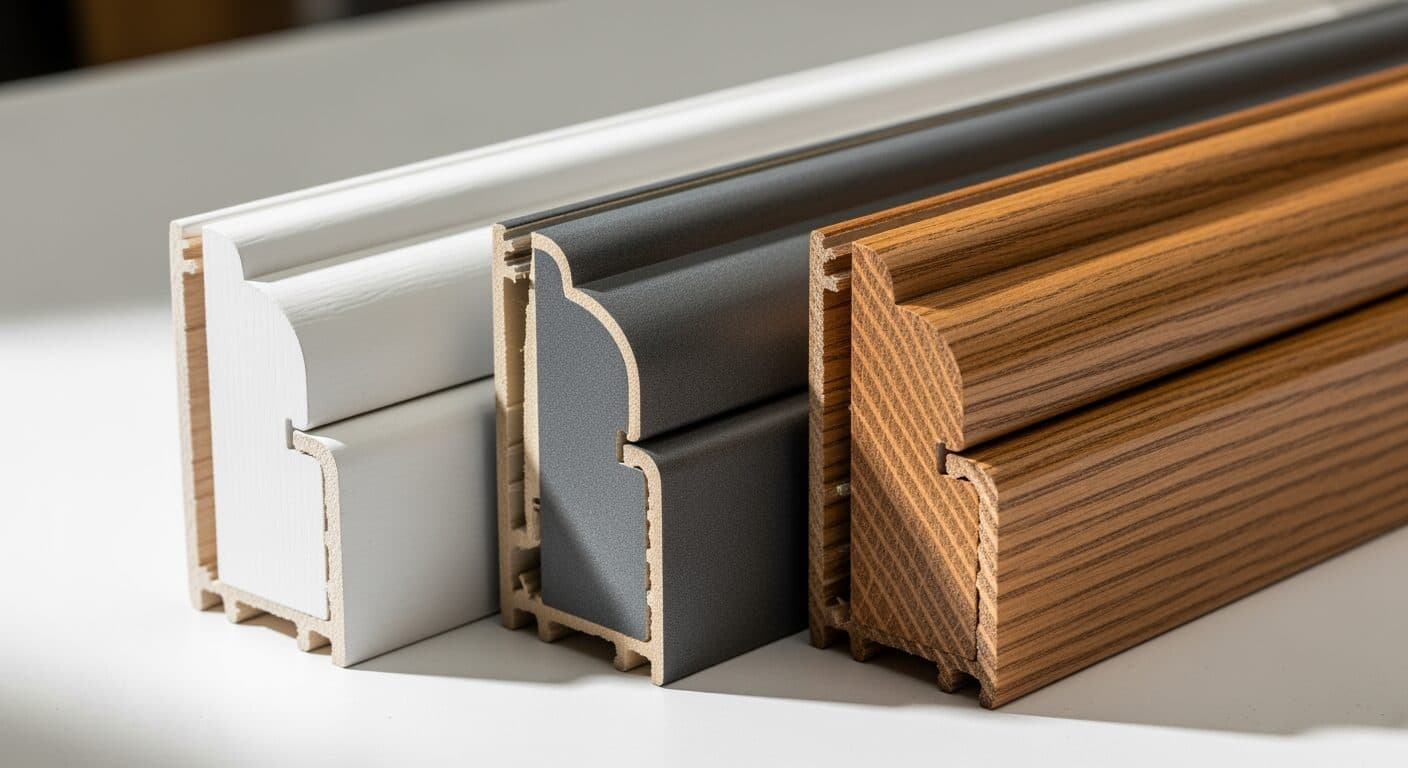
If you've started getting quotes, you've already noticed that the frame material drives more of the price than almost anything else. Two windows of the same size and shape can differ by a wide margin purely because one is vinyl and the other is wood. The frame is also what you'll live with for decades. It sets how the window looks, how often you have to maintain it, and how long before you're shopping again.
This guide compares the four materials head to head, drawing on my 2.5 years inside Renewal by Andersen, whose entire frame is a composite called Fibrex. I'll be honest about where each one wins and where the marketing oversells it. Where a specific number matters and I can't tie it to a primary source, I've left a placeholder rather than guess, because a wrong U-factor on this page would mislead you, and that's worse than a missing one.
The four window materials, compared at a glance
There are realistically four frame materials in the replacement market today: vinyl, fiberglass, composite, and wood (including aluminum-clad wood). Aluminum-framed windows still exist, but for residential replacement in our region they're a niche choice for contemporary architecture, not a mainstream option, so I treat them only briefly below.
Here's the head-to-head, ordered roughly from lowest to highest cost. The dollar figures are intentionally left as tracked placeholders, because installed pricing in DC/MD/VA moves with size, glass package, and install type, and I'd rather point you at our live cost pages than print a number that's stale by the time you read it.
| Material | Relative cost | Maintenance | Aesthetics | Best fit |
|---|---|---|---|---|
| Vinyl | Lowest | None (no painting) | Good in light colors; limited dark options | Most owner-occupied homes, rentals, flips |
| Fiberglass | Mid to high | Very low; can be painted | Slim profiles, paintable, clean lines | Long-term holds, energy focus |
| Composite (e.g. Fibrex) | Mid to high | Very low | Wood-like, more color range than vinyl | Homeowners wanting wood look without wood upkeep |
| Wood / clad | Highest | Interior wood needs upkeep | Best-in-class, true wood interior | Historic homes, high-end remodels |
For exact installed ranges, our material-specific cost breakdowns are the source of truth: vinyl window cost, fiberglass window cost, and wood window cost. The overall window replacement cost page puts them side by side.
[data pending: installed per-window price ranges by material (vinyl, fiberglass, composite, wood) in DC/MD/VA]Vinyl windows: the value default
Vinyl is the most common replacement window material in the U.S., and for most homes in our region it's the right call. It's made from PVC, requires no painting or staining, never rots, and resists moisture, which matters in our humid summers.
The honest trade-offs: vinyl can't be painted reliably, so you're locked into the color you buy. Light colors are stable; dark vinyl absorbs more heat in direct sun, and color options on the dark end of the range are more limited because of how the material behaves under thermal load. Vinyl also expands and contracts with temperature more than fiberglass does, which over many years is the mechanism behind seal stress on lower-quality units. The quality gap within vinyl is wide. A budget builder-grade vinyl window and a premium one are very different products despite sharing a category name.
Where vinyl fits in DC/MD/VA: rentals, flips, and the large majority of owner-occupied homes where you want a solid, low-maintenance window without paying for a wood look. The main place it doesn't fit is a historic district that won't approve vinyl on the street-facing elevation. For the full cost picture, see vinyl window cost.
The other vinyl-specific thing to understand in our climate is the dark-color limitation. Vinyl absorbs heat, and a dark frame in full afternoon sun on a south or west elevation gets hot. Manufacturers manage this with heat-reflective cap stocks and color-stable formulations on their better lines, but the range of stable dark colors is narrower than what fiberglass or composite can offer, and cheap dark vinyl is where you see warping and seal stress over time. If your heart is set on black or bronze frames on a sunny elevation, that's a real reason to look at fiberglass or composite instead.
Service-life data from This Old House and InterNACHI puts vinyl window frames at roughly 20 to 30 years.
Fiberglass windows: durability per dollar
Fiberglass frames are made from glass fibers in a resin, and the headline advantage is dimensional stability. Fiberglass expands and contracts very little with temperature swings (qualitatively less than vinyl), which is why it holds seals and joints well over a long life.
Fiberglass is stronger than vinyl, which lets manufacturers build slimmer frames with more glass area for the same opening. It can be painted, so unlike vinyl you aren't permanently locked into one color. The trade-offs are price and selection: fiberglass costs meaningfully more than vinyl, and fewer manufacturers and product lines offer it, so your choices are narrower. Marvin's Essential line is all-fiberglass, while its Elevate line pairs a fiberglass exterior with a wood interior, and both are well-regarded examples in this category.
Where fiberglass fits in DC/MD/VA: homeowners planning to hold the house long enough that the durability and paintability pay back, or those who want a slimmer, more refined sightline than typical vinyl. It's also a strong answer where you want near-zero maintenance but a more permanent finish than vinyl gives. See fiberglass window cost for ranges.
Why dimensional stability matters in practice: a window seal fails when the two panes of an insulated glass unit are flexed apart often enough that the seal loses its grip and the gas fill leaks out. That's the fogging you see between panes on an old window. A frame that moves less with temperature puts less repeated stress on that seal and the corners over decades of summer-to-winter cycling. Fiberglass moves less than vinyl because glass fibers expand far less than PVC, and that's the mechanism behind its longevity claims. It's a qualitative advantage you won't notice in year one and will appreciate in year twenty.
The paintability point also deserves a fair caveat. Yes, fiberglass can be painted, which gives you flexibility vinyl doesn't, but factory finishes are baked on and far more durable than anything you'll brush on later, so treat field-repainting as a future option rather than a routine maintenance task. The realistic read on fiberglass is: buy the color you want from the factory, enjoy near-zero upkeep, and keep repainting in your back pocket as a way to refresh or recolor the home a decade or two out.
Manufacturer and industry data put fiberglass frame service life at roughly 30 to 50 years.
Composite windows: the wood look without the wood upkeep
Composite frames blend materials, typically a polymer with wood fiber or fiberglass reinforcement, to land between vinyl and wood. The best-known example in our market is Fibrex, the frame Renewal by Andersen builds its entire product around. Having spent 2.5 years inside that company, I'll give it straight: Fibrex is a genuinely good material. It's a composite of reclaimed wood fiber and thermoplastic polymer, it carries color well including darker tones, and it's dimensionally stable.
The honest critique isn't of the material. It's of how composite gets sold. In the in-home pitch, Fibrex is presented as categorically superior to "vinyl," and the strength comparison ("twice as strong as vinyl") is the manufacturer's own published figure, not an independent test. But a premium vinyl or fiberglass window can deliver comparable comfort and energy outcomes, and the composite premium often reflects the brand's service model and warranty as much as the frame itself. The material is good; whether it's worth the spread over a quality vinyl or fiberglass unit depends on your priorities, not on the demo.
Composite is also worth understanding as a category beyond Fibrex, because not all composites are the same. Some are polymer-and-wood-fiber blends like Fibrex; others are fiberglass-reinforced polymers; the term covers a range. What they share is the goal of combining the workability and look of one material with the stability of another. That makes "composite" a label you can't take at face value. Two windows both called composite can be built very differently, so the question to ask is what the frame is actually made of and how it's been tested, not whether the brochure says "composite."
A fair word on the "twice as strong as vinyl" claim, because it's the one buyers carry out of the demo. The figure is Andersen's own, and composites genuinely are stiffer than budget vinyl at the material level, which is what lets a composite frame hold a slimmer profile and a darker color. But strength in the lab and comfort at your window are not the same number. What you actually feel sitting next to the window is driven by the glass package, the air-tightness of the install, and the weatherstripping, and a stronger frame doesn't change any of those on its own. So treat the strength figure as one input into fit and finish, not as proof the window will be warmer or quieter than a well-built vinyl or fiberglass unit with the same glass.
Where composite fits in DC/MD/VA: homeowners who want a wood-like look and a wider color range than vinyl, with essentially no maintenance, and who value a strong warranty. It's a particularly good fit if you tried to make vinyl work but couldn't get the dark color or the wood-grain interior you wanted, and you're not ready to take on wood's upkeep. For a frank head-to-head on the brand, our brands hub covers it without the sales script.
[data pending: composite/Fibrex frame strength-vs-vinyl ratio and lifespan, tied to manufacturer source]Wood windows: best looks, real maintenance
Wood is the original window material and still the best-looking. A true wood interior, usually pine, sometimes oak or mahogany, can be stained or painted to match trim, and nothing else replicates it. On historic and high-end homes, wood is often the only material that looks right and, in some historic districts, the only one approved.
The catch is maintenance. Exposed exterior wood needs periodic painting or sealing, and in our humid, freeze-thaw climate, neglected exterior wood is the most common source of the rot I see behind failed windows in pre-1980 homes. The fix the industry settled on is aluminum-clad wood (or fiberglass-clad): a wood interior with a maintenance-free metal or composite skin on the outside. That gives you the wood interior look while protecting the exterior from weather. Marvin Signature and Pella Reserve are strong examples of premium clad-wood lines; both are genuinely excellent products at the top of the price range.
There's a regional wrinkle here that matters more than the brochures admit. In DC's Georgetown and Capitol Hill, in Old Town Alexandria, and in the Annapolis Historic District, the historic review boards often have a say in what goes on a street-facing window, and the approved answer frequently is wood, not vinyl, sometimes not even clad-wood on the most tightly controlled blocks. If you own in one of these districts, the material decision may be partly made for you, and it's worth confirming with the relevant preservation office before you fall in love with a vinyl quote. That's the one situation where wood isn't a luxury choice but a requirement, and it's the most common reason I see DC-area homeowners paying for wood.
Where wood and clad-wood fit in DC/MD/VA: historic district homes where approval requires it, traditional homes where the interior wood is a design priority, and high-end remodels. For most other homes, the maintenance and cost are more than the situation calls for. See wood window cost.
Published service-life data (NAHB and InterNACHI) puts wood window frames at 30-plus years, often considerably more with consistent maintenance.
How window materials compare on energy in climate zone 4
Frame material affects energy performance, but in our climate the glass package usually matters more than the frame. DC, Maryland, and Virginia sit in IECC climate zone 4 (mixed-humid), so we get real winters and real summers, and you're managing both heat loss and heat gain.
A window's energy performance is captured by two NFRC numbers: U-factor (how well it resists heat flow, where lower is better for our winters) and SHGC, solar heat gain coefficient (how much solar heat it lets in, where moderate values suit zone 4, balancing winter gain against summer load). These ratings are properties of the whole window unit, frame plus glass, not the frame alone, which is why two windows in the same frame material can have very different numbers depending on the glass.
On the frame's own contribution: vinyl, fiberglass, and composite frames are all non-conductive (they don't transfer heat the way metal does), so all three start from a good thermal baseline. Aluminum frames without a thermal break are the weak case, because metal conducts heat and creates condensation problems, which is a large part of why bare aluminum fell out of residential use. Where aluminum still shows up in residential work, it's the thermally broken kind, with a low-conductivity barrier separating the inside and outside metal so the frame can't shuttle cold straight through. That barrier closes much of the gap, but it adds cost, which is why for a standard double-hung or casement in our region most buyers land on vinyl, fiberglass, or composite rather than aluminum. For the specific ratings to target in zone 4, check the ENERGY STAR window thresholds for the Northern/North-Central region your county falls in, and look at the NFRC label on any unit you're quoted.
The NFRC label is the one piece of paper that lets you compare two quotes on the same footing, because every certified window carries it and the numbers are tested the same way across brands. Beyond U-factor and SHGC, the label also lists visible transmittance (how much daylight the glass lets through, where higher means a brighter room) and air leakage (how much air passes through the assembly, where lower is tighter). When two reps quote different frame materials, ask for the NFRC numbers on the exact unit and glass package each is proposing, not the brand's best-case line. That single step turns a material argument into an apples-to-apples comparison, and it's the fastest way to see whether a price gap is buying you real performance or just a different label on the frame.
For most of DC, Maryland, and Virginia the applicable ENERGY STAR zone is North-Central, where the Version 7.0 specification requires a U-factor of 0.25 or lower and an SHGC of 0.40 or lower.
A note on the federal tax credit, because it comes up: the §25C federal energy-efficient window tax credit expired for installs placed in service after December 31, 2025 (under the 2025 reconciliation law, PL 119-21). If a salesperson tells you a window upgrade still earns a federal credit this year, that's outdated. The real, durable savings from a higher-performing window are on your utility bills, not a tax form, and those depend far more on the glass and install quality than on which of these four frames you pick.
Why glass usually beats frame material for energy
The single most useful reframe I can offer is this: in our climate, the glass package moves your energy bill more than the frame material does. If your driver for replacing windows is comfort and lower bills, you should spend your attention on the glass first and treat the frame as the second decision.
The glass levers that matter are the number of panes (double versus triple), the low-E coating (a microscopically thin metallic layer that reflects heat, which is what makes a modern double-pane outperform an old one), the gas fill (argon or krypton between the panes resists heat flow better than plain air), and the spacer (the material separating the panes at the edge, where warm-edge spacers cut heat loss and condensation at the perimeter). A premium vinyl window with a good triple-pane, low-E, argon-filled package will out-perform a premium wood or composite window with a basic double-pane. The frame sets the floor; the glass sets the ceiling.
This is exactly why the in-home pitch's frame-material argument can be misleading. When a rep tells you their composite frame beats vinyl, they may be right about the frame, but if you're comparing their composite-with-premium-glass window against a basic-glass vinyl, you're not comparing frames at all, you're comparing glass packages. To compare materials honestly, hold the glass package constant across quotes. Our energy-efficient windows guide breaks down the glass side in detail, and if you're unsure which package fits a zone 4 home, that's a good question to put to Zig.
[data pending: typical energy/utility-bill impact range of glass package upgrades (double to triple, low-E, argon) for a zone 4 home, from a verifiable source]How to choose between window materials in three questions
Pick the material by answering three questions in order: how long you'll hold the home, what the home's style and any historic rules demand, and how much maintenance you're willing to do.
How long are you holding the home? Short holds (rental, flip, prepping to sell) rarely justify paying past quality vinyl, because the buyer won't pay you back for fiberglass or wood at closing. Long holds (10 to 15+ years) are where fiberglass, composite, or clad-wood durability and finish start to pay back. As a real estate agent, I watched plenty of sellers over-improve windows right before listing and never recover the spread, so if you're inside a two-or-three-year horizon, the disciplined move is a clean, well-installed vinyl rather than a premium frame the next owner won't price in.
What does the home demand? A 1920s DC row house in a historic district may require wood or a specific approved material on the street face. A 1960s Maryland rambler or a Virginia Cape Cod has no such constraint and looks fine in vinyl or fiberglass. Let the home and the rules narrow the field before brand or price does.
How much maintenance will you actually do? Be honest. If you won't repaint exterior trim on schedule, don't buy exposed exterior wood; buy clad-wood, fiberglass, composite, or vinyl. The lowest-regret choice is the one whose upkeep matches your real habits, not your intentions.
If you want a second opinion calibrated to your specific house and budget, you can ask Zig, our window consultant. It knows each material's trade-offs and each brand's warranty language and can tell you where the spend is worth it. To compare the choice against type and brand, the companion guides are how to choose a window type and the complete guide to replacement windows.
See it on your own house first
Preview a clean replacement on a photo of your actual window and get itemized pricing before you decide.
Where window material fits in the bigger decision
Material is one of three decisions that actually move the outcome. The other two are window type and installer, and material is the one most buyers over-weight relative to the installer. A perfectly chosen material installed badly will still leak and fail; a mid-tier vinyl installed well will outperform a premium frame installed poorly.
So treat material as important but not supreme. Get the type right for each room (casement over a kitchen sink, double-hung on a colonial), pick the material that matches your hold period and home, and then spend real attention on who installs it. The order I'd put it in: type follows the room and the home's style, material follows your hold period and any historic rules, glass package follows your comfort and energy goals, and installer quality is the thing you should never compromise on regardless of how the first three shook out. Buyers tend to invert this, spending hours on brand spec sheets and minutes on the crew that will actually cut into their house, and it's the most expensive habit I see. Our energy-efficient windows guide goes deeper on the glass-and-rating side that drives utility savings, and window installation covers the install quality that protects whatever material you choose. If you're early in the process, start with first-time window replacement. The full homeowner library lives at /guides.
Start your measurement in 5 minutes
Snap a photo with your phone, get AI measurements and an honest price — no salesperson, no in-home pitch.
Frequently asked questions
What is the best window material for the money?
For most homes, quality vinyl gives the best value: low cost, no maintenance, and solid energy performance in our zone 4 climate. Fiberglass is the best durability per dollar if you're holding the home long-term. Wood is best only when looks or historic rules require it.
Are fiberglass windows really better than vinyl?
In durability, yes. Fiberglass expands and contracts less than vinyl, holds seals well, can be painted, and supports slimmer frames. But it costs more and comes in fewer product lines, and for many homes quality vinyl delivers comparable comfort and energy results for less.
What is Fibrex and is it worth the price?
Fibrex is a composite of reclaimed wood fiber and thermoplastic polymer used in Renewal by Andersen windows. It's a genuinely good, dimensionally stable material with a wood-like look. Whether it's worth the premium depends on your priorities, because a quality vinyl or fiberglass window can match its comfort and energy outcomes for less.
Do vinyl windows look cheap?
Light-colored vinyl on a typical suburban home looks clean and is widely accepted. The limits show up with dark colors, where fewer stable options exist, and on historic or high-end homes where a true wood or wood-look interior reads as more appropriate. Match the material to the home's style.
Which window material is best for DC, MD, and VA's climate?
DC, Maryland, and Virginia are IECC climate zone 4 (mixed-humid). Vinyl, fiberglass, and composite all perform well here because their frames are non-conductive. The bigger energy lever is the glass package and its NFRC U-factor and SHGC ratings, not the frame material alone.
Is wood worth the maintenance?
On historic homes, traditional interiors, and high-end remodels, yes, because nothing else looks like real wood. Otherwise the painting and sealing it needs in our humid, freeze-thaw climate is more upkeep than most homes call for. Aluminum-clad wood removes most exterior maintenance while keeping the wood interior.
Is there still a federal tax credit for energy-efficient windows?
No. The Section 25C federal energy-efficient window tax credit expired for installs placed in service after December 31, 2025, under the 2025 reconciliation law (PL 119-21). The durable savings from a better window now come from lower utility bills, driven mostly by the glass package and install quality.