Wood window cost in DC, MD, and VA: what to budget
Wood window cost sits at the top of the mainstream range. Solid wood and aluminum-clad wood are typically the most expensive option per window installed, well above vinyl or fiberglass. You pay for the look and the historic-district fit, plus a real maintenance burden on exposed wood. Clad wood costs more upfront but cuts that upkeep.

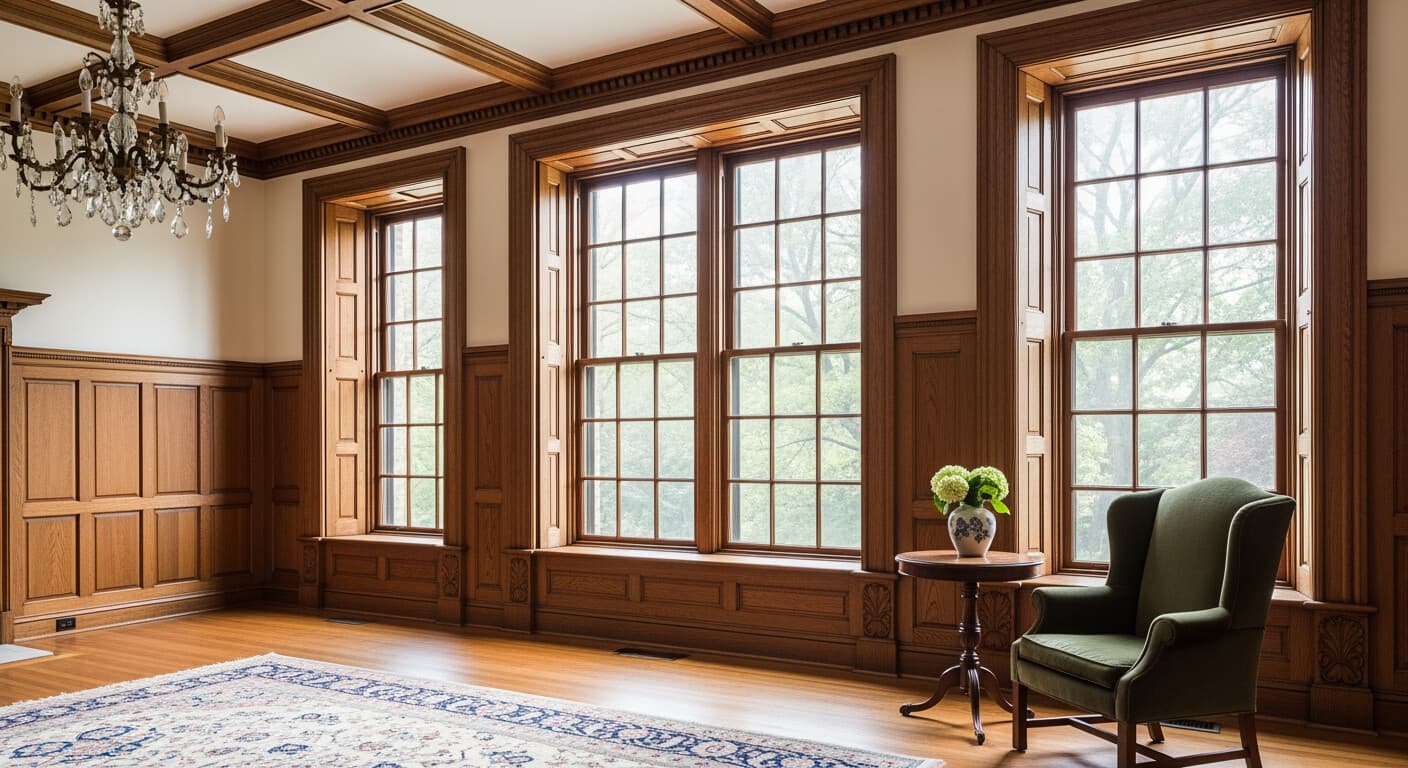
If you're here, you probably either own a home in a historic district that requires wood, or you want a real wood interior (the warmth of a stained or painted wood sash from inside the room) and you're trying to budget for it. Both are legitimate reasons to spend more. What you should not do is spend more without knowing exactly which kind of wood window you're buying, because "wood window" covers two very different products at two very different price and maintenance points: solid wood, and clad wood. This page breaks them apart so the quote you get makes sense.
What does wood window cost per window?
Wood window cost is generally the highest of the mainstream frame materials. A solid wood or aluminum-clad wood unit installed typically runs above comparable vinyl and fiberglass in the DC/MD/VA market. We won't print a fabricated "from $X" number; the honest figure depends on your openings, the install type, and the brand line.
The ranges below are general market context for our region, not OneStep's verified prices. Use them to sanity-check a quote, not as a bid. Solid wood and clad wood are called out separately because they price and behave differently.
| Frame type | What it is | General market range per window installed | Maintenance |
|---|---|---|---|
| Solid wood | Wood inside and out | [data pending: solid wood per-window installed market range, DC/MD/VA] | Highest (exterior needs periodic paint/seal) |
| Aluminum-clad wood | Wood interior, aluminum exterior skin | [data pending: aluminum-clad wood per-window installed market range, DC/MD/VA] | Low exterior, wood interior only |
| Fiberglass (for comparison) | Pultruded fiberglass, paintable | [data pending: fiberglass per-window installed market range, DC/MD/VA] | Low |
| Vinyl (for comparison) | Extruded vinyl | [data pending: vinyl per-window installed market range, DC/MD/VA] | Low |
A whole-house project of [data pending: typical whole-house window count for a DC row house vs MD/VA single-family] windows multiplies the per-window number, though per-window cost usually eases a little at volume because the crew mobilizes once. For the broader picture across all materials, see our window replacement cost guide.
What drives wood window cost up?
Wood costs more than vinyl or fiberglass for a stack of real reasons, not just brand prestige. The material itself is more expensive to mill and finish, the joinery is more involved, and the lines that offer true wood interiors (Marvin Signature, Pella Reserve, Andersen's wood series) sit in each maker's premium tier.
- Material and finishing. Wood has to be milled, joined, primed, and finished. A stained interior adds a finishing step a vinyl extrusion never needs.
- Cladding. Aluminum or fiberglass cladding on the exterior adds material and a manufacturing step, and depending on the brand line a clad unit can price at or even above the comparable solid-wood version, even as it saves you maintenance later.
- Brand tier. True wood-interior windows live in the top product lines, which carry the highest markups in each brand's catalog.
- Install type. A full-frame replacement, often what historic or rotted openings need, costs more than an insert that reuses a sound existing frame.
- Glass and grilles. Simulated divided lites, true divided lites, and specialty glass each add cost and are common requests on traditional wood windows. True divided lites, where each pane of glass is a separate piece set in real muntins, cost meaningfully more than simulated divided lites, where grille bars are applied to a single sealed unit; some historic districts require the true version, which is why the grille choice is both an aesthetic and a budget line on a wood quote.
Solid wood vs clad wood vs the alternatives
The core decision is solid wood versus clad wood, with fiberglass and vinyl as the lower-maintenance alternatives if your home and district allow them. Solid wood gives you a wood exterior a purist or a strict historic district may want; clad wood keeps the wood interior you can see and touch while protecting the outside with aluminum or fiberglass.
| Option | Upfront wood window cost | Interior look | Exterior maintenance | Best fit |
|---|---|---|---|---|
| Solid wood | [data pending: solid wood relative cost positioning] | True wood | Highest (repaint/reseal on a cycle) | Strict historic exteriors, purists |
| Aluminum-clad wood | [data pending: clad wood relative cost positioning] | True wood | Low | Most owners wanting wood interior |
| Fiberglass | [data pending: fiberglass relative cost positioning] | Paintable, not real wood | Low | Wood-look budget, long hold |
| Vinyl | [data pending: vinyl relative cost positioning] | Not wood | Low | Value-first, no wood requirement |
For most owners who want the wood interior aesthetic but don't have a strict all-wood exterior requirement, aluminum-clad wood is the practical middle: the warmth inside, far less upkeep outside. If you're weighing the lower-maintenance routes, compare vinyl window cost and fiberglass window cost side by side before you commit to solid wood.
Get an honest price, no salesperson
Tell us your address and window and get itemized pricing — no in-home pitch, no surprises.
When is wood worth it, and when is clad or vinyl the smarter call?
Do historic districts in DC, MD, and VA require wood windows?
Often, but it varies by district, and you should verify before you budget. Many historic overlays in the District, Annapolis, and Alexandria's Old Town require wood or aluminum-clad wood windows and may require review or approval from the local Historic Preservation Office or review board before you replace anything. That requirement is a real driver of wood window cost in our region, because it can take the cheaper materials off the table entirely.
Because the specific rule depends on your district (some require true divided lites, some accept simulated, some allow clad, some require all-wood exteriors), treat any general statement as a starting point, not gospel. Confirm your block's requirements with the local HPO or commission before you choose a material. [data pending: district-specific window material and approval requirements for the buyer's specific historic district (DC HPO / Annapolis / Alexandria Old Town)] If you're navigating this, our window consultant Zig can help you organize the questions to ask your HPO, and you can preview wood and clad options on your actual home in the 3D configurator.
Are wood windows more energy efficient in Zone 4?
Not inherently. Frame material is a smaller efficiency lever than the glass package. DC, Maryland, and Virginia sit in IECC climate zone 4 (mixed-humid), where you're keeping winter heat in and humid summer heat out. The numbers that matter are the NFRC-rated U-factor (lower is better for winter heat loss) and SHGC, the solar heat gain coefficient (lower keeps summer heat out), and those are set by the glass package and the whole-unit construction, not by whether the frame is wood.
Wood is a natural insulator and clad wood performs comparably to other premium frames, but a well-built vinyl or fiberglass window with a strong Low-E glass package can match or beat a wood unit on the rated numbers. For certification at most DC/MD/VA addresses, which sit in ENERGY STAR's North-Central window zone, the ENERGY STAR Version 7.0 specification sets the bar at a U-factor of 0.25 or lower and an SHGC of 0.40 or lower; ask Zig to confirm the zone for your address. One thing to state plainly: the federal §25C window tax credit (30% of cost, capped at $600/year) was terminated for property placed in service after December 31, 2025 under the 2025 federal tax law (Public Law 119-21). For a 2026 install, don't count on a federal window credit; check current utility and state or local incentives instead ([data pending: current DC/MD/VA utility, state, or local window rebate or incentive programs]).
Frequently asked questions
How much do wood windows cost compared to vinyl?
Wood windows are typically the most expensive mainstream option, costing more per window installed than vinyl and usually more than fiberglass. The exact gap depends on whether you choose solid wood or clad wood, the brand line, and your install type.
What is the difference between solid wood and clad wood windows?
A solid wood window is wood inside and out; an aluminum-clad (or fiberglass-clad) wood window has a real wood interior and a protective metal or composite exterior skin. Depending on the brand line, clad can price at or above the comparable solid-wood unit, but it sharply reduces exterior maintenance, since the wood that needs periodic paint or seal is no longer exposed to weather.
Do I have to use wood windows in a historic district?
Often, but it varies by district. Many DC, Annapolis, and Alexandria Old Town historic overlays require wood or aluminum-clad wood and may require Historic Preservation Office or commission approval before replacement. Confirm your specific district's material and approval rules with the local HPO before budgeting, because the requirement is a real driver of cost.
Are wood windows worth the extra cost?
Wood is worth it when the wood interior aesthetic or a historic-district requirement genuinely matters to you, and you accept the maintenance on any exposed exterior wood. If you want the look with less upkeep, aluminum-clad wood is usually the smarter spend; if you don't need real wood at all, fiberglass or vinyl deliver lower cost and lower maintenance.
Is there still a federal tax credit for wood replacement windows in 2026?
No. The federal section 25C credit for windows (30% of cost, up to $600 per year) was terminated for property placed in service after December 31, 2025 under Public Law 119-21. For a 2026 wood window install, do not assume a federal credit applies; check current utility and state or local incentives instead.
Are wood windows more energy efficient than vinyl or fiberglass?
Not necessarily. Frame material is a smaller efficiency lever than the glass package. In Zone 4 (DC/MD/VA), the NFRC U-factor and SHGC of the glass and whole unit drive performance, and a well-built vinyl or fiberglass window with a strong Low-E package can match or beat wood on the rated numbers.
Next step
The most useful thing you can do before choosing a wood window is see a real, itemized number for your own openings (solid wood, clad wood, or a lower-maintenance alternative) without a rep visit. Our 3D configurator pulls up your home, lets you place the windows you actually need, and prices them per opening.
See it on your own house first
Preview a clean replacement on a photo of your actual window and get itemized pricing before you decide.
For the full material-by-material breakdown, start at the cost hub and the window replacement cost guide. To understand the bigger picture of what we do, see window replacement and the styles we install at the windows hub. The person behind every page on this site is at Anthony Moorman.