How much does a vinyl window cost?
Vinyl is the most common and lowest-cost mainstream window material, but vinyl window cost spans a wide range, and budget vinyl and premium vinyl can sit far apart on the same wall. The gap is real engineering: frame chambers, welded versus mechanically joined corners, the glass package, and the warranty. This page breaks those tiers apart so you can tell what you're actually paying for.

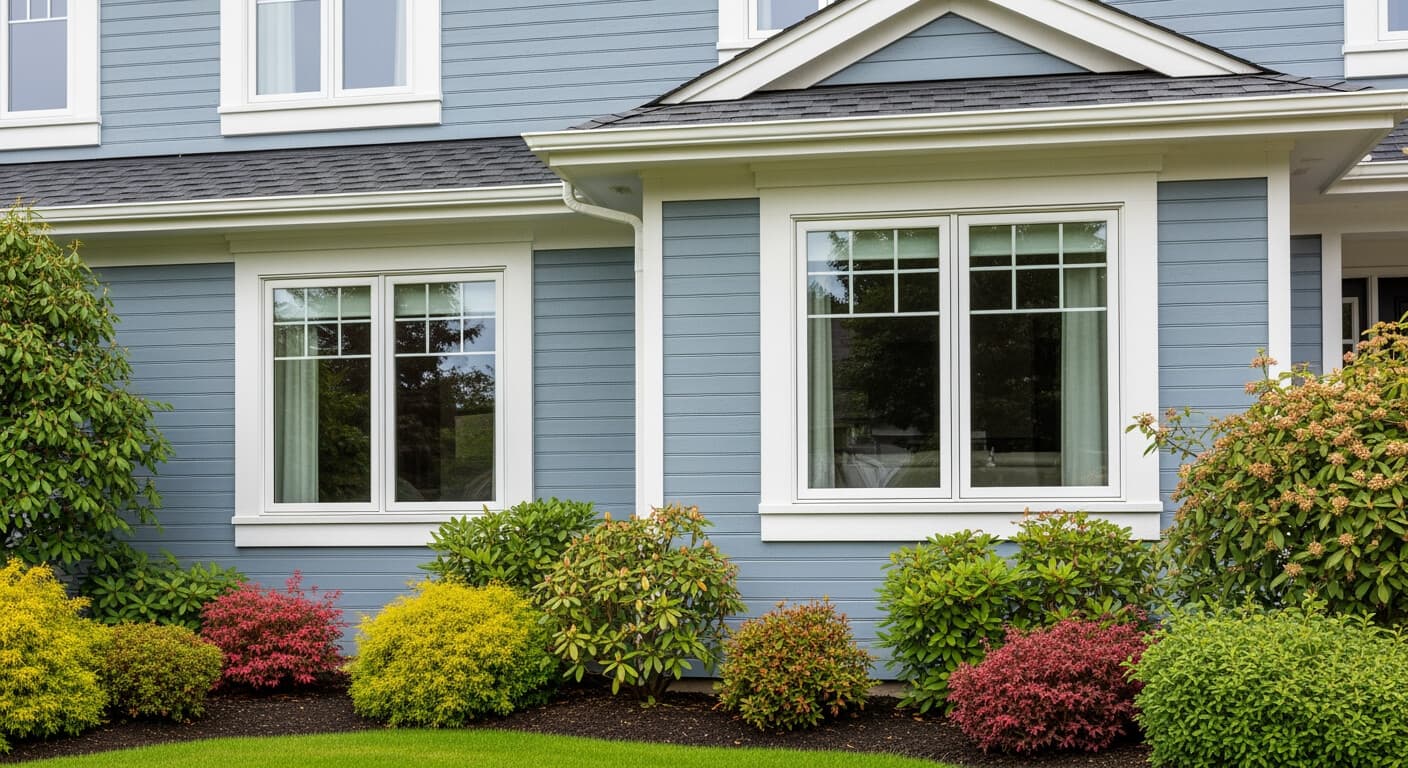
If you've started pricing vinyl windows, you've probably noticed the same word ("vinyl") attached to wildly different numbers. That's not a scam; it's that "vinyl" describes a category, not a quality grade. A builder-grade unit in a flip and a fusion-welded, multi-chamber frame with a premium glass package are both technically vinyl. The price difference reflects what's inside the frame and how long it's built to last. Below, I'll separate the tiers and tell you which differences are worth paying for in the DC/MD/VA climate, and which are mostly nameplate.
What does a vinyl window cost per window?
A single installed vinyl replacement window is the lowest-cost mainstream option in the DC/MD/VA market, generally landing well below fiberglass, wood, or wood-clad for a comparable size and install type. Exact dollar figures depend on tier, glass, and whether the install is an insert or full-frame replacement.
The ranges below are general market context for our region, not OneStep's verified prices. Use them to sanity-check a quote, not as a bid.
| Vinyl tier | What you typically get | General market range per window installed | Who it fits |
|---|---|---|---|
| Budget vinyl | Builder-grade, fewer frame chambers, often mechanically joined corners, base double-pane glass, shorter warranty | [data pending: budget vinyl per-window installed market range, DC/MD/VA] | Rentals, flips, secondary openings |
| Mid-tier vinyl | Multi-chamber welded frame, Low-E + argon glass, transferable warranty | [data pending: mid-tier vinyl per-window installed market range, DC/MD/VA] | Most owner-occupied DC/MD/VA homes |
| Premium vinyl | More frame chambers, foam-filled or reinforced frame, upgraded Low-E/glass spacer, strongest warranty | [data pending: premium vinyl per-window installed market range, DC/MD/VA] | Long-term hold, energy and comfort focus |
For a whole-house project, per-window cost usually drops a little at volume because the crew mobilizes once. For how vinyl compares to the full material ladder, see our window replacement cost guide.
What separates budget, mid-tier, and premium vinyl window cost?
Four things drive vinyl window cost up the tier ladder: frame chambers, corner construction, the glass package, and the warranty. None of them are visible from across the room, which is exactly why budget and premium vinyl get sold at such different prices under the same material name.
- Frame chambers. A vinyl frame is hollow, divided into internal air chambers. More chambers mean more insulating air pockets and a stiffer frame. Budget frames run fewer, larger chambers; premium frames run more, smaller ones, sometimes foam-filled or steel/aluminum-reinforced at the meeting rail.
- Corner construction. Premium and most mid-tier vinyl uses fusion-welded corners, where the frame and sash corners are heat-fused into one continuous piece, which resists air and water leaks over time. Cheaper units may use mechanically joined (screwed or crimped) corners that can loosen and leak as the frame expands and contracts through DC/MD/VA's hot summers and cold winters.
- Glass package. Base double-pane with no coating sits at the bottom. Low-E coatings plus an argon gas fill are the modern mid-tier baseline. Upgraded spacers (warm-edge) and additional Low-E layers cost more and matter most for comfort and condensation resistance.
- Warranty. Budget vinyl often carries a shorter, non-transferable warranty. Mid and premium tiers carry longer terms that frequently transfer to the next owner, a real resale signal, not just paperwork.
These four drivers are also why two quotes for the "same" vinyl window can land far apart. A quote that names fusion-welded corners, a multi-chamber frame, and Low-E argon glass is describing the mid-tier engineering that actually holds up through DC/MD/VA's freeze-thaw and humid-heat swings; a quote that's vague on all four is usually pricing the budget tier and counting on you not to ask. When you read a vinyl window cost line item, look for those four specifics by name. If a rep can't tell you the corner construction, the chamber count, the glass coating and fill, and the warranty length and whether it transfers, you don't yet know which tier you're buying, only what it costs. The same opening priced as an insert (the new unit set into the existing frame) versus a full-frame replacement (the old frame removed down to the rough opening) also changes the number, because full-frame adds labor and trim work the insert skips.
Why is vinyl the lowest-cost window material?
Vinyl is the value leader because the material itself is inexpensive to produce and the frames are extruded and assembled efficiently at scale. That keeps the base cost of a vinyl window below fiberglass, composite, wood, and wood-clad for a comparable unit.
That low base is also why the vinyl window cost range is so wide. When the raw material is cheap, the price difference between a throwaway flip unit and a frame built to the 20-to-30-year service life This Old House cites for quality vinyl comes almost entirely from the engineering layered on top: the chambers, welds, glass, and reinforcement above. A budget vinyl window isn't "fake vinyl"; it's vinyl with the upgrades stripped out. Knowing that lets you decide deliberately which upgrades you want rather than defaulting to whatever a salesperson bundles in.
Is premium vinyl worth the extra cost?
For a home you plan to keep, the jump from budget to mid-tier vinyl is usually worth it; the jump from mid-tier to premium vinyl is a comfort-and-longevity call, not an obligation. The biggest real-world gains (welded corners, a multi-chamber frame, Low-E and argon glass) show up at the mid-tier, not the very top.
In DC, Maryland, and Virginia you're in IECC climate zone 4 (mixed-humid), heating in winter and fighting humid heat in summer. The NFRC-printed numbers that matter are U-factor (lower keeps winter heat in) and SHGC, the solar heat gain coefficient (lower keeps summer heat out). Mid-tier vinyl with Low-E and argon already hits the modern baseline for zone 4; premium vinyl buys incremental gains in comfort, condensation resistance, and noise rather than a dramatic energy leap. For certification, most addresses in our region fall under ENERGY STAR's North-Central window zone, where the ENERGY STAR Version 7.0 specification calls for a U-factor of 0.25 or lower and an SHGC of 0.40 or lower; ask Zig if you want the zone confirmed for your home.
One thing worth saying plainly: the federal §25C Energy Efficient Home Improvement Credit for windows (30% of cost, capped at $600/year for windows) was terminated for property placed in service after December 31, 2025 under the 2025 federal tax law (Public Law 119-21). For a 2026 install, do not count on a federal window tax credit to offset a premium-vinyl upgrade. Any state or local incentive that might apply is [data pending: DC/MD/VA state or local window-efficiency incentives or utility rebates available 2026]; weigh the upgrade on utility savings and payback instead.
Is vinyl the right material for your home?
Vinyl is the right default for most DC/MD/VA homes, and at the mid-tier it delivers the welded corners, multi-chamber frame, and Low-E argon glass that carry the real performance. The honest exception is narrow and specific, so it's worth naming rather than pretending vinyl wins on every opening.
What does OneStep vinyl window cost?
OneStep is built to show you an itemized, no-rep price for your specific openings before anyone talks to you. The number depends on the same drivers above (tier, glass package, install type, and window count) applied to your actual windows.
Because pricing is configured per home rather than pitched, the cleanest way to see a real vinyl window cost for your house is to run your own address through the configurator. We won't print a fake "from $X" headline; that's the marked-up-list-price game worth avoiding. You measure with your phone, configure your tier and glass in 3D, and see a price broken out per opening, with no rep visit and no opening-bid markup. See the broader windows hub for the styles we install, or window replacement for how the process works end to end.
See it on your own house first
Preview a clean replacement on a photo of your actual window and get itemized pricing before you decide.
Frequently asked questions
How much does a vinyl window cost installed in DC, MD, or VA?
Vinyl is the lowest-cost mainstream material in our region, generally landing well below fiberglass, wood, and wood-clad for a comparable size and install type. The exact figure depends on tier, glass package, and whether the install is an insert or full-frame replacement.
Why do vinyl window prices vary so much?
Because vinyl is a material category, not a quality grade. Budget and premium vinyl differ in frame chambers, corner construction (welded versus mechanically joined), glass package, and warranty length. Those differences aren't visible from across the room, so the same word covers very different products at very different prices.
Is cheap vinyl window cost a false economy?
It can be. Budget vinyl with mechanically joined corners and a base glass package may loosen, leak, or underperform sooner in DC/MD/VA's freeze-thaw and humid-heat cycle. For a home you plan to keep, mid-tier vinyl with welded corners and Low-E argon glass is usually the better value; for a rental or flip, budget vinyl can be the right deliberate choice.
What glass should I get in vinyl windows for Zone 4?
DC, Maryland, and Virginia sit in IECC climate zone 4 (mixed-humid), so look for a low U-factor and a low SHGC, with Low-E coatings plus an argon fill as the modern baseline. The exact certified U-factor and SHGC depend on your specific ENERGY STAR window zone and orientation, so target the number for your address rather than a single regional figure.
Is premium vinyl worth it over mid-tier vinyl?
For most homes, the biggest gains (welded corners, a multi-chamber frame, and Low-E argon glass) already arrive at the mid-tier. Premium vinyl buys incremental comfort, condensation resistance, and noise reduction rather than a dramatic energy jump, so it's a longevity-and-comfort call rather than a requirement.
Is there still a federal tax credit for vinyl windows in 2026?
No. The federal section 25C credit for windows (30% of cost, up to $600 per year for windows) was terminated for property placed in service after December 31, 2025 under Public Law 119-21. For a 2026 install, do not assume a federal window tax credit applies; weigh upgrades on utility savings and payback, and confirm any state or local incentive separately.
Next step
The most useful thing you can do before talking to any installer is see a real, itemized vinyl window cost for your own openings. Our 3D configurator pulls up your home, lets you pick your tier and glass, and prices each opening, with no rep, no pitch, and no expiring discount.
See it on your own house first
Preview a clean replacement on a photo of your actual window and get itemized pricing before you decide.
For the full material-by-material breakdown, start at the cost hub and the window replacement cost guide. To compare vinyl against the next steps up, see fiberglass window cost and wood window cost. The person behind every page on this site is Anthony Moorman.