Failed window seal: what it means and what to do
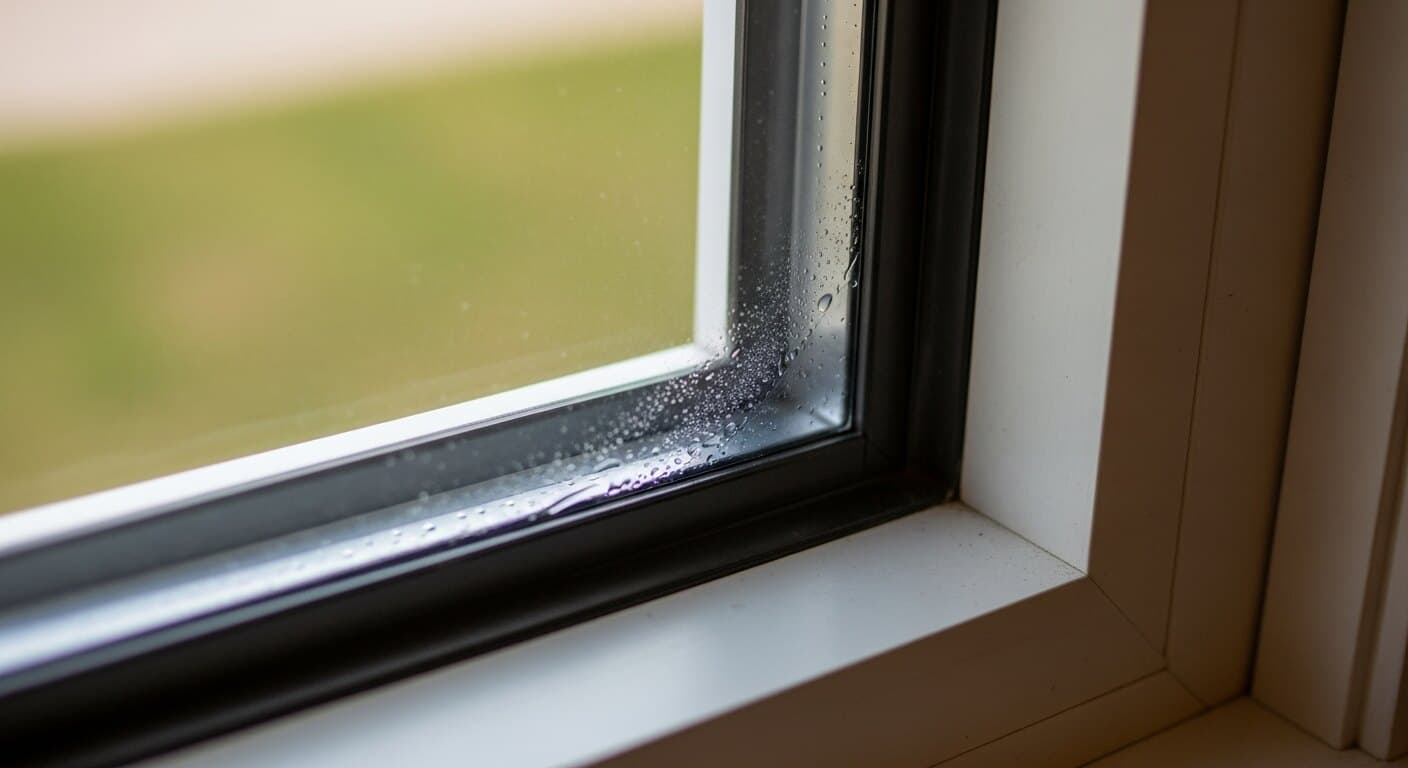
A failed window seal means the airtight bond around your insulated glass unit has broken, so the dry, gas-filled cavity between the panes is no longer sealed. Humid air leaks in, the insulating gas leaks out, and you see haze you cannot clean off. You cannot reliably reseal it. Your real options are a glass-only swap, a full window replacement, or a warranty claim if the unit is still covered.

In 2.5 years selling Renewal by Andersen in-home, what stuck with me was how an insulated glass unit holds its rating. A seal failure quietly erases it. That is the lens here. Not the panic over the haze, but what is mechanically gone, what your warranty will and will not pay for, and which of your three real options fits your window.
Most homeowners arrive at this page after spotting the fog and assuming the whole window is shot. Usually it is not. The glass sandwich failed, and the glass sandwich is often the only thing you need to address. Let me walk through what a failed seal is, how to confirm it, what your warranty really covers, and the honest math on each fix.
What does a failed window seal actually mean?
A failed window seal means the perimeter bond that keeps your insulated glass unit (IGU) airtight has broken down, so the sealed cavity between the panes is now open to outside air. That cavity is the entire point of a modern window, and once it is breached, the unit stops performing the way it was rated to.
The part doing the work here is the edge, not the glass. Around the perimeter of every insulated unit runs a spacer bar that sets the gap between the panes, and bonding it all together is not one seal but two: a primary seal (a thin bead of polyisobutylene that is the real moisture and gas barrier) and a secondary seal (a structural bead, often silicone or polyurethane, that holds the sandwich together mechanically). Inside that double-sealed perimeter, a desiccant in the spacer keeps the captive air or argon bone-dry. When people say a seal "failed," what they almost always mean is that the primary bead has degraded enough to let moisture diffuse past it. The glass is fine. The half-inch of sealant around its edge is what gave out.
When the seal fails, two things happen at once. Humid outside air diffuses into the cavity and condenses as fog or film you cannot wipe away, because it is sealed inside the glass. And the insulating gas diffuses out. The window you are looking at is no longer the energy-rated unit you paid for. It is closer to a pane of plain glass with a hazy partner an inch away.
What causes a window seal to fail?
A failed window seal is the slow result of stress on the edge sealant: decades of daily heat cycling, water that sits in the frame, ultraviolet breakdown of the sealant, or a manufacturing defect in the original unit. It is rarely one dramatic event. It is fatigue.
The mechanics are worth understanding because they tell you whether your other windows are likely next. Every day, the sealed cavity heats up in the sun and expands, then cools at night and contracts. That cycle works the sealant like a paperclip you bend back and forth, and over years the bond fatigues. Add direct water exposure (a sill that pools, failed exterior caulk, or a leak you did not know about) and the sealant degrades faster. South- and west-facing windows that take the most sun and weather tend to fail first.
A few honest contributors most homeowners do not hear about:
- Gas permeation is normal, and constant. Even a perfect IGU loses a little gas every year. The industry rule of thumb, derived from ASTM E2190 durability testing and repeated in National Glass Association guidance, is roughly 1 percent argon loss per year, which compounds to about 10 percent over a decade. A failed seal just accelerates that loss to the point where the cavity is effectively unsealed.
- Spacer and sealant quality vary by manufacturer. A cheap aluminum spacer with a single sealant bead fails sooner than a warm-edge spacer with a robust dual seal. This is one place the brand you bought genuinely matters.
- Altitude and pressure changes during shipping or installation can stress units assembled near sea level, though this is a minor factor for most DC/MD/VA homes.
How do I confirm it is the seal and not just condensation?
Confirm a failed seal with one test: try to wipe the moisture off. If the haze is locked between the panes and no cleaning touches it, the seal has failed. If you can wipe it away from the inside or outside surface, the seal is fine and you have a different problem.
This matters because replacing glass you did not need to replace is an expensive mistake, and it is easy to make. Three different moisture problems look similar at a glance:
- Between the panes, cannot wipe it: Failed seal. This is the one this page is about.
- Inside surface, in winter, wipeable: Indoor humidity meeting cold glass. That is a ventilation or humidity issue in your house, not a window defect.
- Outside surface, on cool mornings: Dew on the exterior, which actually means the glass is sealing heat in well. Nothing is wrong.
There are subtler tells on a true seal failure too. You may see a faint chalky or oily film that comes and goes with the temperature, a visible distortion or "potato chip" warp in the glass on hot days (the cavity flexing), or a chemical residue near the spacer. If you are still unsure, a window pro can identify it in minutes. For the full side-by-side on each moisture type, the window condensation guide walks through all three, and the foggy windows page covers the repair-or-replace decision once you have confirmed the seal is gone.
Can a failed window seal be repaired or resealed?
A failed window seal cannot be reliably resealed, despite the "defog" services advertised online. The honest fix is to replace the sealed glass unit, not to repair the old one. The marketed defog process treats the symptom and leaves the unit underperforming.
This is the most important myth to clear up, because the cheap option is the one that does not actually work. The advertised "window defogging" service drills small holes in the glass, injects a cleaning solution to remove the trapped moisture, then dries and seals the holes. It can clear the visible haze for a while. What it does not do is restore the dry, sealed, gas-filled cavity. The gas fill is gone and the process does not replace it, so you are left with a clearer pane that still performs like plain glass, and the fog often creeps back as humid air keeps cycling through the same compromised seal.
So your real choices are three, not four:
- Replace the insulated glass unit only. A new IGU drops into your existing frame and sash, restoring the sealed cavity and the gas fill. This is the correct repair when the frame is sound.
- Replace the whole window. The right call when the frame is rotted, racked, swollen, or the window barely operates, or when you are addressing several aging units at once.
- File a warranty claim. If the unit is still covered, the glass itself may be free. Always check this before you pay (more below).
I will not pretend the DIY-defog kit is never tempting at thirty-some dollars. But you are paying to make a problem invisible, not to fix it, and on an energy-rated window you bought for its performance, that is a poor trade.
Will my warranty cover a failed window seal?
More often than people assume, and it is the cheapest path to rule in or out, so do it before you price anything else. Seal failure is one defect manufacturers genuinely expect, which is why the sealed unit commonly carries 10 to 20 years of coverage against fogging from the install or manufacture date. Marvin and Andersen warrant their seals for 20 years, and Simonton's builder lines carry 15.
This is where the years of explaining these warranties to homeowners in person pay off, because warranty language is written to sound more generous than it reads in practice. A few patterns I learned to look for, and that you should too:
- The seal term outlives almost everything else on the unit. It is common to see the sealed glass warranted against seal failure for around 20 years while hardware and weatherstripping carry far shorter terms. Marvin's Infinity line, for example, publishes a 20-year glass seal-failure term next to a 10-year hardware term, on a frame warranted for as long as you own the home.
- The expensive part is usually the part not covered. Most warranties separate parts (glass, hardware) from labor (sending a tech out). Andersen, among others, does not cover installation labor at all, so the replacement glass can be free while the visit and the install land on your bill.
- Prorated coverage shrinks the older the unit gets. To make up an example: on a prorated schedule, a year-one claim might be a full free replacement while the same claim in year twelve covers only a fraction, with you paying the balance. Confirm whether yours is non-prorated, because that single word changes the math.
- Transfer clauses quietly change the math at sale. Some warranties pass to the next owner intact, some step down at sale. Registration, despite the common worry, reads as optional in the major brands' published documents rather than a condition of coverage. In a fast-turnover DC/MD/VA market, a fully transferable glass warranty is a real, if small, resale point.
If you do not know the brand or age of your windows, a pro can often read the unit from the spacer stamp, an etched logo, or a date code in the glass corner. Worth doing before you assume the repair is out of pocket. If you have a warranty document in hand, our window consultant Zig can help you find the seal-failure clause and the exclusions worth asking about.
How much does fixing a failed seal cost?
Less than most people fear, because the fix is almost always glass-only. But the right way to think about a failed seal's cost is in three tiers, cheapest first, and the cheapest one is often free: a warranty claim, then a glass-only swap, then a full window. Check the warranty before you price anything, because if the unit is still in its seal-failure term the glass itself can cost you nothing.
If the warranty is expired, you are into glass-only territory, which national aggregators put in the low hundreds per window: well under what a full replacement window installed runs, and the gap is the whole reason confirming a sound frame matters before you spend. I keep the detailed repair-versus-replace math and the per-window numbers on one page so they do not drift, and that page is foggy windows: repair or replace. It walks the full decision tree, the cost ranges, and the frame-condition test that decides between glass-only and a whole new unit. For our area specifically, what a single-opening glass swap works out to here: [data pending: OneStep DC/MD/VA installed glass-only IGU swap price for a failed seal, vs. national aggregator range].
The one number worth holding in your head: per-window cost times how many seals have failed, set against a whole-home figure. One failed seal in a sound frame is a repair, full stop. Several across 20-year-old windows is the case where replacement starts to win, because you reset the energy performance and the warranty clock in one job. The cost to replace a single window and cost to replace all the windows in a house pages carry the full ranges for each path.
Does a failed seal actually hurt my energy bills?
Yes, modestly per window and meaningfully in aggregate. A failed seal has lost most of its insulating gas fill, so that opening now conducts more heat in winter and more cooling out in summer than the rated window did. One window is marginal; several add up.
Here is the honest scale of it. The gas fill (usually argon) slows heat transfer across the cavity, which is part of how the window earns its U-factor rating. When the seal fails and the gas escapes, the cavity reverts toward plain air, and the unit's real-world performance drifts back toward an older, cheaper window. You will not see it as a dramatic spike on one bill. You will see it as the slow erosion of the efficiency you paid extra for, concentrated on whichever windows have failed.
In our Zone 4 mixed-humid climate, with real cooling load in summer and heating load in winter, that erosion runs in both directions year-round. The practical takeaway: a failed seal is not an emergency, but it is not free to ignore either. If energy performance is why you bought good windows in the first place, a unit that has lost its gas fill is quietly not doing the job. The energy-efficient windows guide explains the U-factor, Low-E, and gas-fill performance a failed seal gives up, and if drafts are part of your symptom, drafty windows covers air leakage, which is a separate failure mode.
Get an honest price, no salesperson
Tell us your address and window and get itemized pricing — no in-home pitch, no surprises.
Should I fix it now or wait?
Fix it now if the failed seal is in a visible room, the fog bothers you, you are within a few years of selling, or several units have failed. Defer it, reasonably, if it is a single unit in a basement or rarely-seen window on a house you plan to keep for years. A failed seal is not a safety problem.
The case for acting: a failed seal gets worse, not better. As more humid air cycles in, the haze deepens and can stain the glass with mineral film over time, and the energy penalty persists every season. If you are listing the home, a home inspector will note every fogged pane in writing, and once it is documented it becomes a negotiation line item, where the buyer's credit request is often larger than what the quiet repair would have cost you.
The case for waiting, honestly: the glass is intact, the window still operates, and one failed unit in a low-traffic spot does no harm to the house. Just be clear-eyed that putting it off is not the same as fixing it. You are accepting a steady little energy cost and a repair you will still make later, on a seal that is never going to mend on its own.
Is OneStep right for you?
Frequently asked questions
What does a failed window seal mean?
It means the airtight bond around the insulated glass unit has broken, so the sealed space between the panes is no longer dry or gas-filled. Humid air gets in and condenses as haze you cannot wipe off, and the insulating gas escapes, so the window stops performing the way it was rated to.
Can a failed window seal be repaired or resealed?
Not reliably. The advertised defog service drills the glass and removes the trapped moisture but does not restore the gas fill, so the unit still underperforms and the fog often returns. The real fix is replacing the sealed glass unit, or the whole window if the frame is also bad.
How do I know if my window seal is broken?
Try to wipe the moisture away. If the haze is sealed between the panes and no cleaning reaches it, the seal has failed. If you can wipe the moisture off the inside or outside surface, the seal is fine and you have a humidity or weather issue instead.
Is a failed window seal covered under warranty?
Often yes. Insulated glass seal failure is one of the most commonly warranted defects, and manufacturers commonly cover the sealed unit for 10 to 20 years: Marvin and Andersen publish 20-year seal terms, while Simonton's builder lines carry 15. Read your document for the exact term, whether labor is included, and whether it is prorated, then file before paying out of pocket.
How much does it cost to fix a broken window seal?
Cheapest first: if the seal is still under its warranty term the glass can be free, so check that before anything. With the warranty expired, you are into a glass-only swap, which national estimates put in the low hundreds per window, far below a full replacement window installed. The figure moves with glass size, pane count, the Low-E and gas spec, and your local market.
Does a failed window seal raise my energy bills?
Modestly per window and more in aggregate. A failed seal has lost most of its insulating gas fill, so that opening conducts more heat in winter and lets more cooling escape in summer than the rated window did. One window is marginal, but several failed units add a steady, year-round penalty.
Is a failed window seal dangerous?
No. The glass is still intact and the window still operates, so it is a performance and appearance problem, not a safety hazard. The downsides are the lost energy efficiency and the visible haze, not any structural or health risk, which is why deferring a single failed unit is a reasonable choice.
Next step
Two moves settle most failed seals, in this order: check the warranty (the glass may be free), then have a glass shop swap the sealed units if it is not. Save the replacement conversation for the case where the seals are one symptom among several on windows that are aging out, and even then, price your own openings yourself before you let anyone quote you a whole-house job.
Start your measurement in 5 minutes
Snap a photo with your phone, get AI measurements and an honest price — no salesperson, no in-home pitch.
Keep diagnosing: the window problems hub covers every common window issue, the foggy windows page handles the repair-or-replace call once you have confirmed the seal, and you can ask Zig which fix fits your specific window. The person behind every page on this site is Anthony Moorman.