Drafty windows: how to find the leak and fix it for good
Drafty windows usually come from one of four leak paths: worn sash weatherstripping, a gap where the frame meets the wall, the hidden rough-opening gap behind your trim, or a failed insulated-glass seal. The first three are often DIY or low-cost fixes. Only when the frame itself is shot, or the draft is everywhere at once, does full replacement become the honest call.

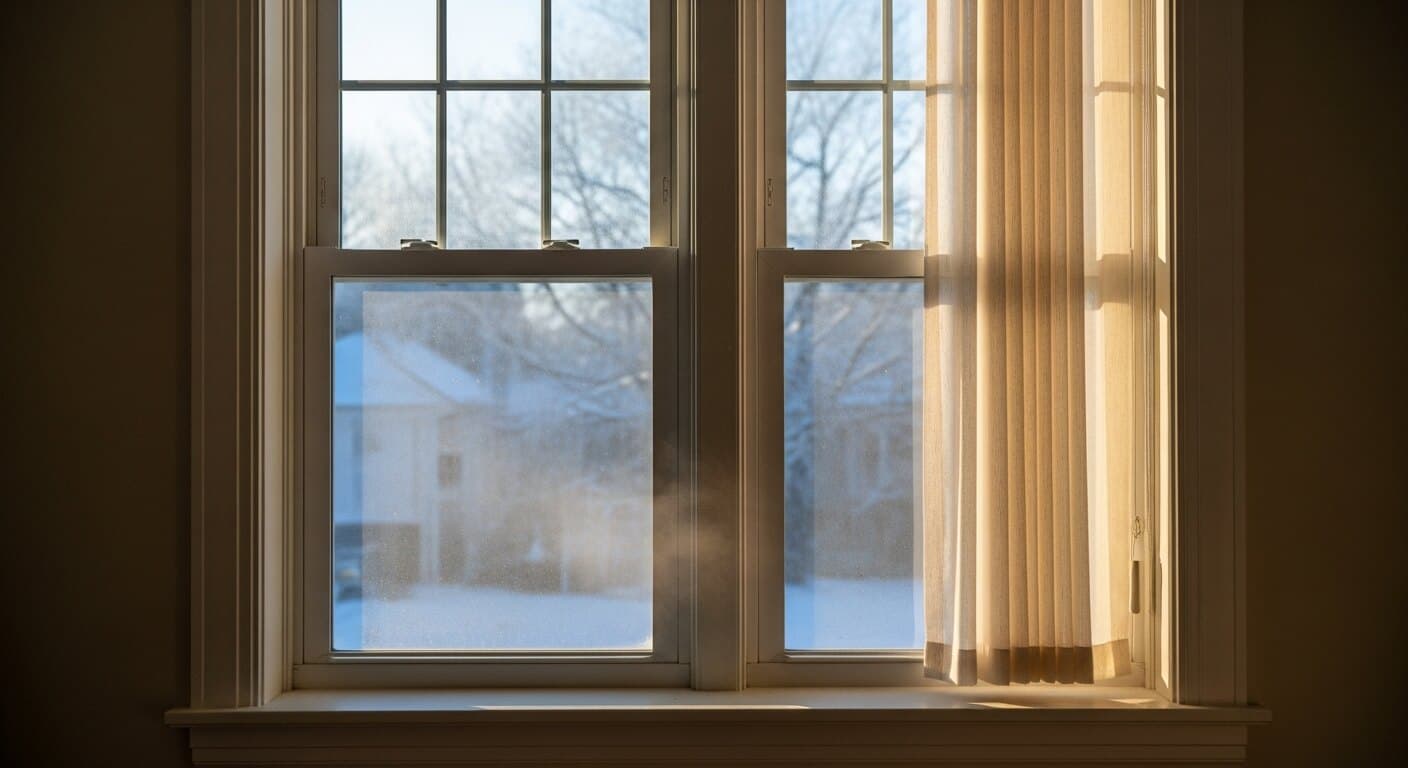
When I ran in-home window consultations for Renewal by Andersen, the most common reason someone called was "I feel cold air at my windows." Half the time the right answer was not a new window. It was a $12 weatherstrip kit or a tube of caulk, and I would tell them so even though it meant no sale that day. The trick to drafty windows is the same whether you are doing it yourself or paying someone: find the actual leak path before you spend a dollar. Most people skip that step and buy the wrong fix.
This page walks the diagnosis the way I did it at the window: where the air is really coming from, what each fix actually solves, what it costs, and the narrow set of cases where replacement is the only honest answer. No pitch, just the order of operations.
What causes drafty windows in the first place
A drafty window is air moving through a gap that should be sealed. There are four common gaps, and they are not interchangeable. The fix for one will do nothing for another, which is why so many homeowners "fix" a draft and still feel cold air a week later.
Here are the four leak paths, from most common to least, with what each one is and how it usually fails:
| Leak path | Where it is | How it fails | Right fix |
|---|---|---|---|
| Sash weatherstripping | Between the moving sash and the frame | Foam/felt flattens, hardens, cracks with age | Replace weatherstrip |
| Frame-to-wall joint | Where the window frame meets the wall, behind trim | Caulk shrinks, cracks, pulls away | Re-caulk exterior |
| Rough-opening gap | The hidden 1/4 to 1/2 inch gap around the unit | Was never insulated, or foam settled | Foam the gap |
| Failed glass seal | Between the two panes (the IGU) | Edge seal fails, gas escapes, glass gets cold | Replace sash or unit |
The Department of Energy notes that windows have a gap of roughly a quarter to a half inch on all four sides between the unit and the framed opening, and that this gap is a major hidden source of air leakage behind your trim. That is the one most people never check, because they cannot see it. A genuinely cold, drafty window is often two or three of these leaking at once, which is exactly why a single fix can disappoint.
How to find where the draft is actually coming from
Before you buy anything, locate the leak. The fastest home method is the smoke or flame test on a windy day: hold a lit incense stick or a candle near the sash edges, the meeting rail, the lock, and the frame-to-wall joints, and watch where the smoke bends. Movement means air movement.
Walk the window in this order, because it mirrors the four leak paths:
- Run your hand around the sash edge and the meeting rail. This is where weatherstripping lives. Cold air here, especially at the center meeting rail of a double-hung, points to flattened or missing weatherstrip.
- Feel the frame-to-wall joint, inside and out. Cold along the edge of the trim, or daylight visible at the exterior caulk line, points to a failed caulk joint, not the window itself.
- Check the corners and the lock. A window that does not pull tight when locked is leaking at the seal between sash and frame, which can mean a worn weatherstrip or a sash that has dropped out of square.
- Look at the glass itself. If the draft feels like the glass is just plain cold, with no moving air, that is radiant loss, not a draft, and it usually means single-pane glass or a failed seal, covered in our foggy windows and failed seal guides.
The quick fixes: weatherstripping, caulk, and foam
For the three non-glass leak paths, the fixes are cheap, fast, and genuinely effective. The Department of Energy's own DIY weatherstripping project estimates roughly 5 to 10 percent energy savings from sealing air leaks at windows and doors. That is real money on a DC-area heating bill, and you can do most of it in an afternoon.
Match the fix to the leak path:
- Worn sash weatherstrip. Replace it. V-strip (tension seal), foam tape, or a spring-bronze strip seals the moving joint where the sash slides or closes. This is the single most common drafty-window fix and usually runs under $20 in materials per window.
- Failed frame-to-wall caulk. Re-caulk the exterior perimeter where the frame meets the siding or brick. Caulk belongs on joints that do not move; that is why it works on the frame-to-wall seam and not on the moving sash. A quality exterior sealant is a few dollars a tube.
- Uninsulated rough-opening gap. If you can pull the interior trim, fill the hidden gap with low-expansion (window-and-door) foam, not standard expanding foam, which can bow the frame and make the window stick. This addresses the leak path DOE flags as the hidden one.
One honest limit: these fixes seal air leaks, but they do nothing for a cold single-pane glass or a failed insulated unit. If your "draft" is really a cold pane radiating, weatherstripping will not fix the feeling. Know which problem you have before you buy the kit.
Temporary stopgaps versus a real fix, and how long each lasts
Stopgaps like shrink-film insulation kits, rope caulk, and draft snakes are fine to get you through a cold snap, but they are not repairs. They buy you a season, not a solution, and several of them have to come off again in spring. Reach for them when you cannot get to the real fix yet, not as the plan.
Here is the honest durability ladder, shortest-lived to most permanent:
- Draft snake or door/window sock. Blocks airflow at the bottom rail only. Useful tonight, does nothing for the rest of the window, lasts as long as you leave it there.
- Shrink-film window insulation kit. A clear plastic film you tape over the interior and shrink with a hairdryer. It cuts drafts and adds a small insulating air layer for one heating season, then you peel it off. Cheap, reversible, genuinely effective short-term, but it is a winter-only patch.
- Rope caulk. A removable putty you press into gaps. Seals a leak for a season and pulls out clean in spring, which is why it suits a window you still want to open.
- New weatherstrip and exterior caulk. The real repair. Properly installed weatherstrip lasts years before it flattens again, and an exterior sealant joint holds five to ten years by InterNACHI's life-expectancy chart. This is the fix that actually retires the draft.
The reason this order matters: if you are reaching for film and rope caulk every single winter on the same window, you have stopped fixing it and started managing a failure. That repeated stopgap is itself a signal the window is near the end of its useful life and worth pricing for replacement.
When drafty windows mean it is time to replace
Replacement becomes the honest answer in three situations: the frame itself is rotted or warped beyond a reliable seal, the draft is coming from every window in the house at once, or you have already re-sealed and the cold air is still there. At that point you are not fixing a gap, you are fixing a worn-out window.
Here is how I separated repair from replace at the window:
- The frame is compromised. Wood that is soft, swollen, or rotted will not hold a weatherstrip or a caulk joint, because the surface it seals against is failing. Aluminum frames from the 1960s to 80s, common in this region's older builds, also conduct cold badly and sweat. See our rotted frame guide for the repair-versus-replace line on rot specifically.
- It is the whole house, not one window. One drafty window is a repair. Eight drafty windows of the same age, all leaking, is a housing-stock problem, and re-sealing all of them piecemeal often costs enough that new units make more sense, especially given the energy gap between old single-pane and a modern ENERGY STAR unit.
- You already sealed and it is still cold. If you have replaced the weatherstrip and re-caulked and the window still leaks, the sash has likely dropped out of square or the unit has racked with the house settling. That is past the point of a seal fix.
Modern replacements close the energy gap that no amount of weatherstripping can. For the DC/MD/VA region, which sits in the ENERGY STAR North-Central climate zone (IECC Climate Zone 4), ENERGY STAR Version 7.0 windows must hit a U-factor of 0.25 or lower, a meaningful step tighter than the older 0.30 standard and far ahead of a leaky single-pane. If you are weighing whether to keep patching, our drafty-vs-replace cost picture and the broader window replacement cost guide give you real ranges before you decide.
What replacement costs, and what about rebates
If you do land on replacement, price it before anyone visits your home. A single drafty-window replacement in this market typically runs [data pending: installed price range for a single replacement window in DC/MD/VA, from OneStep catalog pricing], with the number driven by size, material, and whether the frame needs full-frame work or a simpler insert.
One thing to clear up, because it trips people up in 2026: there is no federal window tax credit right now. The federal Section 25C energy-efficient home improvement credit, which used to return up to $600 on qualifying windows, expired for installs placed in service after December 31, 2025, per the IRS. Any contractor still pitching a federal window tax credit for a 2026 install is quoting an expired program. What can still help is utility or state-level efficiency rebates, which vary by your provider and jurisdiction across DC, Maryland, and Virginia: [data pending: current DC/MD/VA utility and state window/efficiency rebate programs and amounts (e.g. Pepco, BGE, Dominion, Washington Gas)]. Confirm any rebate against the program's own page before you count on it.
The honest framing: replace drafty windows for the comfort and the energy savings, not for a tax credit that no longer exists.
How OneStep helps you avoid replacing a window you could have sealed
Most window companies make money when you replace; we are set up so the first thing our process does on a draft is try to talk you out of it. Ask Zig to run the smoke test and the four leak paths with you before you price a single window, because a sealed-up good window is a better outcome for you than a sale for us.
When sealing is genuinely past the point of helping, the process is built to strip out the pressure that pushes people into over-buying. You preview and price your real openings in the 3D configurator, measure by AI phone-video instead of booking a sales appointment, and see itemized pricing with no rep at your door running a discount clock. To work out a draft you are unsure about, ask Zig in the chat; when the numbers are what you want next, price your windows in the configurator. For the full map of window symptoms and the repair-versus-replace line on each, start at the window problems hub, and the window installation guide covers what a properly sealed, draft-free install actually involves.
See it on your own house first
Preview a clean replacement on a photo of your actual window and get itemized pricing before you decide.
Frequently asked questions
Why do my windows feel drafty even after I locked them?
A window that still feels drafty when locked usually has flattened or missing weatherstripping at the sash, or the sash has dropped out of square so it no longer pulls tight against the frame. Run a smoke or incense test along the meeting rail and edges to confirm where the air is moving before you buy a fix.
Can you fix a drafty window without replacing it?
Yes, most of the time. Three of the four common leak paths are low-cost repairs: replace worn sash weatherstripping, re-caulk the exterior frame-to-wall joint, and foam the hidden rough-opening gap. Replacement is only the honest answer when the frame itself is rotted or warped, the draft is house-wide, or sealing has already failed.
How do I find where a window draft is coming from?
On a windy day, hold a lit incense stick or candle near the sash edges, the meeting rail, the lock, and the frame-to-wall joints and watch where the smoke bends. Movement shows you the leak path, which tells you whether you need weatherstrip, caulk, foam, or a glass-seal repair.
How much can weatherstripping save on my energy bill?
The U.S. Department of Energy estimates that a DIY weatherstripping project sealing air leaks around windows and doors yields roughly 5 to 10 percent energy savings. The exact figure depends on how leaky your home is and your local climate, but in a cold DC-area winter it is real money for a small material cost.
Is there a tax credit for replacing drafty windows in 2026?
No federal one. The federal Section 25C energy-efficient home improvement credit for windows expired for installs placed in service after December 31, 2025, per the IRS. Utility or state efficiency rebates may still apply depending on your provider and jurisdiction in DC, Maryland, or Virginia, so check your specific program directly.
What U-factor do replacement windows need in DC, Maryland, or Virginia?
The DC/MD/VA region is in the ENERGY STAR North-Central climate zone, which is IECC Climate Zone 4. ENERGY STAR Version 7.0 windows in that zone must have a U-factor of 0.25 or lower, tighter than the older 0.30 standard. Confirm any specific product against its NFRC label before buying.
Next step
Diagnose first, then fix only what is actually leaking; that order is the whole money-saving trick with drafts. Smoke test says weatherstrip and caulk? Do it and keep the window. Smoke test says the frame is shot or the whole house is leaking at once? That is when an itemized price on your own openings, in hand before any salesperson shows up, becomes worth getting.
Start your measurement in 5 minutes
Snap a photo with your phone, get AI measurements and an honest price — no salesperson, no in-home pitch.
Keep reading: the window problems hub covers every symptom from foggy glass to water leaks and whistling windows, the energy-efficient windows guide explains U-factor and SHGC in plain terms, and the person behind every page here is Anthony Moorman.