How to free a stuck window without breaking it
A stuck window almost always comes down to one of four things: paint sealing the sash to the frame, wood that swelled with humidity, tracks clogged with old paint or grime, or a seized lock or balance. Work out which one you have first, then free it gently with a putty knife or paint-saw and patience. Force is what cracks glass and splinters sashes, so go slow.

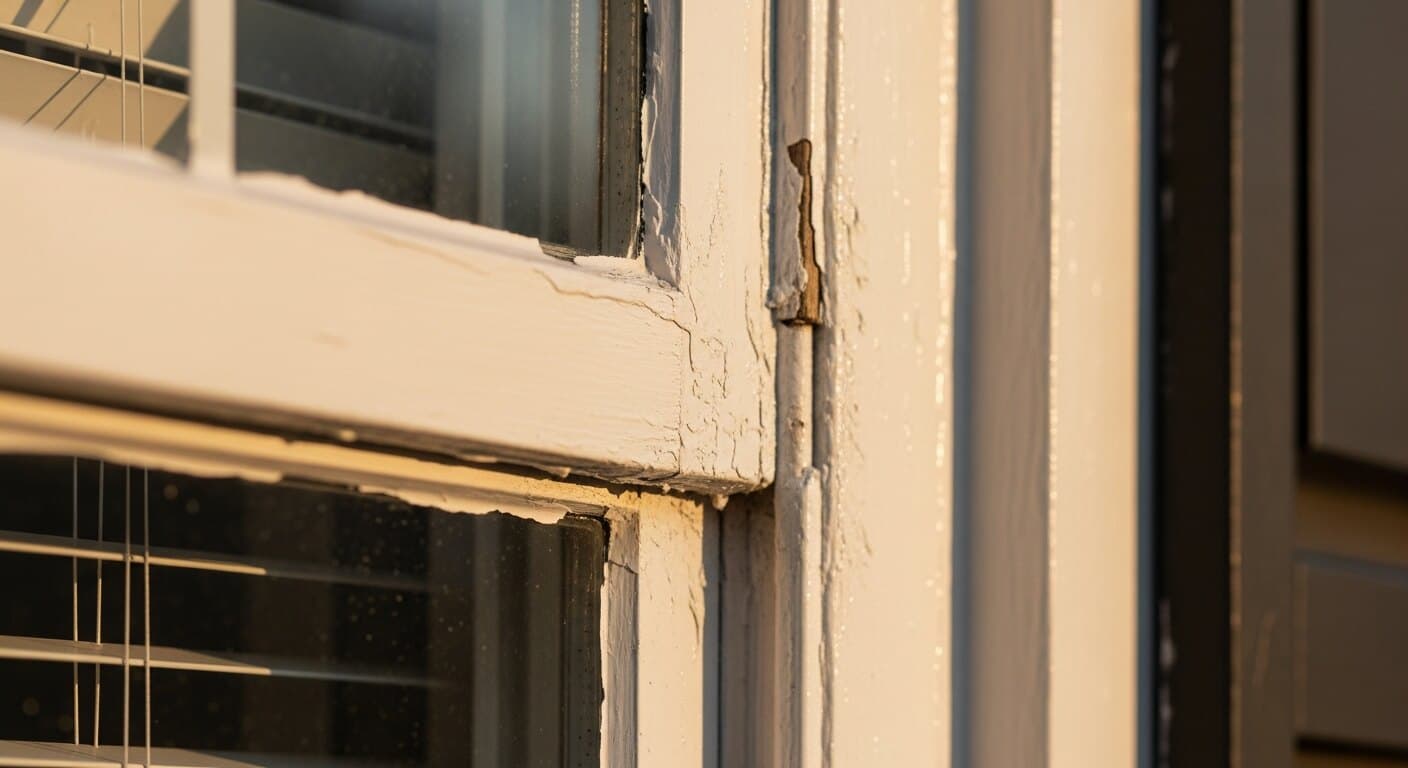
In exterior-remodeling sales at Nu Look Home Design, the stuck-window call was one I usually talked through by phone instead of selling a replacement. Nine times out of ten it was paint, swelling, or a gummed-up track, and a careful person with a putty knife fixed it in twenty minutes. This page is that phone call written down: how to figure out why your window is stuck, how to free it without cracking the glass, and the honest line where you stop and call someone.
Why is my stuck window stuck in the first place?
A stuck window is stuck for a reason, and the reason decides the fix. The four common causes are a painted-shut sash, wood swollen from humidity, tracks fouled with paint or debris, and seized hardware or a failed balance. Diagnose before you pry.
Most people skip diagnosis and just yank harder, which is exactly how a sash splits or a pane cracks. Take two minutes first. Look at the seam where the sash meets the frame and the stops. If you see a continuous skin of paint bridging that gap, it is painted shut. If the paint line is broken but the sash still won't budge and the weather has been humid, the wood has likely swelled. If the sash rocks slightly but binds as it slides, the track is fouled or the jamb has shifted. If nothing moves at all and you have a lock or a crank, the hardware may be seized.
In our DC, Maryland, and Virginia climate, swelling is seasonal. Old wood double-hungs that glide fine in a dry February can bind hard in an August humidity spell, then loosen on their own when the air dries out. That is worth knowing before you take a tool to a window that may free itself in a week.
How do I free a painted-shut window?
For a painted-shut window, you score the paint seam to break the bond, then gently work the sash loose. The tool is a putty knife, a paint-saw (a sash zip tool), or a stiff utility blade, not a pry bar. Patience here is the whole job.
Here is the sequence I walk people through:
- Find every painted seam. Inside and out, look where the sash meets the stops, the parting bead, and the sill. A double-hung is often painted shut on both the inside stop and the outside, so check both faces.
- Score the seam. Run a utility knife or a dedicated sash-saw down the paint line on every edge to cut the skin of paint. Keep the blade in the seam, not biting into the wood.
- Seat a putty knife in the seam and tap. Place a wide, stiff putty knife in the scored gap and tap the handle with a rubber mallet, working it along the whole seam to break the bond. Move around the perimeter; do not lever from one spot.
- Try from outside if you can reach it safely. A pry block of scrap wood under the sash on the exterior, worked evenly side to side, often frees it without stressing the glass. Never pry on the glass or the muntins.
If your home was built before 1978, that paint may be lead-based, and scraping or sanding it disturbs lead dust. Wet the area, work carefully, and read the EPA's renovation rules before you sand. For older DC row houses and pre-war MD and VA homes, assume lead until tested.
What if the wood sash has swollen?
A swollen sash binds because humidity has expanded the wood tighter than its opening. The first move is to dry it, not to force it. Run a dehumidifier or AC in the room for a day or two and try again before you take a tool to anything.
If it still binds once the air is dry, the fix is to reduce the friction, not to attack the wood hard. A bar of paraffin, a candle, or a dedicated dry lubricant rubbed along the tracks and the sash edges lets it slide. For a sash that drags in one spot, fine sandpaper on a block, taken to the high edge in small passes, relieves the bind. Take off as little as possible. A sash sanded too aggressively in August will rattle and leak air every dry winter after.
The thing to understand about swelling is that it is a symptom. Bare or failing paint lets the wood drink up moisture, so once the window opens, sealing the raw edges with primer and paint is what keeps it from happening every humid season. If the wood is soft or dark where it swelled, you are no longer looking at swelling. You are looking at rot, which is a different problem covered in our guide to a rotted window frame.
My window still won't budge. Are the tracks or hardware the problem?
If the paint is scored and the wood is dry but the window still won't move, the cause is usually a fouled track, a shifted jamb, or seized hardware. Clean the channel first, then check the moving parts before you assume the window is finished.
For a double-hung, the sash rides in the jamb channels, and decades of paint buildup, dirt, and hardened old lubricant narrow those channels until the sash jams. Scrape the channels clean with a stiff brush and a putty knife, vacuum the grit, and apply a dry silicone or a paraffin lubricant. Avoid oily lubricants, which grab dust and gum up worse over time. For casements and awnings, the problem is more often the crank operator or the hinges: a stripped gear in the operator or a bent hinge arm stops the sash cold, and those are replaceable parts.
Then check the locks. A sash lock or a window stop or vent latch that did not fully disengage will hold a window shut no matter how clean the track is. People miss this constantly. Confirm every lock, latch, and any security pin is fully released before you decide the window itself is the problem.
When does a stuck window mean it's time to replace?
A stuck window is usually a cleaning or paint problem, not a replacement trigger. You replace when the frame is rotted, the sash is racked because the house has settled, or the unit is so old that freeing it just exposes the next failure. Free it first; judge the window second.
Here is the honest line. If a few hours of scoring, cleaning, and lubricating gets you a window that opens and latches, you saved real money and you are done. But there are cases where the stuck window is the symptom of something a putty knife can't fix:
- Rot. Soft, spongy, or dark wood at the sash or sill means the wood structure is gone. Lubricant won't help; the unit needs repair or replacement.
- A racked opening. If the whole window is out of square because the house settled, the sash binds no matter what you do, and that is a framing issue, not a paint issue.
- Failed balances on top of sticking. If the window also won't stay up once you free it, the sash balances are gone too, which is its own diagnosis in our guide to a window that won't stay open.
- Single-pane, no weatherstripping, every-season fight. An old wood window you free every humid summer and that leaks air every winter is telling you the math has shifted toward replacement. Worth pricing against a draft fix first, covered in our drafty windows guide.
Whole-home replacement in this market runs a real range depending on material and tier. Replacing a single problem window specifically lands around [data pending: installed price range for a single replacement double-hung window in DC/MD/VA, from OneStep catalog pricing], which is the number to weigh against an afternoon of DIY. For the broader picture, see our cost to replace a single window breakdown and the full window replacement cost guide.
How OneStep fits if a stuck window can't be saved
If you free the window and it works, you are done and you owe us nothing. If freeing it just exposes rot, a racked frame, or a window past saving, OneStep lets you price the replacement without an in-home sales visit. You measure with your phone and see an itemized number, so you are deciding on facts, not a pitch.
That order matters to me. In my remodeling years, the homeowners who got burned were the ones who let a rep "take a look" at a stuck window and walked away with a pressured whole-home quote for windows that mostly just needed cleaning. A stuck sash does not need a sales appointment. It needs twenty minutes and a putty knife, and only if that fails do you price a real fix. When you get there, you can preview and price a replacement on your actual home or start the phone measurement on your own schedule, and ask Zig in the chat whether your specific window reads as a repair or a replacement. For the full set of window issues and how to triage them, the window problems hub is the place to start.
See it on your own house first
Preview a clean replacement on a photo of your actual window and get itemized pricing before you decide.
Frequently asked questions
How do I open a window that is painted shut?
Score the paint seam on every edge with a utility knife or a sash saw to break the paint bond, then seat a stiff putty knife in the seam and tap it along the perimeter with a rubber mallet. Work all the way around rather than prying from one spot, and never lever against the glass.
Why is my window suddenly hard to open in summer?
Humidity. Wood sashes absorb moisture and swell tighter in their openings during humid Mid-Atlantic summers, then loosen again when the air dries out. Running a dehumidifier or AC in the room for a day or two often frees a swollen sash without any tools.
What is the best lubricant for a sticking window track?
A dry lubricant such as silicone spray or a rubbed-on bar of paraffin or candle wax. Avoid oily lubricants like WD-40 as a long-term fix, because the oil attracts dust and grit and the track gums up worse over time. Clean the channel before you apply anything.
Can I damage my window trying to force it open?
Yes. Forcing a stuck window is the most common way people crack a pane, split a sash rail, or bend a balance. Always diagnose the cause and break the paint or clean the track first, and work the sash gently and evenly rather than yanking from one corner.
Is it safe to scrape paint off an old window myself?
Only with caution on homes built before 1978, where the paint may contain lead. Scraping or sanding lead paint creates hazardous dust, so keep the area wet, contain debris, and follow the EPA's lead-safe renovation guidance, or hire a lead-certified pro to free the window.
When should I replace a stuck window instead of fixing it?
Replace it when the wood is rotted or soft, when the frame is racked out of square from the house settling, or when an old single-pane unit fights you every humid season and leaks air every winter. If cleaning and lubricating gets it working, repair is the cheaper and correct call.