Window replacement in Falls Church, VA
Window replacement in Falls Church depends on a quirk most owners miss: "Falls Church" is two markets sharing one name. The tiny independent city (about 2.11 square miles per the Census Bureau) has a Historic Architectural Review Board, but that board is only advisory on alterations like windows. Most addresses carrying a Falls Church mailing label are actually in Fairfax County, where no binding design review applies. Regional pricing runs a few hundred to several thousand dollars per window.

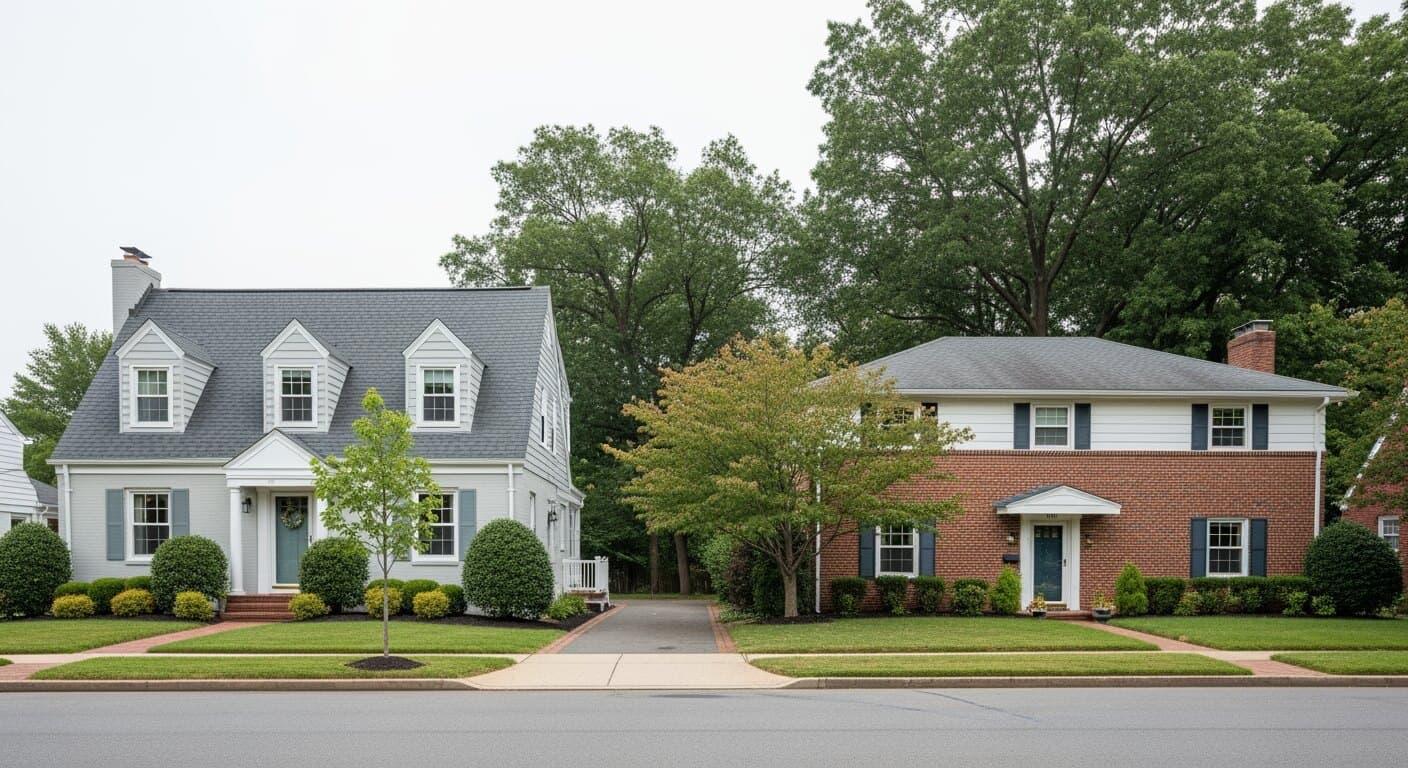
The single fact that reshapes a Falls Church project is which "Falls Church" your deed is in. There is a small independent City of Falls Church, one of the smallest incorporated municipalities in Virginia, and then a much larger ring of Fairfax-County neighborhoods that carry a "Falls Church, VA" mailing address but answer to the county. I work this market as a licensed Virginia realtor, and the two-rulebook split is the trap I see owners fall into: a house in the city's historic overlay and an ordinary county rambler can sit a couple of miles apart, look identical on the street, and follow different rules for the same window swap. This page sorts out which one you own before you order.
What window replacement in Falls Church usually looks like
Most Falls Church homes are early-to-mid-20th-century houses, so the typical job is a whole-home swap of aging single-pane or first-generation aluminum units. Inside the independent city, the oldest neighborhoods (Broadmont and East Falls Church) carry 1910s-1920s bungalows, four-squares, and colonials, while Greenway Downs and Virginia Forest date to around 1941. Post-WWII Cape Cods and one-level ramblers from the 1940s-50s dominate the next tier (Winter Hill is a good example), with later teardown-rebuild colonials and craftsman homes filling in. Tinner Hill is the city's historically significant African-American neighborhood.
The wrinkle is the county side. Many homes with a "Falls Church, VA" address sit in Fairfax County, including the mid-century-modern stock of Holmes Run Acres (slab ramblers and split-levels built 1951-1958, on the National Register and the Virginia Landmarks Register) and Lake Barcroft, plus 1950s ramblers and Capes in Pimmit Hills, Broyhill Park, Annalee Heights, and Sleepy Hollow.
Scope is mixed. Inside the small city, the modest 1940s-50s Capes and ramblers I walk for clients (often under 1,000 square feet) suit whole-home jobs of roughly 8 to 15 openings. On the county side, teardown and renovation activity produces both full-house re-glazing on expanded homes and larger custom orders, and the mid-century-modern homes in Holmes Run Acres and Lake Barcroft lean on expansive glass and big fixed lites. As for what gets ordered, the housing stock sorts it: double-hung carries the early-century colonials and the post-war Capes, picture and grouped casement units fit the wide low elevations on the county mid-century homes, and sliding or awning units fill the odd openings.
Do you need historic approval for window replacement in Falls Church?
For most homes, no, and even inside the city's historic overlay the board's hold on windows is weaker than owners fear. The City of Falls Church has, by its own code, a five-member Historic Architectural Review Board (HARB) that reviews permits for protected historic structures in the city's historic-district zoning overlay. Under that code, its protected structures are residences built during or before 1910, plus any structure expressly protected by ordinance. So an ordinary post-WWII Cape, rambler, or colonial that is not a designated structure sits outside HARB's historic jurisdiction entirely.
Here is the part that surprises people. HARB has binding authority only over demolition or relocation of historic structures: a protected building may not be razed or removed without a HARB-approved permit. For alterations to historic structures, the board makes recommendations only. That means exterior window replacement on a designated pre-1910 city home is subject to HARB advice, not a binding Certificate-of-Appropriateness-style denial. The independent city is a softer historic environment for windows than nearby Old Town overlays that can refuse a swap outright.
The county side is even more open. Holmes Run Acres is National-Register and Virginia-Landmarks listed, but that listing is honorary: it is not one of Fairfax County's Historic Overlay Districts. A proposed Holmes Run Acres overlay district was studied and then unanimously rescinded by the Board of Supervisors, so no binding Architectural Review Board design review applies to exterior alterations like windows there. If your project is in the City of Falls Church on a non-designated home, the like-for-like building-permit pathway is the only open question; confirm it at [data pending: falls-church-window-permit]. For any Fairfax-County "Falls Church" address outside a Historic Overlay District, the county's land-development guidance lists direct replacement of existing windows and doors as no-permit work, so a like-for-like swap generally needs no filing.
What does window replacement in Falls Church cost, and how OneStep prices it
Pricing in Falls Church tracks the wider DC/MD/VA metro rather than carrying a city premium, and that holds on both sides of the line. A single installed replacement window generally runs from a few hundred dollars at the budget-vinyl end to several thousand at the wood-clad premium end, with most owner-occupied homes landing in mid-tier vinyl. The metro prices roughly uniformly, so there is no honest Falls Church delta to quote. For a verified per-window figure on your exact openings, pull [data pending: OneStep itemized per-window price for the buyer's Falls Church address] from the configurator.
What actually moves the Falls Church math is the house, not the ZIP. The mid-century Capes and ramblers that define this area drive cost two ways. First, install type: a sound, square opening takes a pocket (insert) replacement, but rot or an out-of-square frame, common in settled 1950s homes, pushes you to full-frame, the more involved line item. Second, the paperwork: an independent-city job answers to Falls Church's own permitting rules, while on the county side Fairfax's land-development guidance treats direct window replacement as no-permit work, so a county-address swap usually skips the filing step.
The cost layer almost nobody itemizes for you is the sales model. A traditional in-home seller folds the dispatched rep, the scheduled visit, and the time-limited "today only" markdown into the number you sign. OneStep has no such layer to recover. You capture the openings on your phone, build the job in 3D, and read a price broken out opening by opening, a real figure, not a starting position.
Get an honest price, no salesperson
Tell us your address and window and get itemized pricing — no in-home pitch, no surprises.
How the OneStep process works for a Falls Church homeowner
You can get a real, itemized number for window replacement in Falls Church entirely from your phone. OneStep runs the direct-to-consumer model: phone-video measurement, a 3D configurator, and one transparent per-opening price, with no in-home sales rep in the loop.
Here is what those two tools do for this housing stock. The phone-video step earns its keep because Falls Church homes are not uniform: a tidy in-city Cape captures fast, while a Holmes Run Acres mid-century elevation, where the picture lites and grouped casements are anything but standard catalog sizes, is exactly where a tape guess goes wrong and the video read does not. The configurator then lets you place the right unit on each opening and price it individually: double-hung down a Broadmont colonial, a wide fixed lite for a low county ranch wall, a slider where a room only fits one. Unsure whether your deed sits in the city or in Fairfax County, or which glass package suits our mixed-humid IECC Zone 4 climate? Put it to Zig, our window consultant. The one thing to plan for is lead time: roughly 4 to 6 weeks from order to install, since these are made-to-order.
See it on your own house first
Preview a clean replacement on a photo of your actual window and get itemized pricing before you decide.
Frequently asked questions
Do I need historic approval to replace windows in Falls Church, VA?
Usually no. The City of Falls Church Historic Architectural Review Board only covers protected historic structures, generally residences built during or before 1910, and even for those it is advisory on alterations like windows rather than binding. An ordinary post-WWII Cape or rambler that is not a designated structure sits outside its historic jurisdiction entirely.
Is my Falls Church address in the city or in Fairfax County?
Many homes with a Falls Church mailing address are actually in Fairfax County, not the independent city. The independent City of Falls Church is only about 2.11 square miles by Census Bureau measure, so neighborhoods like Holmes Run Acres, Lake Barcroft, Pimmit Hills, and Sleepy Hollow are county addresses that simply carry a Falls Church label. Which jurisdiction you are in changes the rules, so confirm your specific address before you order.
Is Holmes Run Acres a protected historic district for window replacement?
Not in a binding way. Holmes Run Acres is listed on the National Register and the Virginia Landmarks Register, but that listing is honorary. It is not one of Fairfax County's Historic Overlay Districts, and a proposed overlay was studied and then rescinded, so no binding design review applies to exterior window replacement there.
Do I need a permit to replace windows in the City of Falls Church?
It depends which side of the line you are on. For a Fairfax County Falls Church address, the county's land-development guidance lists direct replacement of existing windows and doors as work that needs no permit, so a true like-for-like swap generally files nothing. Inside the independent City of Falls Church, the city sets its own rules, so confirm the current like-for-like pathway with its permitting office before you order.
How much does window replacement cost in Falls Church?
Pricing tracks the wider DC, Maryland, and Virginia market: a few hundred dollars per window for budget vinyl up to several thousand for wood-clad premium, with most owner-occupied homes in the mid-tier vinyl range. There is no real Falls Church price premium. What actually moves your total is the house, mainly whether your mid-century Cape or rambler takes a pocket insert or a more involved full-frame install, plus the size of any large fixed glass.
Does my 1950s Falls Church rambler need full-frame or insert window replacement?
It depends on the condition of the existing frames. If they are sound and square, a pocket (insert) replacement fits inside them and is the lighter job. If there is rot or an out-of-square opening, common in settled mid-century homes here, a full-frame replacement is the right call and costs more.
Keep researching
A few next reads, picked for the way Falls Church homes are built. Because the county mid-century houses lean on wide fixed glass, settle the proportions with picture window options, and check casement window styles for the grouped openings on those low elevations. Most jobs here are whole-home, so price the real total with our guide to replacing every window in a house first. If you are weighing vinyl against fiberglass or wood on a colonial or a rambler, the window materials guide lays out the tradeoffs. Looking at a different DC-area town? Browse the rest from our city-by-city window guides.