Pella windows review: wood, fiberglass, and vinyl
Pella windows span more material than almost any single brand (vinyl, proprietary fiberglass, and aluminum-clad wood), so one company can cover a rental flip and a historic rowhome restoration. The clad-wood and Impervia fiberglass lines are genuinely strong. The two things to vet before signing are Pella's documented clad-wood water-intrusion history and which dealer installs your job.

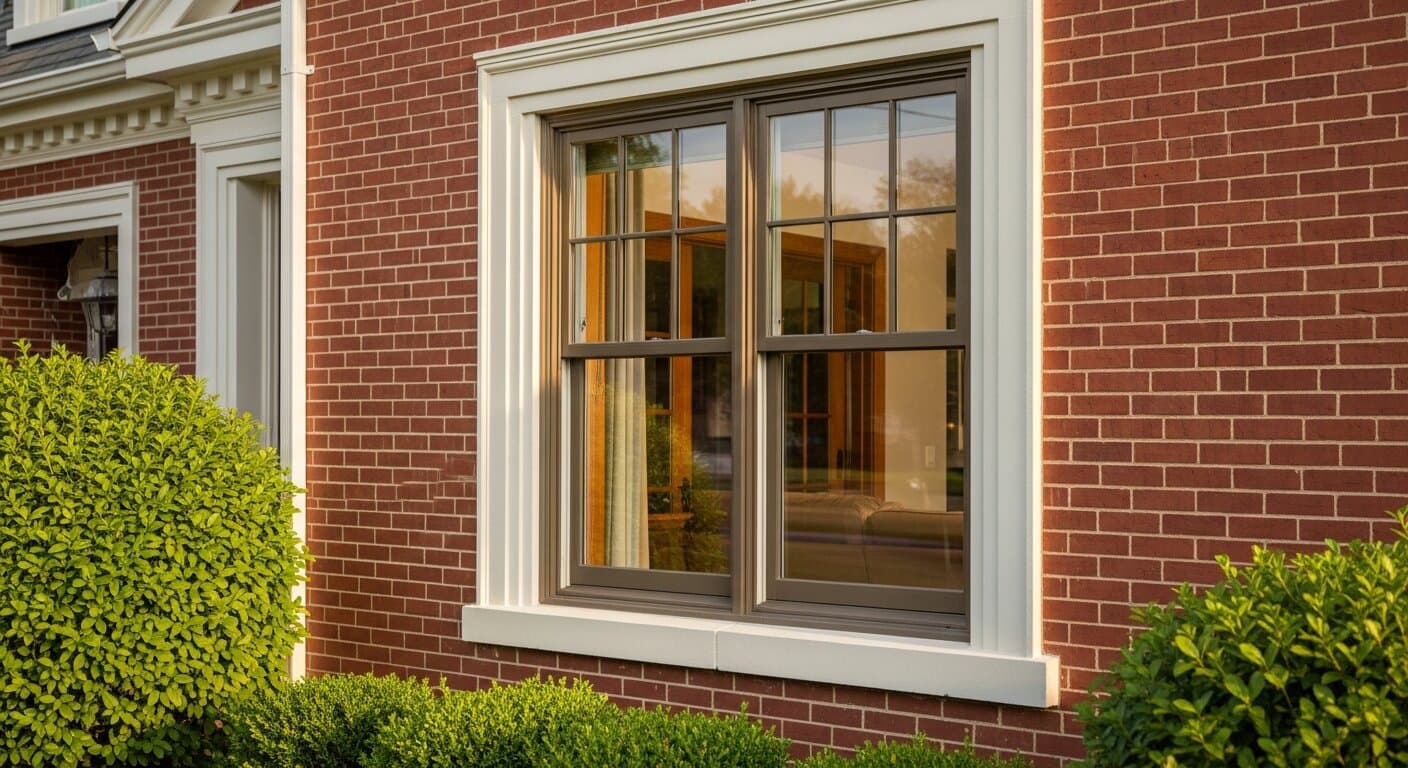
I never sold Pella. I want to say that plainly up front, because most "reviews" online are written by people who either sell the brand or have never sat with a homeowner who was actually deciding on windows. I sold Renewal by Andersen for 2.5 years, the same in-home, dealer-installed model Pella runs here through Pella Mid-Atlantic, so I have competed against Pella quotes and sat with homeowners who had one on the table. This is informed third-party market analysis grounded in Pella's own spec documents, not insider experience with the brand.
The short version: Pella is a real, capable mid-to-premium manufacturer with a wider material ladder than most. The product is mostly not the risk. The risk is a known clad-wood failure mode and the install variability that comes with a dealer-and-contractor model. Here is the honest breakdown.
Where Pella windows sit in the market
Pella is a national manufacturer founded in 1925, positioned mid-to-premium, and unusual for offering vinyl, fiberglass, and aluminum-clad wood all under one roof. That breadth is the headline. Most brands pick a lane. Pella lets you stay in one brand from a budget vinyl secondary opening up to a museum-grade clad-wood restoration.
The line ladder, roughly low to high:
| Line | Material | Where it fits |
|---|---|---|
| 250 Series | Vinyl, multi-chambered, reinforced sash | Rentals, flips, budget-conscious whole-home jobs |
| Impervia | Duracast five-layer engineered fiberglass | Long-term hold, low maintenance, energy focus |
| Lifestyle Series | Aluminum-clad wood (roll-form cladding) | Mid-tier wood look, owner-occupied homes |
| Reserve (Architect Series) | Aluminum-clad wood (extruded cladding) | Historic districts, high-end traditional remodels |
For the broader brand landscape in this region, see our brands hub, and for how Pella stacks against the brand I actually sold, the Pella vs. Renewal by Andersen comparison.
For a homeowner deciding where to start, the practical takeaway is to identify your project type first, then let it pick the line. A rental or flip rarely justifies clad-wood. A historic-district restoration rarely accepts vinyl. Knowing which of those you are before a dealer appointment keeps the conversation honest and the quote comparable.
Pella windows material lineup, line by line
Each Pella line is a genuinely distinct product, and the tier distinctions are real rather than marketing. Here is what each one actually is, drawn from Pella's own 2026 Architectural Design Manual and product documentation.
- Impervia (fiberglass). Built from "Duracast," Pella's proprietary five-layer engineered fiberglass composite: pultruded, with an interlocking structural mat, roving, heat-set resin, and a baked-on powder-coat finish. Pella markets it as their strongest material, and the specs back that up. The powder-coat finish meets AAMA 624, and Impervia carries commercial-grade structural ratings (more below). This is not generic fiberglass and it is not a clad product.
- Reserve / Architect Series (premium clad-wood). Uses extruded aluminum cladding (heavier-gauge, with crisper 90-degree profiles) finished in EnduraClad meeting AAMA 2604. Reserve Traditional carries authentic historic detailing: putty-glaze profiles, through-stile construction, butt joinery, spoon-lock hardware.
- Lifestyle Series (mid-tier clad-wood). Uses roll-form aluminum cladding (sheet aluminum bent to profile) with the same EnduraClad finish. Pella states this cladding distinction itself, and it is the key reason Lifestyle costs less than Reserve.
- 250 Series (vinyl). Multi-chambered vinyl with reinforced sashes, Pella's current primary vinyl line. From Pella's 2026 ADM (argon, dual-pane double-hung), Advanced Low-E runs about U 0.28 to 0.30 / SHGC 0.25 to 0.28 and the SunDefense+ package about U 0.24 to 0.25 / SHGC 0.18 to 0.20 (Pella 250 ADM). The mid-tier clad-wood Lifestyle double-hung runs U 0.30 to 0.33 / SHGC 0.27 to 0.30 (Advanced Low-E) down to U 0.25 to 0.28 / SHGC 0.20 to 0.22 (SunDefense+) (Pella Lifestyle ADM). Ratings vary by operating type and glass package, so read the NFRC label on the exact unit quoted.
One line buyers still search for is the 350 Series, a former step-up vinyl line. It no longer appears in Pella's current vinyl lineup (Encompass, 250, 150, Defender, Hurricane Shield), Pella now files its warranty under the company's historical products directory, and the old product page redirects to a generic page. Those are all signs of a national catalog removal, not a regional gap. Pella publishes no explicit "discontinued" notice, so I'd treat the 350 as retired and ask a dealer about the current equivalent (Encompass or 250) if you came in searching for it (Pella historical-warranty filing).
How good is Pella Impervia fiberglass?
Impervia is the line I would point a DC/MD/VA homeowner toward for a long-term, low-maintenance hold, and the certified performance numbers support that. It is the strongest case in the Pella catalog where the spec sheet, not the sales pitch, does the talking.
From Pella's 2026 Architectural Design Manual:
- Casement thermal performance (argon-fill, dual-pane): U-Factor roughly 0.24 to 0.33 and SHGC 0.18 to 0.48 depending on glass. SunDefense Low-E lands around U 0.24 to 0.28 / SHGC 0.18 to 0.20, and Advanced Low-E around U 0.27 to 0.33 / SHGC 0.24 to 0.27. Triple-pane is also available.
- Structural (awning): rating AP-LC30-LC+50/-60, air infiltration 0.05, design pressure +50/-60 psf, forced-entry 40. These are commercial-grade classes, not entry-level.
- Sound: STC up to about 37 with 5mm/10mm PVB laminated glass, meaningful on a busy DC corridor.
- Code: Impervia vent units carry an ASTM E1996 medium-missile rating C for wind zone 2 (Non-HVHZ), and the line holds Florida Product Approvals filed under Pella Corporation: FL35281 (awning), FL35278 (casement vent), and FL35284 (fixed casement) per Pella's ADM Impervia spec sheets. They are searchable on floridabuilding.org if you want to confirm them yourself (Pella Impervia ADM).
For our zone 4 mixed-humid climate (DC, Maryland, and Virginia sit in climate zone 4 per the 2021 IECC), the two NFRC numbers that matter are U-factor (winter heat loss, lower is better) and SHGC (summer solar gain). Pella's ADM lists Impervia's SunDefense+ glass as ENERGY STAR-capable across the North-Central, South-Central, and Southern zones (and AdvancedComfort in the Northern zone), which brackets our Zone 4 (Pella Impervia ADM). "Capable" is a manufacturer statement, not a per-unit certification, so per-SKU ENERGY STAR status, Most Efficient designation, and tax-credit eligibility for the 250 and Lifestyle lines still need a live-database check before you rely on them: [data pending: Pella 250/Lifestyle per-SKU ENERGY STAR certification and Most Efficient status, verified against the live energystar.gov product finder] For how these numbers translate to bills, see our energy-efficient windows guide.
The clad-wood water-intrusion history you should vet
This is the single most important caveat in any Pella clad-wood recommendation: Pella's clad-wood lines have a documented history of water-intrusion complaints, where water got behind the aluminum cladding and rotted the wood interior. It is not a reason to rule Pella out. It is a reason to ask hard questions.
The most documented case is Eubank v. Pella Corp., 753 F.3d 718 (7th Cir. 2014), a federal class action over water intrusion in Pella's aluminum-clad ProLine windows, where water got behind the cladding and rotted the underlying wood; the litigation produced a $25.75 million settlement fund. Consumer-complaint channels (BBB, ConsumerAffairs) echo the same water-intrusion theme on the clad-wood lines. I weight this heavily for one regional reason: in DC/MD/VA's older rowhomes, colonials, and Cape Cods, flashing and sill detailing are often imperfect to begin with, and clad-wood is least forgiving exactly where water already wants to sit. As a real-estate agent I have walked homes where clad-wood failed at the sill, the cladding looking fine from the curb while the wood behind it was gone.
What this means practically: clad-wood is a beautiful, authentic product and the right call for a historic restoration. Reserve Traditional has even been approved case-by-case by the National Park Service for historic-tax-credit projects, a real differentiator for a DC historic-district rowhome. But it lives or dies on the install and the flashing. If you go clad-wood, vet the installing dealer's water-management practice specifically, and read the warranty's exclusions for water intrusion before you sign.
How Pella windows are sold and installed in DC/MD/VA
Pella reaches this market through two channels, and which one you buy from changes the line available, the install, and arguably the warranty. Know which you are in before you sign.
- Dealer / in-home / showroom. In DC/MD/VA this is Pella Mid-Atlantic, with its HQ and showroom in Beltsville, MD, plus showrooms in Gaithersburg, Annapolis, Hunt Valley (MD), Tysons (VA), and Lewes (DE). This channel carries the full line, including the clad-wood Reserve, Architect, and Lifestyle Series, and uses in-home consultation with professional installation.
- Big-box retail. Pella at Lowe's carries Lifestyle Series (clad-wood), Impervia (fiberglass), and the vinyl lines (250 Series, 150 Series, plus Hurricane Shield and Defender) sold as stocked or special-order with separate Lowe's installation.
When I walked into an appointment and saw a Pella folder already on the table, the training kicked in: never knock the window, reframe the buy. We were taught to ask who actually installs it, pull the dealer quote apart line by line, and turn every gap into a question only our one-company model could answer. The homeowner thought they were comparing two windows. They were watching a script built to make the other quote feel incomplete.
Here is the part I can speak to from the rep's side of the table: Pella's dealer install is performed by third-party contractors, not Pella W-2 crews. That is the same structure most premium brands use, and it is not inherently bad, but it makes the specific crew on your house the variable. Consumer complaints in this region cite uneven install quality, damaged-on-arrival product, and slow repair scheduling. The brand on the truck does not guarantee the crew. The single best predictor of a good Pella outcome is the dealer, not the Pella name, so vet the installing entity the same way you would any contractor. Our guide to choosing a window replacement contractor is the checklist I would hand a friend before a Pella appointment.
Pella windows warranty and what it really covers
Pella publishes a transferable limited warranty alongside its "Pella Care Guarantee," but the year-by-year terms matter more than the headline, and they step down when you sell the home. I will not assert numbers I could not pull from Pella's primary warranty document.
Confirmed against Pella's current Impervia warranty document (©2020 Pella Corporation, WPI1220): glass 20 years, non-glass components and workmanship 10 years, and labor 2 years, all transferable. The catch is the frame: Impervia's Duracast material carries a limited-lifetime warranty to the original owner only, and it is non-transferable. It converts to the transferable 10-year materials-and-workmanship coverage the moment you sell or stop occupying the home (Pella Impervia warranty). The 2020-and-later document also adds an arbitration and class-action waiver with a 90-day opt-out, and requires claim notice within a year of discovery.
Two honest points for this market specifically. First, the roughly 2-year labor coverage is less generous than some premium competitors, and labor is most of the cost of a future repair. Second, the transfer step-down matters more here than almost anywhere: DC/MD/VA is a high-turnover real-estate market, and a warranty that shrinks the day you sell is worth less to a homeowner who plans to move in five years than the brochure implies.
Pella windows pricing: what it costs and why it's opaque
Pella is mid-to-premium and quote-driven. There is no published per-window MSRP, and I won't invent one. Every dollar figure circulating online for Pella comes from secondary cost-aggregator sites, not Pella, so the ranges below are clearly-labeled third-party estimates, never Pella pricing.
The honest tier intuition, lowest to highest: 250 Series vinyl sits at the bottom, Impervia fiberglass and Lifestyle clad-wood overlap in the middle, and Reserve/Architect clad-wood is the premium. Third-party cost-aggregator estimates (never Pella-published) put installed per-window pricing nationally at roughly 250 Series vinyl $450 to $1,350, Impervia fiberglass $400 to $2,200, Lifestyle clad-wood $400 to $2,000, and Reserve/Architect clad-wood $1,300 to $3,500, with DC/MD/VA running roughly 10 to 30% above the national figure on labor and access (koalatyremodel; projectcostatlas DC). Use those to sanity-check a quote, not as a bid.
The opacity itself is worth naming, because it is the thing our model is built against. Pella's price is whatever the in-home or dealer quote says that day, and the dual Lowe's-versus-dealer channel can leave a buyer unsure which line, install, and warranty they are actually getting. That is not unique to Pella. It is how the whole in-home category works, and it is exactly the markup-and-discount theater I ran for years. For region-wide context on what windows actually cost, see our window replacement cost guide, and for the material-by-material version, the wood window cost and fiberglass window cost pages.
Is Pella worth it? My read
Pella is worth it when the line and the dealer are both right, and a waste of a premium when they aren't. The product range is real, the Impervia and Reserve lines are genuinely strong, and the brand is established enough that parts and service exist. None of that is the gamble.
The gamble is two things you control by vetting: the clad-wood water-intrusion exposure (mitigated by a good installer and a careful read of the warranty's water exclusions), and the dealer-and-contractor install quality (mitigated by treating the local Pella entity like any contractor you'd screen). Get those right and Pella delivers. Skip them and the Pella name on the sticker won't save the job. Before any in-home appointment, the most useful thing you can do is get a real, itemized number for your own house to hold the Pella quote against.
See it on your own house first
Preview a clean replacement on a photo of your actual window and get itemized pricing before you decide.
Frequently asked questions
Are Pella windows worth the money?
Often, but it depends on the line and the dealer more than the brand. Pella's Impervia fiberglass and Reserve clad-wood are genuinely strong, well-specified products. The two things that decide whether your money is well spent are vetting Pella's documented clad-wood water-intrusion history and screening the specific third-party dealer that installs your job, since Pella does not install with its own crews.
What is the problem with Pella windows?
The most documented issue is clad-wood water intrusion, litigated in Eubank v. Pella Corp., 753 F.3d 718 (7th Cir. 2014), a federal class action over ProLine aluminum-clad windows that let water behind the cladding and rotted the wood interior. Separately, because installation is handled by third-party contractors rather than Pella crews, install quality and service responsiveness vary by dealer, so the installing entity is worth vetting carefully.
What is the difference between Pella Reserve and Lifestyle Series?
Both are aluminum-clad wood, but the cladding differs. Reserve (Architect Series) uses extruded aluminum cladding, heavier-gauge with crisper profiles and authentic historic detailing, finished in EnduraClad meeting AAMA 2604. Lifestyle Series uses roll-form aluminum cladding (sheet aluminum bent to profile). That cladding distinction is the main reason Reserve costs more than Lifestyle.
Is Pella Impervia really fiberglass?
Yes. Impervia is made from Duracast, Pella's proprietary five-layer engineered fiberglass composite, pultruded with an interlocking structural mat, roving, heat-set resin, and a baked-on powder-coat finish meeting AAMA 624. It is not aluminum and not a clad-wood product, despite being sometimes confused with both.
How much do Pella windows cost?
Pella is mid-to-premium and quote-driven, with no published per-window MSRP. Tiers run lowest to highest: 250 Series vinyl, then Impervia fiberglass and Lifestyle clad-wood overlapping in the middle, then Reserve/Architect clad-wood at the top. Any specific dollar figure online comes from secondary cost-aggregator sites, not Pella, so treat those as estimates rather than the brand's pricing.
Where can I buy Pella windows in DC, Maryland, or Virginia?
Two channels. Pella Mid-Atlantic runs dealer showrooms with in-home consultation, with HQ in Beltsville, MD, plus Gaithersburg, Annapolis, Hunt Valley (MD), Tysons (VA), and Lewes (DE), carrying the full line including clad-wood. Pella at Lowe's carries Lifestyle, Impervia, and the vinyl lines with separate Lowe's installation. Which channel you buy from affects the line, install, and warranty you get.
How does Pella compare to Renewal by Andersen?
They run a similar premium, in-home, dealer-installed model in this region, but the core material differs: Pella offers vinyl, fiberglass, and clad-wood, while Renewal by Andersen builds in its proprietary Fibrex composite only. Pella's clad-wood and fiberglass breadth is the differentiator, while Renewal's single-material focus is its own.