Pella vs Renewal by Andersen: a DC/MD/VA buyer's guide
Renewal by Andersen sells one frame material (its proprietary Fibrex composite) through a single-company, in-home, no-line-item-pricing model. Pella sells a full ladder of vinyl, fiberglass, and clad-wood through dealers and Lowe's, with more material choice but a documented clad-wood water-intrusion history. In the pella vs renewal by andersen decision, pick on material, sales model, and warranty, not the TV ad.

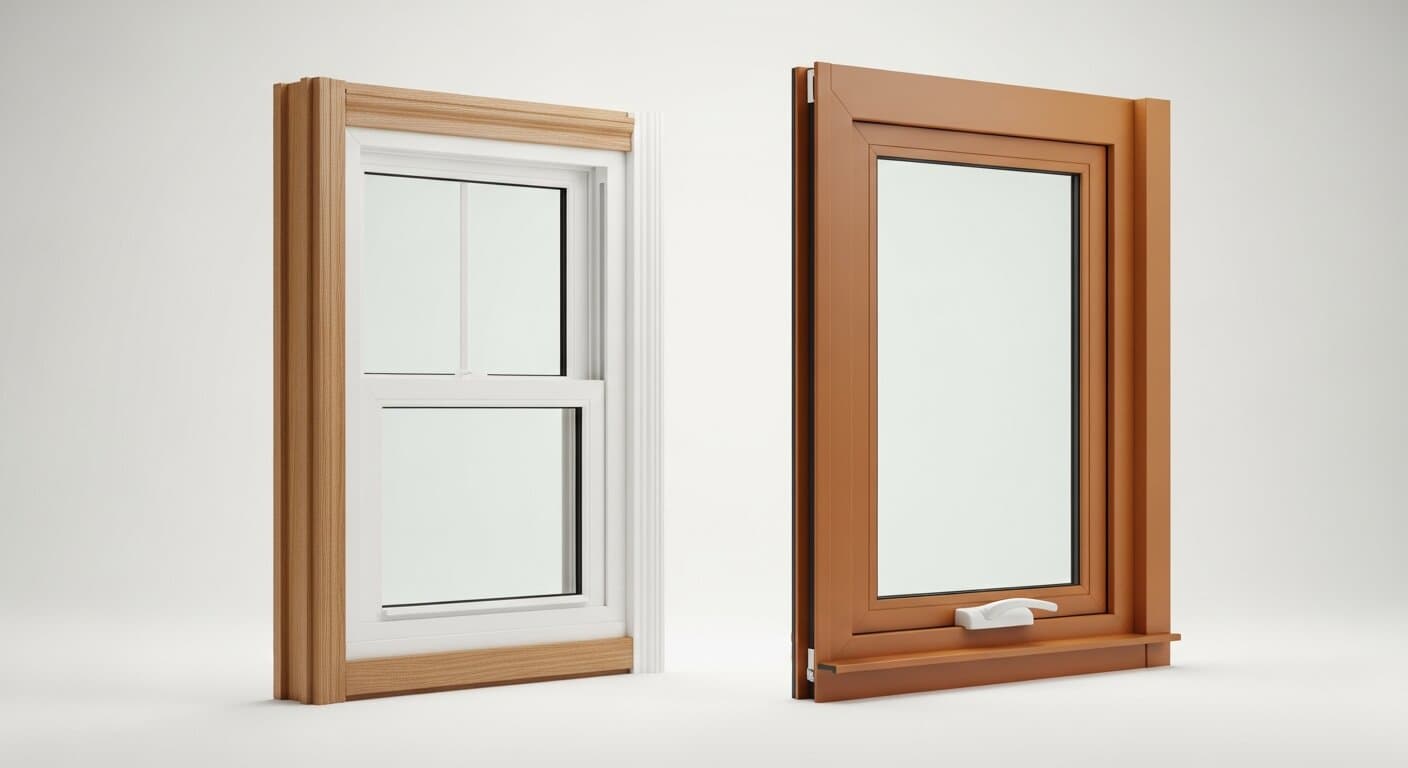
I spent 2.5 years as a Renewal by Andersen design consultant, so my read on RbA here is insider experience. I never worked for Pella; I met it as a competing in-home rep across the DMV, so treat that read as informed market analysis grounded in Pella's own published specs. Both are good windows. They are built and sold so differently that the right answer depends almost entirely on what kind of buyer you are.
Pella vs Renewal by Andersen at a glance
The fastest way to frame the pella vs renewal by andersen choice: Renewal by Andersen is a one-material, one-company, premium replacement system; Pella is a broad manufacturer with vinyl through clad-wood, sold both through dealers and at Lowe's. RbA trades choice for accountability. Pella trades single-throat accountability for range and price flexibility.
| Dimension | Renewal by Andersen | Pella |
|---|---|---|
| Frame material(s) | Fibrex composite only (reclaimed wood fiber + thermoplastic polymer, ~40% wood fiber) | Vinyl (250/150 Series), fiberglass (Impervia "Duracast"), aluminum-clad wood (Reserve/Architect, Lifestyle) |
| Sales model | Single-company "Signature Service" (RbA sells, builds, installs, services) | Dealer showroom + in-home install (Pella Mid-Atlantic) and big-box retail at Lowe's |
| Installation | RbA-managed "Certified Master Installers" (employment status varies by affiliate) | Third-party contractors via dealer or Lowe's |
| Pricing | One custom project number, no line items | Quote-driven, opaque; no published primary pricing |
| Warranty (key spans) | 20-yr glass, 20-yr Fibrex, 10-yr parts, 2-yr install; fully transferable, no step-down (per RbA's limited warranty, RBA12755) | Glass 20 yr, components 10 yr, labor 2 yr (transferable); Impervia Duracast frame lifetime to original owner only, non-transferable (drops to 10 yr on sale) (per Pella's Impervia warranty doc) |
| Glazing | Double-pane + optional HeatLock coating; true triple-pane also offered (Enhanced Triple Pane) | Dual and triple-pane available across lines |
| DC/MD/VA presence | RbA of the Capital Region (DMV) | Pella Mid-Atlantic (Beltsville HQ; Gaithersburg, Annapolis, Hunt Valley MD; Tysons VA) + Lowe's |
If you want the wider field of brands you'll run into locally before narrowing to these two, start at our replacement window brands hub, and for other head-to-heads see the brand comparison guides.
Materials: Fibrex composite vs Pella's full ladder
This is the real fork. Renewal by Andersen offers exactly one frame material; Pella offers four families. If you have a strong material preference, that alone can decide it.
Renewal by Andersen builds every window (double-hung, casement, awning, picture, bay/bow, sliding, specialty) from Andersen's proprietary Fibrex. Per RbA's own materials documentation, Fibrex is reclaimed wood fiber fused with a thermoplastic polymer, roughly 40% wood fiber by weight, with the polymer coating each fiber so the frame resists rot and fungal growth. RbA claims it is "twice as stable and rigid as vinyl" with a low thermal-expansion rate. One correction I made constantly while selling it: Fibrex is a composite member, meaning the whole frame and sash are the material, not a cladding over a wood core. There is no vinyl, all-wood, or fiberglass option in the RbA line. That's the trade: one engineered material, no menu.
Pella, by contrast, is a material ladder:
- Vinyl. The 250 Series (multi-chambered, reinforced sash) is the current primary vinyl line; the 150 Series is the entry/builder tier. The former step-up 350 Series has been dropped: Pella now files its warranty under the company's historical products directory and it's gone from the current vinyl lineup, a national catalog removal, though Pella publishes no explicit discontinuation notice.
- Fiberglass. Impervia uses Duracast, Pella's proprietary five-layer engineered fiberglass composite (pultruded, with an interlocking structural mat, roving, heat-set resin, and a baked-on powder-coat finish meeting AAMA 624), per Pella's 2026 Architectural Design Manual. It is genuinely strong and low-maintenance, not generic fiberglass, and not a clad product.
- Aluminum-clad wood. Reserve and Architect Series use extruded aluminum cladding (heavier-gauge, crisper profiles) with an EnduraClad finish meeting AAMA 2604, per the same 2026 Architectural Design Manual; the mid-tier Lifestyle Series uses roll-form cladding. The cladding is aluminum over a wood interior, so these are clad-wood windows, not aluminum windows.
For a neutral primer on how these materials behave over time, our window materials guide breaks down vinyl, fiberglass, composite, and clad-wood without a brand attached.
Sales model: Signature Service vs dealer-and-Lowe's
Renewal by Andersen runs a single-company model; Pella runs a split dealer-plus-retail model. This shapes accountability, pricing transparency, and who actually shows up to install, and in my experience it matters more to homeowners than the frame material does.
I ran the RbA version myself. "Signature Service" means RbA owns the whole chain: design and sale, custom build-to-order manufacturing, installation by Certified Master Installers, and warranty service ("we own the entire process," as the company puts it). The upside is real: one company to call, no finger-pointing between a window brand and a separate installer. The downside I delivered firsthand: a single total project price with no line items, and an in-home presentation built to close on the first visit. (One honest caveat I can't assert as fact: many local RbA operations are independently owned franchises, and whether installers are W-2 employees or subcontractors varies by location. [data pending: whether RbA Capital Region installers are W-2 employees vs. subcontractors])
Pella reaches you two ways. The dealer channel in our market is Pella Mid-Atlantic (HQ and showroom in Beltsville, plus Gaithersburg, Annapolis, Hunt Valley in MD and Tysons in VA), which carries the full line including clad-wood and does in-home consultation with third-party installation. Separately, Pella at Lowe's stocks Lifestyle Series clad-wood, Impervia fiberglass, and the 250/150 vinyl lines with separate Lowe's installation. That breadth is a genuine convenience, but it has a catch I'd flag to any buyer: the same brand name can mean a different line, install crew, and warranty depending on which door you walked through. Confirm exactly which line and who installs before you compare two "Pella" quotes.
Get an honest price, no salesperson
Tell us your address and window and get itemized pricing — no in-home pitch, no surprises.
Warranty and resale: which holds up when you sell
Both warranties are strong on paper; the difference that matters in a high-turnover market like the DMV is transferability. Renewal by Andersen's warranty is structured to transfer cleanly to the next owner; Pella's steps down on transfer.
RbA's transferable limited warranty runs 20 years on glass, 20 years on the Fibrex frame/sash material, 10 years on non-glass parts and hardware, 10 years on the exterior color finish (fade not to exceed 5 delta-e per ASTM D2244-16el), and 2 years on installation workmanship, fully and automatically transferable to a subsequent owner with no maintenance preconditions. As a former real estate agent, I'll say plainly: a warranty that survives the sale is a real, if modest, line item in a listing.
Here are both, confirmed against each brand's published warranty terms. Renewal by Andersen runs 20 years on glass, 20 on Fibrex, 10 on hardware and on the exterior finish, and 2 on installation, fully transferable for the remainder of the term with no step-down, per the corporate limited warranty document covering units installed after January 1, 2022 (RbA limited warranty PDF, RBA12755). Pella's current Impervia warranty gives 20 years on glass, 10 on non-glass components and workmanship, and 2 on labor, all transferable, but the Duracast frame material is limited-lifetime to the original owner only and non-transferable, converting to the transferable 10-year coverage when you sell (Pella Impervia warranty). The practical read: RbA's coverage follows the house intact; Pella's best material coverage does not survive a sale.
A warranty is only as good as the company that honors it and the install behind it. Our contractor-vetting guide covers how to read warranty clauses and confirm who actually answers a claim.
Pella vs Renewal by Andersen: honest weaknesses on both sides
Neither brand is flawless, and a fair pella vs renewal by andersen comparison has to name the documented problems, not just the brochure strengths.
Renewal by Andersen:
- The most-cited complaint pattern is high-pressure, lengthy in-home sales, including same-day-signing pressure and discounts presented as expiring. I delivered that presentation; expect it, and don't sign under a deadline.
- No itemized pricing. You get one project number, which makes apples-to-apples shopping hard and drives sticker shock.
- One frame material. If you want a true wood interior or a budget vinyl option, RbA doesn't have it.
- Double-pane is standard; true triple-pane isn't part of the standard lineup (HeatLock is a coating, not a third pane).
Pella:
- The single most important caveat: a documented history of clad-wood water intrusion and wood rot. Multiple class-action suits alleged Architect Series and Designer Series units let water behind the aluminum cladding and rotted the interior wood. This is the central reason to vet a clad-wood Pella carefully, especially on weather-exposed elevations of older DMV homes.
- Installation is third-party, and consumer complaints (BBB, ConsumerAffairs) cite uneven install quality and slow service, so vet the specific dealer or Lowe's crew, not just the brand.
- The dual dealer/Lowe's channel can blur which line, warranty, and installer you're actually getting.
To be just as fair on strengths: Pella's Impervia fiberglass is a legitimately excellent low-maintenance material with commercial-grade performance classes, and Pella Reserve Traditional clad-wood has been approved case-by-case by the National Park Service for historic-tax-credit projects, a real differentiator for a historic DC rowhome where authentic putty-glaze profiles matter. RbA's strength is the opposite kind: fewer decisions, one accountable company, and a warranty built to transfer.
Which should you pick
Choose on your situation, not the brand with the better commercial. The two real decision axes are material (do you need a wood interior, a budget vinyl, or is one engineered composite fine) and accountability (do you want one company on the hook, or are you comfortable vetting a separate installer for more range and price flexibility). In a high-turnover market like the DMV, weight the transferable-warranty difference heavily too, since the coverage that follows the house is the one that shows up when you list it. Here's how I'd route a DC/MD/VA homeowner who got both pitches.
- You want a true wood interior or historic-accurate sightlines (older colonial, a rowhome in a historic district where the architectural review board cares): Pella Reserve/Architect clad-wood is the stronger fit, since RbA has no wood-interior option. Vet the clad-wood water-intrusion history and the installer.
- You want the lowest defensible price or a vinyl option: Pella's 250 Series vinyl (dealer or Lowe's) gives you a budget path RbA simply doesn't offer.
- You value single-company accountability and a clean transferable warranty over material choice: Renewal by Andersen. One company measures, builds, installs, and services, and the warranty follows the house when you sell.
- You want low-maintenance performance without wood and without the full clad-wood premium: Pella Impervia fiberglass is the quiet standout in this matchup.
- You're going to be pressure-pitched either way and want to slow it down: get the spec in writing (line, glass package, install type, warranty terms) and never sign on a same-day deadline from RbA or a Pella dealer.
The honest meta-point: both are premium, in-home-sold brands, and most of the price you pay covers the rep, the appointment-setting, and the advertising, not the glass. That's the exact overhead our direct-to-consumer model is built to strip out. If you'd rather see an itemized, per-window number for your actual house before any rep visit, the 3D configurator gives you one with no pitch and no expiring discount. For typical regional pricing context, see our window replacement cost guide, and you can ask Zig which glass package fits our Zone 4 mixed-humid climate if you're unsure.
See it on your own house first
Preview a clean replacement on a photo of your actual window and get itemized pricing before you decide.
Frequently asked questions
Is Renewal by Andersen better than Pella?
Neither is universally better. Renewal by Andersen offers one engineered material (Fibrex), single-company accountability, and a transferable warranty. Pella offers far more material choice across vinyl, fiberglass, and clad-wood at a wider price range, but installs through third parties and carries a documented clad-wood water-intrusion history. The better choice depends on whether you value material range or single-throat accountability.
What is the main difference between Pella and Renewal by Andersen windows?
Material and sales model. Renewal by Andersen builds every window from its proprietary Fibrex composite and sells, builds, installs, and services them as one company. Pella is a manufacturer offering vinyl, fiberglass (Impervia), and aluminum-clad wood, sold through dealers and at Lowe's with third-party installation.
Does Pella or Renewal by Andersen have the better warranty?
Both publish strong limited warranties. The practical difference is transferability: per RbA's published limited warranty, its coverage is fully and automatically transferable to the next owner, while per Pella's Impervia warranty document, the Duracast frame coverage is limited-lifetime for the original owner only and steps down on transfer. Confirm the exact current terms against each brand's primary warranty document before relying on a number.
Is Pella's clad-wood window prone to rot?
There is a documented history of complaints and class-action allegations that certain Pella clad-wood lines (Architect Series and Designer Series) allowed water behind the aluminum cladding, rotting the interior wood. Newer construction may differ, but it is the single most important thing to vet, especially on weather-exposed elevations of older DC/MD/VA homes.
Which is more expensive, Pella or Renewal by Andersen?
Both are premium, in-home-sold brands, and neither publishes per-window pricing. From third-party aggregators (never a manufacturer figure), Renewal by Andersen runs roughly $1,000 to $3,500 per window installed ($15,000 to $55,000+ whole-house), while Pella spans about $450 to $1,350 for 250 vinyl, $400 to $2,200 for Impervia fiberglass, and $1,300 to $3,500 for Reserve/Architect clad-wood. Get itemized quotes and compare the same line, glass, and install type.
Does Renewal by Andersen offer triple-pane windows?
Yes, but read the distinction. Renewal by Andersen's standard glazing is double-pane, and its HeatLock option is a room-side Low-E coating, not a third pane. Separately, RbA does offer a genuine triple-pane product, Enhanced Triple Pane (including an Enhanced Triple Pane with SmartSun). If a true triple-pane unit matters to you, confirm you are being quoted the actual Enhanced Triple Pane glass and not just the HeatLock coating.