How much does a casement window cost?
Casement window cost runs a little above a comparable double-hung in the same product line, because the crank operator and heavier hinges cost more than a balance system. Across the DC/MD/VA market, the bigger swing is frame material: budget vinyl sits lowest, fiberglass and composite cost more, and wood or wood-clad sits at the top. Install type and the sales model behind the quote move the number too.

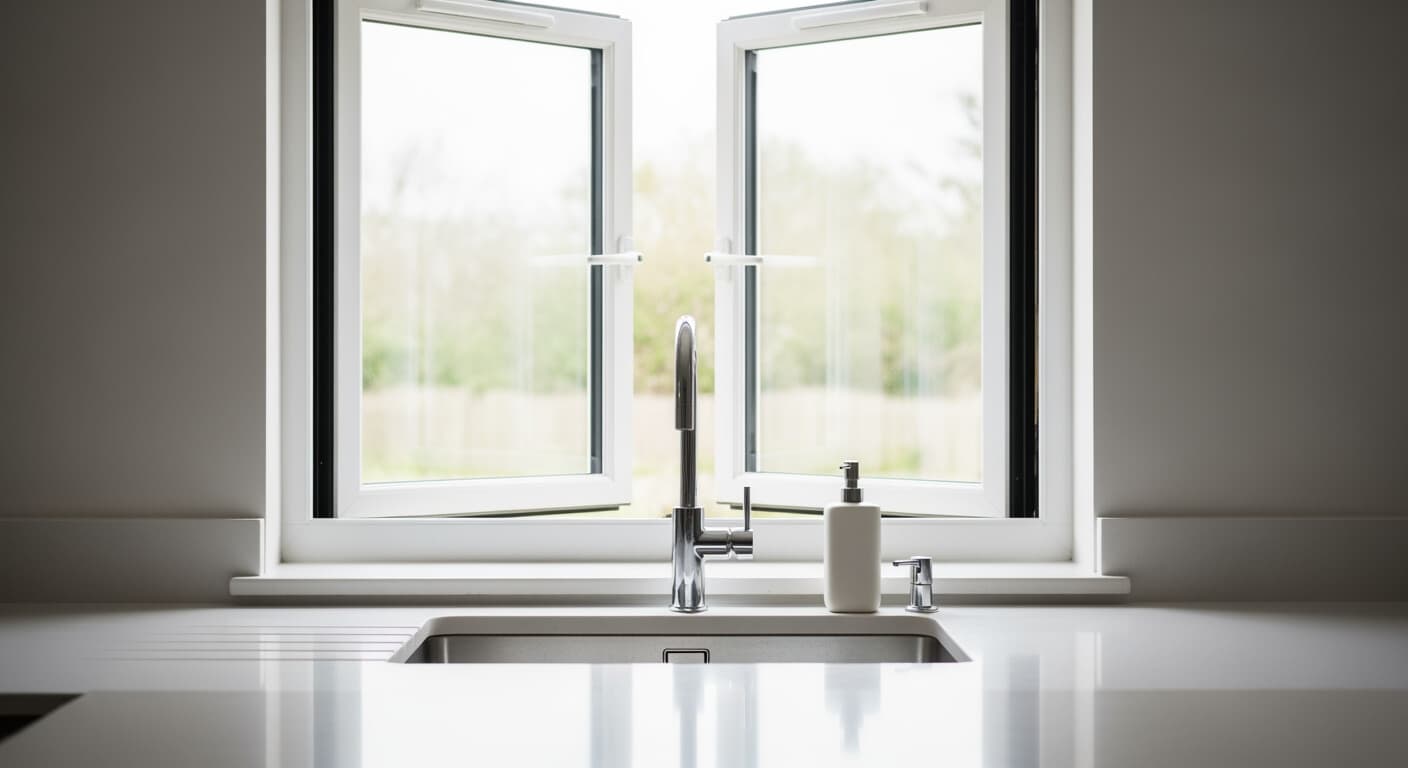
If you've gotten a casement quote and you're trying to tell whether the number is fair, here's what's actually in it. A casement is not just a "fancier" window with a fancier price. It's a different mechanism, and the price reflects the operator hardware and hinges as much as the glass. Selling in homes, I saw identical casements priced wildly differently from one company to the next, and the spread came from the tier, the install type, and the sales model, not the window itself. This page breaks the stack apart for casements specifically, so you can read your own quote across vinyl, fiberglass, and wood.
What does a casement window cost across material tiers?
A single installed casement in the DC/MD/VA market generally runs from a few hundred dollars at the budget-vinyl end to several thousand at the wood-clad premium end. The casement window cost you actually pay depends far more on frame material and install type than on the casement mechanism itself, though the operator hardware does add a real premium over a double-hung in the same line.
The ranges below are general market context for our region, not OneStep's verified prices. They reflect the kind of numbers reputable industry sources publish for a single, standard-size, double-pane casement installed as an insert. Use them to sanity-check a quote, not as a guaranteed bid.
| Tier | Typical frame / brand examples | General market range per casement installed | Who it fits |
|---|---|---|---|
| Budget vinyl | Builder-grade vinyl | [data pending: budget vinyl casement per-window installed market range, DC/MD/VA] | Rentals, flips, secondary openings |
| Mid-tier vinyl | Mainstream branded vinyl | [data pending: mid-tier vinyl casement per-window installed market range, DC/MD/VA] | Most owner-occupied DC/MD/VA homes |
| Premium vinyl / composite | ProVia, Andersen 100 Series | [data pending: premium vinyl/composite casement per-window installed market range] | Long-term hold, energy focus |
| Fiberglass / Fibrex | Marvin Essential, Renewal by Andersen | [data pending: fiberglass/Fibrex casement per-window installed market range] | Historic districts, 15+ year hold |
| Wood interior / clad | Marvin Signature, Pella Reserve | [data pending: wood/clad casement per-window installed market range] | High-end remodels, traditional interiors |
For the broader, all-styles version of this table, see our window replacement cost guide. A casement sits slightly above the equivalent row for a double-hung in each tier.
Why does casement window cost more than a double-hung?
A casement costs a little more than a comparable double-hung in the same line, typically [data pending: casement vs double-hung price premium percentage] more, because the crank operator, the hinge arms, and the multi-point lock cost more to build than the spring-balance system in a double-hung. The frame, glass, and labor are otherwise comparable.
That premium is mechanical, not cosmetic. A double-hung rides on a cheap balance system. A casement carries a geared crank operator and hinge arms that take the full weight of the sash every time it swings out. Premium brands use cast-metal operators with multi-point locking; budget brands use stamped sheet metal that works fine new and tends to start binding well before the frame's life is up. So the casement premium buys something real (tighter sealing and easier operation), but the hardware is also the part most likely to need service down the line.
What drives casement window cost beyond the material tier?
Beyond frame material, four things move the number: install type, glass package, operator quality, and the sales model behind the quote. Most homeowners assume the casement mechanism is the big lever. Material and install type usually matter more.
- Install type. An insert (pocket) replacement reuses the existing, sound frame and is the lower-cost path. A full-frame replacement strips back to the rough opening, required when the frame is rotted or when you're switching window types. Double-hung-to-casement is doable as an insert in some cases, but ask the installer to inspect first.
- Glass package. Double-pane with Low-E and argon is the modern baseline. Triple-pane and specialty Low-E coatings each add cost. In DC/MD/VA's mixed-humid climate, the glass spec matters as much as the frame.
- Operator quality. A cast-metal operator with multi-point locking costs more than a stamped sheet-metal one and lasts longer, because it carries the full weight of the sash every time the casement swings out. Stamped operators work fine when new but tend to give out years before the frame itself does, so on a long-term hold the better operator is worth paying up for. It is also the line most worth confirming on a quote, since it drives how long the window stays smooth.
- Sales model. This is the layer almost nobody quotes you directly. A traditional in-home rep, the appointment, the follow-ups, and the "today-only" discount theater all cost money that ends up in your price. Selling that way, I watched quotes for the same casement drift hundreds of dollars on this layer alone, which is why an itemized, per-opening price tells you more than a single discounted total.
Are casements worth the cost in Zone 4?
For energy performance specifically, casements are usually worth the premium in our climate, because they're the tightest-sealing operating style. DC, Maryland, and Virginia sit in IECC climate zone 4 (mixed-humid), so you're paying to keep heat in during winter and humid heat out in summer.
Because the sash compresses against the frame on all four sides when you close it, a casement typically posts a lower NFRC U-factor and a much better air infiltration rating than the double-hung in the same product line. The two NFRC-printed numbers to read are U-factor (lower is better for winter heat loss) and SHGC, the solar heat gain coefficient (lower keeps summer heat out). Most DC/MD/VA addresses sit in ENERGY STAR's North-Central window zone, where the ENERGY STAR Version 7.0 specification requires a U-factor of 0.25 or lower and an SHGC of 0.40 or lower for certification; ask Zig if you need to confirm the zone for your address.
One thing worth saying plainly: the federal §25C Energy Efficient Home Improvement Credit for windows (30% of cost, capped at $600/year for windows) was terminated for property placed in service after December 31, 2025 under the 2025 federal tax law (Public Law 119-21). For a 2026 casement install, do not count on a federal window tax credit. Lean instead on utility-bill savings over the life of the window and any state or local incentive that applies ([data pending: DC/MD/VA state or local window/efficiency incentives for 2026]). If a salesperson is still quoting the §25C credit to justify a casement price, that's outdated.
Is my casement quote fair? A checklist
A casement quote is fair when it's itemized, meaning you can see the window, the glass package, the install type, the operator grade, and the labor as separate lines rather than one bundled, discounted number. If the only figure on the page is a lump sum, you can't evaluate it.
Ask any casement quote these questions:
- Is it insert or full-frame, and why? A full-frame charge on a sound frame is worth questioning.
- What's the NFRC-rated U-factor and SHGC on the exact glass package quoted?
- Is the operator cast metal with multi-point locking, or stamped sheet metal? This drives how long it stays smooth.
- Is the price itemized per opening, or one bundled total?
- Is the discount real, or a marked-up list price discounted back to the actual number?
If a seller won't itemize, that's information. For how casements compare to other styles before you commit to one, see the casement window page and the full windows hub.
What does a OneStep casement window cost?
OneStep is built to show you an itemized, no-rep price for your specific casement openings before anyone talks to you. The exact number depends on the same drivers above (material, install type, glass, operator grade, and count) applied to your actual windows.
Because pricing is configured per home rather than pitched, the cleanest way to see a real OneStep casement number is to run your own address through the configurator. We're not going to print a fake "from $X" headline here, because that's exactly the marked-up-list-price game this page is warning you about.
See it on your own house first
Preview a clean replacement on a photo of your actual window and get itemized pricing before you decide.
Frequently asked questions
How much does a casement window cost installed in DC, MD, or VA?
A single installed casement in our region generally ranges from a few hundred dollars for budget vinyl to several thousand for wood-clad premium, with most owner-occupied homes landing in the mid-tier vinyl range. Those are general market figures, and the fair number for your home depends on material, install type, glass, and operator grade.
Why do casement windows cost more than double-hung?
Casements run a little above a comparable double-hung in the same line because the crank operator, hinge arms, and multi-point lock cost more to build than a spring-balance system. The frame, glass, and labor are otherwise similar, so the premium is mechanical rather than cosmetic.
Does vinyl, fiberglass, or wood change casement window cost the most?
Frame material is the single biggest swing in casement window cost. Budget vinyl sits lowest, mid-tier vinyl covers most owner-occupied homes, fiberglass and composite cost more and last longer, and wood or wood-clad sits at the top. Within any one material, the casement premium over a double-hung is comparatively small.
Does insert or full-frame replacement cost more for a casement?
Full-frame costs more. It strips back to the rough opening and is genuinely required when the existing frame is rotted or when you're switching window types. On a sound existing frame, an insert (pocket) replacement is the lower-cost path, so a full-frame charge on a sound frame is worth questioning.
Is there still a federal tax credit for casement windows in 2026?
No. The federal section 25C credit for windows (30% of cost, up to $600 per year for windows) was terminated for property placed in service after December 31, 2025 under Public Law 119-21. For a 2026 install, do not assume a federal window tax credit applies; lean on utility-bill savings and confirm any current state or local incentives before relying on them.
Are casement windows worth the extra cost?
For energy and ease of operation, often yes. Casements seal tighter than any other operating style and are easier to crank open over a sink or in a hard-to-reach opening. Whether the premium pays off depends on the opening, since for a front-facing colonial or row-house window a double-hung may be the better call on looks alone.
Next step
The most useful thing you can do before talking to any installer is see a real, itemized casement number for your own openings. Our 3D configurator pulls up your home, lets you place the casements you need, and prices them per opening, with no rep, no pitch, and no expiring discount.
See it on your own house first
Preview a clean replacement on a photo of your actual window and get itemized pricing before you decide.
For the tier-by-tier breakdown across all styles, start at the cost hub or the window replacement cost guide. To see whether a casement is right for an opening, read the casement window page and the eight styles at the windows hub. For the bigger picture, see window replacement. The person behind every page here is Anthony Moorman.