Renewal by Andersen review: an insider's honest read
Renewal by Andersen builds a genuinely good window. Its proprietary Fibrex frame is more rigid than vinyl, the warranty is strong and transfers to the next owner, and one company owns design, build, install, and service. You pay a premium for it, and the in-home pitch is engineered to close that night. With Renewal by Andersen the product is rarely the problem; the price and the pressure are what to scrutinize.

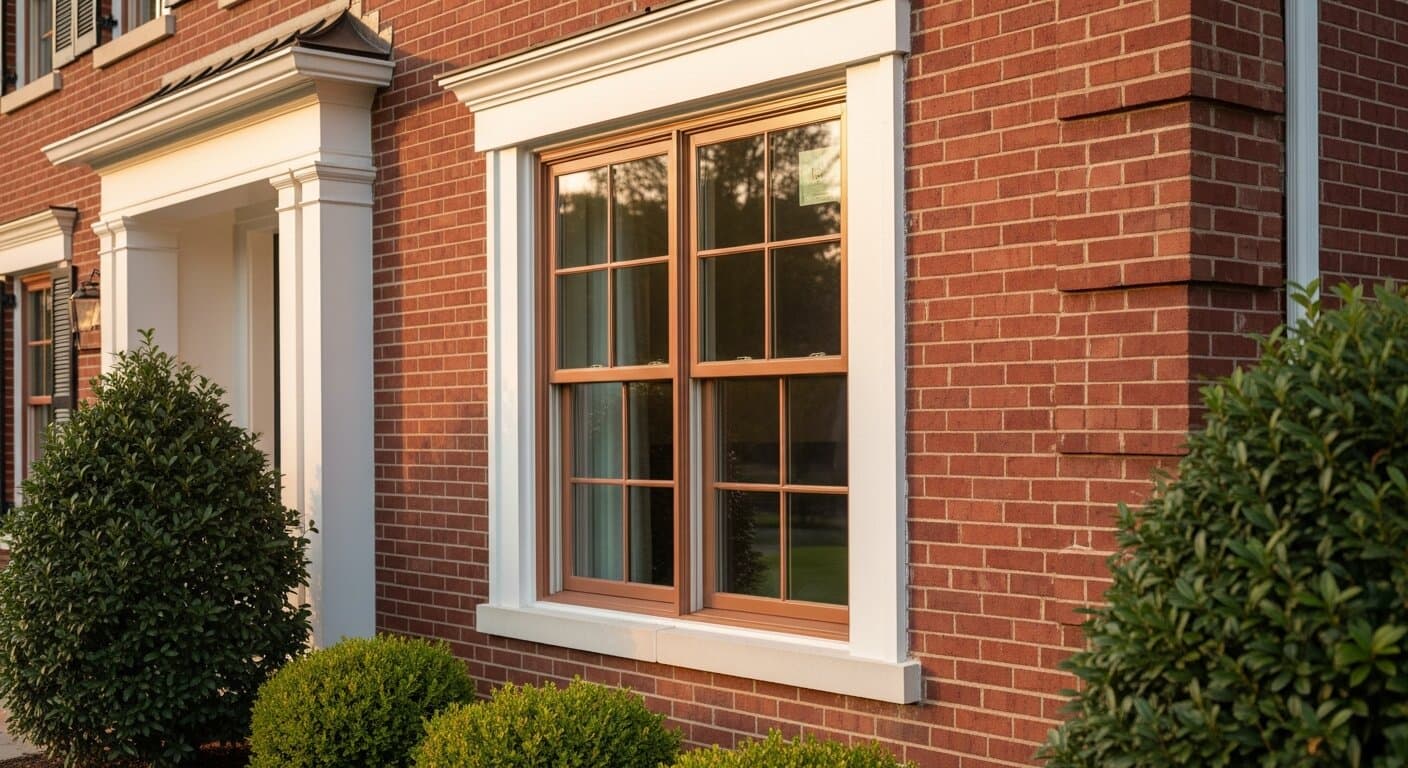
I spent two and a half years selling Renewal by Andersen, running the Signature Service presentation in living rooms across DC, Maryland, and Virginia. So when I write a Renewal by Andersen review, I am not reading other reviews back to you. I am telling you what the product actually is, what the pitch is engineered to do, and where the $30,000 number you may have heard comes from.
I will give the brand full credit where it earns it, because it earns a fair amount. I will also be honest about the parts I used to soften in the room. I no longer sell these windows; I run a direct-to-consumer window company instead, so read this knowing my bias, and weigh it against the sources I cite.
What is Renewal by Andersen, exactly?
Renewal by Andersen is the full-service replacement-window division of Andersen Corporation, sold under a single-company model the brand calls Signature Service. One company handles the in-home design consultation, the custom build-to-order manufacturing, the installation, and the warranty, so there is no big-box shelf to pull from and no separate dealer-plus-installer handoff (renewalbyandersen.com/why-renewal).
The single most common point of confusion: Renewal by Andersen is not the same as the Andersen-branded windows (the 400 Series, 100 Series, and E-Series) you buy through a lumberyard or window dealer. Same parent company, different product line, different way to buy. Renewal by Andersen windows use one frame material across every style (Fibrex), while Andersen-the-manufacturer sells vinyl, wood, clad-wood, and Fibrex lines. If you are weighing the two, that distinction matters, and we cover it on the Andersen brand page.
The line is sold by window style rather than by named material series: double-hung, casement, awning, picture, bay and bow, sliding, and specialty shapes, all in Fibrex, with the primary replacement line marketed as Acclaim (renewalbyandersen.com/windows). In our market the local operation is Renewal by Andersen of the Capital Region, serving the DMV (Capital Region about page).
What is Fibrex, and is it actually better than vinyl?
Fibrex is Andersen's proprietary composite frame material: reclaimed wood fiber fused with a thermoplastic polymer, roughly 40% wood fiber by weight. Andersen states the polymer coats each wood fiber so the frame resists rot and fungal growth, that it is "twice as stable and rigid as vinyl," and that it has a low thermal-expansion rate (Fibrex article).
Two things I want to correct, because both the pitch and the internet get them wrong:
- Fibrex is a composite, not a cladding. The whole frame and sash member is the composite material. These are not wood windows wrapped in vinyl or aluminum, and they are not vinyl windows with a skin. The exterior color is a factory finish on the Fibrex, warranted against fade.
- The rigidity claim is real and it matters. Because Fibrex is stiffer than vinyl, the frame profiles can be narrower for the same strength, which means a bit more glass and a bit less frame than a comparable vinyl window. Over years of thermal cycling, a lower expansion rate also means less seal stress. This is a genuine engineering differentiator, not just marketing, and it is the part of the demo I never had to oversell.
The honest counterweight: "better than vinyl" is not the same as "better than everything." A quality fiberglass window (Marvin, Milgard) competes directly on stability, and a premium vinyl window from a good manufacturer is perfectly adequate for most DMV homes at a lower price. Fibrex is very good. It is not magic, and you are paying a premium for it.
Renewal by Andersen warranty: what is actually covered
The warranty is one of the brand's strongest selling points, and unlike the price, the coverage is concrete. The controlling document is Renewal by Andersen's own Products and Installation Transferable Limited Warranty for units installed after January 1, 2022 (document RBA12755): 20 years on the glass (including the insulating seal), 20 years on the Fibrex frame and sash material, 10 years on non-glass parts and hardware, 10 years on the exterior color finish (fade not to exceed 5 delta-e, measured per ASTM D2244-16el), and 2 years on installation workmanship, transferring automatically to the next homeowner for the remainder of the term, with no maintenance preconditions (Renewal by Andersen Limited Warranty, RBA12755).
| Component | Coverage period | Notes |
|---|---|---|
| Glass (incl. insulating seal) | 20 years | Manufacturing/material/workmanship defects |
| Fibrex frame & sash | 20 years | Rust, blistering, peeling, cracking, pitting, corrosion, rot |
| Non-glass parts & hardware | 10 years | Operators, locks, balances, weatherstripping |
| Exterior color finish | 10 years | Fade not to exceed 5 delta-e (ASTM D2244-16el) |
| Installation workmanship | 2 years | Labor coverage on the install itself |
| Transferability | Full term | Automatic to next owner, no maintenance preconditions |
One scoping note worth knowing: the RBA12755 document covers units installed from January 1, 2022 through May 31, 2024, and a revised version (the Acclaim revision) applies to installs on or after June 1, 2024. The controlling document is always the limited-warranty PDF tied to your install date, so before you sign, ask for that exact PDF and confirm the periods in writing.
Why the transfer clause is worth real money: as a licensed real-estate agent for 12-plus years, I watched window condition and documentation move appraisals and buyer confidence. A 20-year frame-and-glass warranty that follows the house is a legitimate line in a listing, not a throwaway. That is the warranty's strongest, most underrated value.
What does Renewal by Andersen cost, and where does "$30k" come from?
Renewal by Andersen sits in the premium tier, and it does not publish a price per window. By design, you get only a custom in-home quote. The quotes I wrote during my years there stayed valid for roughly a year. So I will be precise: no dollar figure here comes from a Renewal by Andersen primary source.
What I can tell you from inside the room: the quote is delivered as one total project number, not a written line-item breakdown. That single-number approach is the root of most "sticker shock," because you cannot see what each window costs or compare it cleanly against another bid. Bob Vila characterizes the brand as skewing "slightly more expensive than its competitors," which matches what I saw (Bob Vila review).
The $30,000-plus figure in the title is a plausible whole-house number for a multi-window DMV job (a colonial or a larger row house with eight to fifteen openings), but it is not a Renewal by Andersen-published price, and your number could land well below or above it. Secondary aggregator and contractor sites, not Renewal by Andersen, put installed pricing at roughly $1,000 to $3,500 per window, with whole-house projects landing around $15,000 to $55,000+ depending on window count, glass package, and install complexity (Modernize). I pass those along as third-party estimates to sanity-check your quote against, never as an RbA-published price.
For how this stacks against other brands and what windows actually cost in our region, see the cost hub and the window replacement cost guide.
See it on your own house first
Preview a clean replacement on a photo of your actual window and get itemized pricing before you decide.
The in-home pitch: what to expect, and how to handle it
This is where my Renewal by Andersen review gets most useful, because the sales motion, not the window, is what most homeowners actually struggle with. Expect a consultation of roughly 60 to 90 minutes, occasionally longer. The structure is deliberate: a needs conversation, the Fibrex and energy demonstration, a measure, and then pricing, with a discount presented as expiring if you do not sign that night.
Here is the mechanic behind the close, from the rep's side of the kitchen table. The price you are first shown is not the floor. There is room built in to "discount" down to the real number, and the expiring deadline exists to stop you from shopping that real number against two other quotes. I delivered that close many times. It works because the urgency feels real in the room. It is not.
What to do about it:
- Do not sign on the first visit. A quote that stays valid for a year, and the ones I issued did, does not require your signature tonight. That year-long validity contradicts the same-night urgency.
- Ask for the price in writing, itemized if they will do it. You are entitled to know what you are buying.
- Get two other comparable quotes on the same window count, install type, and glass package before you decide. Our guide to choosing a contractor walks through exactly how to normalize three bids.
This pattern (long presentation, same-day pressure, expiring discount) is also the most-cited complaint in third-party reviews and BBB filings for the brand (BBB complaints; replacementwindowsreviews.co). The product satisfaction is generally high; the friction is the sale.
Energy performance and the things that vary by location
Andersen has been an ENERGY STAR partner since the windows program began in 1998 and was named 2023 ENERGY STAR Partner of the Year for Sustained Excellence at the corporate level, and ENERGY STAR-certified Renewal by Andersen units are available with select glass options (ENERGY STAR partner page). For our IECC Zone 4 mixed-humid climate, you want to read the two NFRC-printed numbers on the unit you are quoted: U-factor (lower is better for winter heat retention) and SHGC (lower keeps summer heat out).
The exact U-factor, SHGC, and visible-transmittance figures are regulated specs that belong to the NFRC Certified Products Directory, not to a sales pitch, so here are representative certified numbers for Fibrex casement units (no grilles), from Andersen's own published NFRC ratings. Standard Low-E4 runs U-factor 0.28 / SHGC 0.27 / VT 0.46 (NFRC CPD AND-N-102-00707), and the High-Performance Low-E4 SmartSun package (the one I would ask for in our cooling-dominated summers) comes in at U-factor 0.27 / SHGC 0.18 / VT 0.42 (CPD AND-N-102-00709) (Andersen NFRC ratings). Ratings shift with operating type and grille pattern, so confirm the printed NFRC label on the exact unit and glass package you are quoted.
Two practical notes that come up in nearly every DMV consultation. First, on glazing: Renewal by Andersen's standard unit is double-pane, and its HeatLock option is a room-side Low-E coating (not a third pane) marketed for "near triple-pane" performance on a dual-pane window. The brand does separately offer a genuine three-pane product, Enhanced Triple Pane (including an Enhanced Triple Pane with SmartSun), so if triple-pane is your expectation, confirm you are being quoted the actual Enhanced Triple Pane glass and not just the HeatLock coating (RbA glass options). Second, many local Renewal by Andersen operations are independently owned and operated affiliates licensed under the brand, so installer employment status and exact glass-package naming can vary by market. Ask your local team directly.
How Renewal by Andersen compares, and where it fits
Single-company accountability is the real structural advantage: when one brand measures, builds, installs, and warrants, there is no finger-pointing between a manufacturer and a separate installer. That is worth something, and it is the strongest argument for the premium. The trade is price and a sales process built to close on the first visit.
| Dimension | Renewal by Andersen | What to weigh |
|---|---|---|
| Frame material | Fibrex composite only | Stiffer than vinyl; no wood-interior or budget-vinyl option in the line |
| How you buy | In-home Signature Service, one company | High accountability; high-pressure close; no itemized pricing |
| Pricing | Custom quote only, premium tier | Hard to comparison-shop; expect to negotiate |
| Warranty | 20/20/10/10/2, transferable | Among the strongest, follows the house |
| Glazing | Double-pane standard, HeatLock optional | Verify if you specifically want triple-pane |
If you are cross-shopping, the most relevant head-to-head for this brand is Pella vs. Renewal by Andersen, and for the in-home-versus-regional-retailer question, Renewal by Andersen vs. Window Nation. Our full roster of brand breakdowns lives at /brands.
The honest summary: this is a good window sold through an expensive, high-pressure process. If you slow the sale down, get the warranty terms in writing, and compare two other itemized quotes, a Renewal by Andersen purchase can be a sound one. Just do not let the expiring discount make the decision for you.
Get an honest price, no salesperson
Tell us your address and window and get itemized pricing — no in-home pitch, no surprises.
Frequently asked questions
Is Renewal by Andersen worth the price?
For some homeowners, yes. You are paying a premium for the Fibrex composite frame, single-company accountability, and a strong transferable warranty, and the window itself is genuinely good. Whether the premium is worth it depends on whether you value the in-home experience and warranty enough to pay more than a quality vinyl or fiberglass alternative, and on getting two other itemized quotes to know what fair looks like.
What is Fibrex, and is it better than vinyl?
Fibrex is Andersen's proprietary composite frame material, reclaimed wood fiber fused with thermoplastic polymer, about 40% wood fiber by weight. Andersen states it is twice as rigid and stable as vinyl with a lower thermal-expansion rate and rot resistance. It is a real engineering advantage over standard vinyl, though not categorically better than quality fiberglass, and you pay a premium for it.
Is Renewal by Andersen the same as Andersen windows?
No. Renewal by Andersen is the full-service replacement division, sold only through in-home consultation and built exclusively in Fibrex. Andersen-the-manufacturer (the 400, 100, and E-Series) is sold through dealers and lumberyards in vinyl, wood, and clad-wood. Same parent company, different product line and different way to buy.
How long is the Renewal by Andersen warranty?
Per Renewal by Andersen's published limited warranty for units installed after January 1, 2022 (RBA12755), the terms are 20 years on glass, 20 years on the Fibrex frame and sash, 10 years on non-glass parts and hardware, 10 years on the exterior color finish, and 2 years on installation workmanship, transferring automatically to the next owner. A revised version governs installs after May 31, 2024, so confirm the periods against the warranty PDF tied to your own install date before you sign.
Why is the Renewal by Andersen in-home sales process so long?
The consultation is deliberate, and from my years running it, the 60-to-90-minute estimate is the floor; plenty stretched well past that. The structure is a needs conversation, the Fibrex and energy demo, a measure, then pricing with a discount presented as expiring that night. The length builds value before the price is shown, and the expiring discount is meant to close on the first visit. The quotes I wrote were valid for about a year, so you never have to sign the same night.
Does the Renewal by Andersen warranty transfer if I sell my house?
Yes. Renewal by Andersen's limited warranty document (RBA12755, for units installed after January 1, 2022) makes coverage fully and automatically transferable to a subsequent homeowner for the remainder of the term, with no maintenance preconditions. For a seller, a documented 20-year frame-and-glass warranty that follows the house is a legitimate value point at resale; confirm transfer details in the warranty PDF tied to your install date.
Next step
Before you take any in-home quote, the most useful move is a clean baseline: an itemized, no-rep price for your actual house that you can hold every other bid against. Our 3D configurator pulls up your home, lets you pick styles and tiers, and gives a per-window number with no appointment and no expiring discount. If you are unsure which glass package fits Zone 4, ask Zig.
Start your measurement in 5 minutes
Snap a photo with your phone, get AI measurements and an honest price — no salesperson, no in-home pitch.
Keep reading: compare the brands you will meet in the DMV at /brands, see the Pella vs. Renewal by Andersen head-to-head, and learn how to vet any in-home company in our contractor guide. The person behind every page here is Anthony Moorman.